Buyers decide how a home feels within moments of the front door opening.
Start With the Rooms Buyers Judge First
Begin where a viewing actually begins, not where your own daily life happens to centre. The hallway sets the temperature for everything after it, because a buyer who steps over shoes, coats and unopened post is already bracing for a house that feels cramped and uncared for. Clear the hall down to a console or a single hook rail, leave room to turn around, and make sure the door itself opens fully without catching on a mat, a shoe rack or a pushchair stored hopefully behind it.
After the hall, buyers judge the main living room and the kitchen hardest, and they judge them as space rather than as taste. Walk into each one and ask what the room is for, then remove anything that argues with that answer. A living room reading as an office, a drying room and a toy store at once reads as a house that is too small, even when the floor area is generous. One clear purpose per room lets buyers measure their own furniture against the walls in their heads.
The front of the house does quiet work before anyone rings the bell, and the same weekend spent adding kerb appeal on a small budget will lift the photographs as well as the arrival. Sweep the path, weed between slabs, clean the door furniture and check the house number is legible from the street. Buyers who have driven past once already arrive with a formed impression, and a tidy frontage confirms the story the listing photographs started telling them days earlier.
Declutter Until Every Surface Breathes
Work surface by surface rather than room by vague room, because surfaces are what the camera sees. Kitchen worktops should hold almost nothing: a kettle, perhaps a chopping board, and clear space either side of the hob. Bathroom shelves lose the crowd of half used bottles. Window sills, mantelpieces and the tops of wardrobes all collect the same drift of objects, and each one cleared makes the room read larger without a single wall moving. Box what you clear rather than binning in a panic, and label the boxes by room for the move.
Storage itself needs staging, since buyers open cupboards. A wardrobe crammed tight tells them the house lacks storage, however many cupboards it actually has, so thin the hanging rail until garments have air between them and fold the rest away neatly. The cupboard under the stairs, the airing cupboard and the loft hatch all get opened by thorough viewers. Half empty reads as roomy; stuffed reads as a warning. If boxes have to go somewhere, a short spell in rented storage or a relative’s garage beats a spare room stacked to the ceiling.
Personal items need a lighter touch than most sellers expect. Photographs, children’s artwork and collections are what make a house a home, but a wall of them holds a buyer’s eye on your family instead of their own future in the room. Reduce rather than erase: one or two framed pieces stay, the rest go into the labelled boxes. The aim is a room that feels lived in and calm, not a show home with the personality scrubbed out of it entirely.
Bookshelves and storage furniture deserve the same honesty. A shelf packed spine to spine with no breathing room suggests a house straining at its seams, so box a share of the books and leave deliberate gaps, perhaps with a small stack laid flat. Drawers that buyers might open should close without force. The garage and shed, if they form part of the viewing, need a path through them rather than a wall of stored life. None of this asks you to live in an empty house for months; it asks for one firm edit, done early, then held steady.
Repair the Niggles That Suggest Neglect
Small faults carry a message out of proportion to their size. A dripping tap, a cracked socket, a door that sticks and a toilet seat that shifts all suggest to a buyer that the invisible maintenance has been skipped too. Walk the house with a notebook and list every niggle honestly, then work through the list in a single weekend where you can. Most of these jobs need filler, sealant, a screwdriver and patience rather than a tradesperson, and the effect compounds because buyers stop bracing for the next surprise.
Pay particular attention to anything involving water. Stained ceilings, lifting sealant around the bath, blackened grout and a musty smell under the sink all point a buyer’s mind towards leaks and damp, the two words that cool enthusiasm fastest. Replacing a run of sealant and cleaning or renewing stained grout is slow, fiddly work, but it removes the evidence trail that makes a sound bathroom look like a problem. Check under sinks with a torch and dry hands, and fix the slow drip before the viewing, not after the survey.
Walls and woodwork repay a wash before they repay a repaint. Sugar soap on scuffed paintwork, especially around light switches, door handles and the turn of the stairs, lifts years of hand marks. Where paint has chipped to bare wood or a repair has left a patch, touch it in carefully rather than leaving the contrast. Buyers forgive a colour they dislike far more readily than a finish that looks abandoned, because colour is a weekend job and neglect feels like a pattern.
Style the Kitchen and Bathroom Simply
These two rooms sell houses because they are the most expensive rooms to change, so buyers read them for reassurance. The reassurance comes from cleanliness and order rather than from new units. Degrease the hob and extractor until they shine, empty the bins, and clear the fridge door of its collage of magnets and reminders. A bowl of fruit or a single plant is styling enough. Anything beyond that starts to look like effort, and effort makes buyers wonder what it is covering.
In the bathroom, hang fresh towels folded the same way, put a new bar of soap or a clean pump bottle by the basin, and keep the toilet lid down in photographs and viewings alike. Replace a tired shower curtain rather than scrubbing it, and make sure the mirror is polished, since it is where a viewer stands closest to the room’s condition. Reading a plain account of home staging and how it works shows how consistently these small, cheap signals outperform grand gestures in both rooms.
Light does more styling than objects do. Clean the windows inside and out, open curtains fully and tie them back so the frames show, and replace failed bulbs with matching warm ones so no room glows a different colour from the last. In darker rooms a lamp in the corner where a buyer will stand removes the cave effect that makes even a decent sized room feel mean. Photographs taken on a bright morning will flatter everything you have done.
Add Warmth Without Adding Clutter
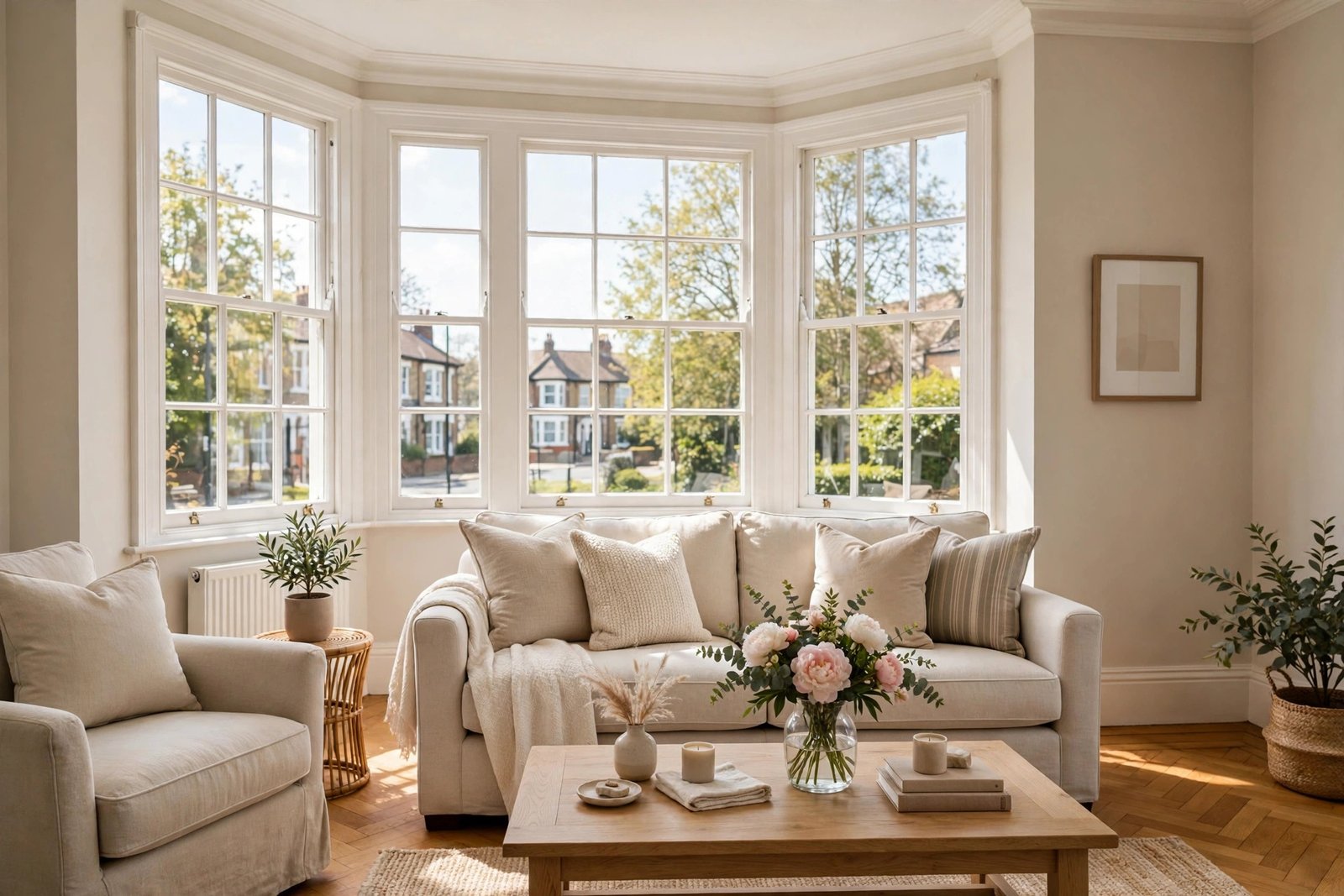
Warmth comes from texture and softness, not from quantity. A throw folded over the arm of a sofa, cushions in a limited palette, a rug that anchors the seating and beds made with plain bedding and a folded blanket at the foot all read as comfort in a photograph. Keep the palette narrow and let one or two materials repeat through the house, so separate rooms feel related. The restraint matters: every added object is another thing the eye has to file, and filing is the opposite of relaxing.
Empty properties need a different version of the same judgement. Bare rooms photograph smaller than furnished ones because there is nothing to scale them against, and they echo in a way that makes viewers lower their voices. This is the single case where hired furniture, or borrowed pieces arranged room by room, can genuinely earn its keep, because a bed shows a bedroom fits a bed and a small table shows a dining corner works. Dress only the rooms buyers judge first and leave the rest clean and empty rather than half furnished.
Scent is the background note nobody photographs. Air the house properly before a viewing, wash pet bedding, empty bins the same morning and deal with the source of any smell rather than masking it with sprays, which buyers read as a confession. A gentle, neutral freshness is the goal; anything perfumed enough to notice invites suspicion. Studying interior design principles for sellers helps here, because the underlying lesson is always the same: remove distractions until the room itself, its light and its proportions carry the impression.
Run a Stranger Test Before Viewings
When the work is done, leave the house, come back in through the front door and walk the viewing route slowly, in order, as someone who has never seen the place. Note the first thing your eye lands on in each room, the first smell, and any point where you have to squeeze past something. Your own familiarity hides all three. A friend who will be honest is even better, provided you let them finish the walk before defending a single choice they question.
Check the photographs with the same stranger’s eye before the listing goes live, because the online listing is the first viewing and most buyers decide there whether the house earns a visit. Look for the bins in the corner of the frame, the car blocking the frontage, your own reflection in the bathroom mirror and rooms shot from the doorway rather than from the corner that shows their true size. Ask the agent to reshoot any frame that undersells a room you have worked on.
Finally, build a short routine for viewing days so the standard holds without a scramble. Beds made, surfaces clear, towels straight, bins emptied, hall empty, curtains open and a quick walk of the route ten minutes before the appointment. Keep a laundry basket ready for the last minute sweep of everyday objects, and put it in the car if viewers are coming round with the agent while you are out. The house that stays ready sells the same story every time.