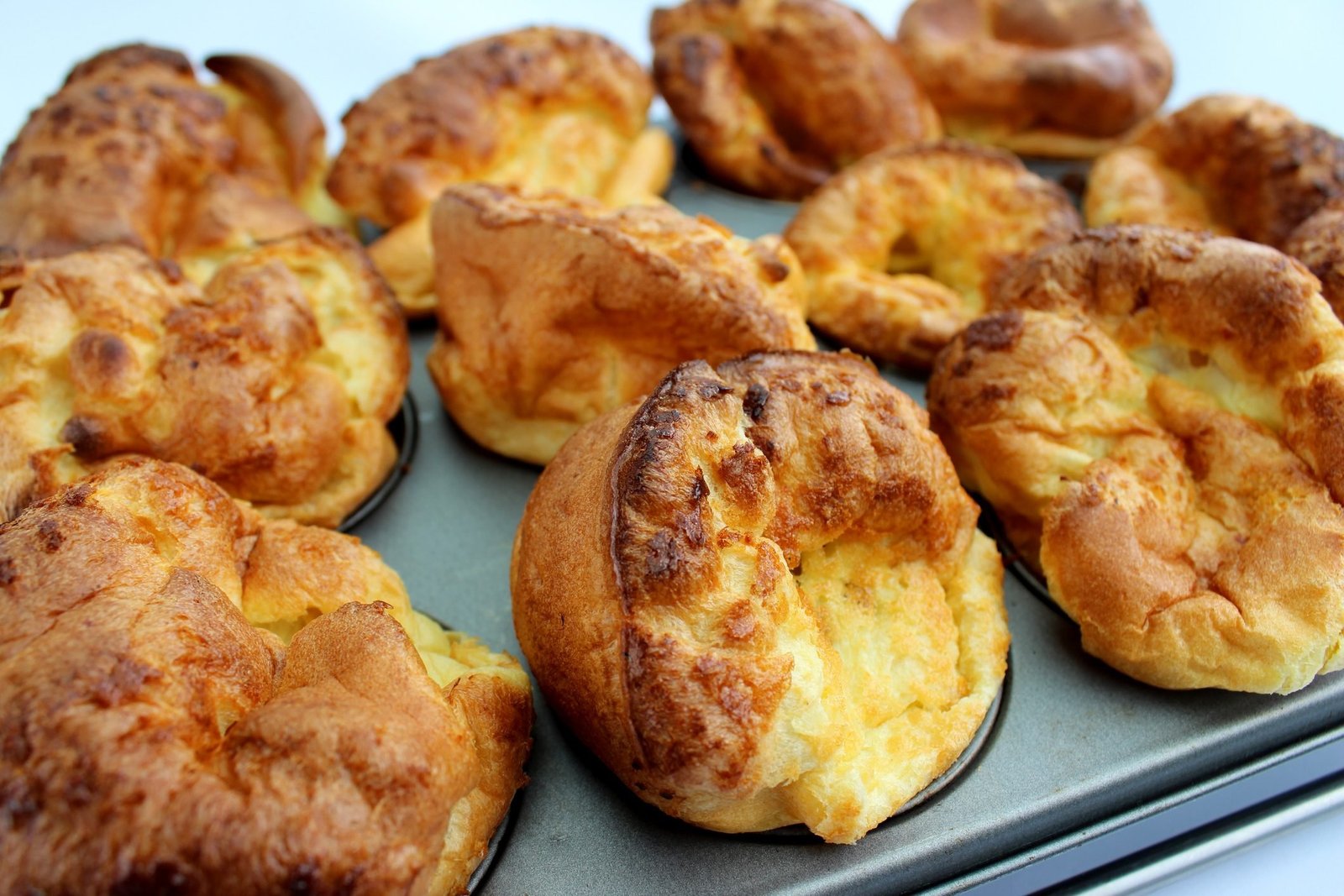
To make yorkshire puddings rise every time, you need to nail three variables: a rested batter, smoking-hot fat, and an oven you don’t open. Miss one and you get sad, flat discs.
Yorkshire puddings are pure kitchen theatre when they work: towering, crisp, golden. I’ve made hundreds, and the method below is the one that never fails me. It’s all about the details.
Make Yorkshire Puddings Rise Every Time: The Method That Actually Works
Here’s how I do it, in order. Nothing fancy here, just the steps that actually move the needle.
Rest the batter
Whisk 140g of plain flour with 4 eggs, 200ml of milk and a pinch of salt until smooth, then rest it for at least 30 minutes (an hour is better, overnight in the fridge is best). Resting lets the flour fully hydrate and the gluten relax, which gives a batter that rises dramatically rather than sulkily. This is the step most recipes underplay and most failures skip.
If you take one thing from this section, make it this: the details compound.
Get the fat properly smoking
Pour a teaspoon of beef dripping, lard or vegetable oil into each hole of a 12-hole muffin tin and heat it in a 220°C oven (200°C fan) until it’s genuinely smoking, about 10 to 15 minutes. The batter must sizzle violently the instant it hits the fat: that explosive steam is what launches the rise. Lukewarm fat gives you flat, greasy pancakes.
There’s no shortcut around this one, but honestly, it’s the satisfying part anyway.
For more ideas along these lines, have a look at keep salad fresh for days.
Work fast once the tin comes out
Have your rested batter in a jug by the oven. Pull the tin out, pour the batter quickly into each hole (about half full), and get the tin straight back in. Every second the tin sits on the counter, the fat cools. Speed matters here more than neatness: a little splashing is fine, dawdling is not.
Do it properly the first time and you’ll never have to troubleshoot it later.
Don’t open the oven door
Once they’re in, the door stays shut for a full 20 to 25 minutes. Opening it drops the temperature and the half-set puddings collapse like punctured soufflés. Watch through the glass: they’re done when deeply golden, crisp, and pulling away from the tin edges. Pale means underdone, whatever the timer says.
This might feel like extra effort now, but it saves time and disappointment down the line.
Use the right tin and fill level
A proper 12-hole muffin tin gives tall individual puddings; a roasting tin gives one giant pudding to share. Fill holes about half full: too little batter and they can’t climb, too much and they overflow before setting. Dark metal tins brown better than shiny ones.
The difference this makes is out of all proportion to the effort involved.
Serve immediately
Yorkshire puddings wait for no one. They start softening within minutes as the steam inside condenses, so have everything else ready and serve them straight from the oven. If you must hold them, keep them in the turned-off oven with the door ajar for a few minutes max, never covered.
Trust the process here even if it feels counterintuitive at first.
Doing This in Britain
Here’s the UK-specific bit: what’s available, what it costs, and where I’d actually spend my money.
Beef dripping is sold in most UK supermarkets near the oils, about £2 for a tub that lasts ages. It’s the traditional fat and it shows in the flavour.
If you want the official word, the Food Standards Agency covers it well.
A good 12-hole muffin tin costs £8 to £12. Dark, heavy-gauge tins give the best browning: thin cheap tins warp and cook unevenly.
Handy Tips Worth Knowing
Once you’ve got the basics down, these are the small habits that make everything easier next time round.
- Equal volumes works too: a cup each of flour, eggs and milk is the traditional rough measure. Weighing is more reliable though. Simple, but surprisingly effective.
- Beef dripping gives the best flavour by miles. Save the fat from your roast: it’s free and it’s traditional. I wish someone had told me this years ago.
- Cold batter into hot fat actually helps: the temperature shock boosts the rise. Don’t warm the batter up. No reason not to do this every time.
- Leftover yorkshires reheat in a hot oven for 5 minutes and make an excellent vehicle for jam, controversially. It takes seconds and saves headaches.
For more ideas along these lines, have a look at dairy free desserts that taste good.
Where It Usually Goes Wrong
If something goes wrong, it’s almost always one of these. Worth a quick read before you start.
Fat that’s not hot enough
If the batter doesn’t sizzle aggressively on contact, put the tin back and wait. This is the number one cause of flat yorkshires.
Opening the oven to peek
Every peek costs you rise. Trust the process and look through the glass.
Skipping the rest
Unrested batter rises poorly and tastes floury. Even 30 minutes makes a visible difference.
Questions I Hear All the Time
Short answers to the questions I’m asked most often about this.
Can I make yorkshire pudding batter in advance?
Yes, and you should. Batter keeps perfectly in the fridge for up to 24 hours, and the rest improves the rise. Just whisk it briefly before pouring.
Why do mine rise then collapse?
Usually the oven door was opened too early, or they were underbaked. They need the full 20 to 25 minutes to set their structure before they can support themselves.
In a Nutshell
Here’s everything above boiled down to the bits that matter most.
- Rest the batter — Whisk 140g of plain flour with 4 eggs, 200ml of milk and a pinch…
- Get the fat properly smoking — Pour a teaspoon of beef dripping, lard or vegetable oil into each hole of…
- Work fast once the tin comes out — Have your rested batter in a jug by the oven. Pull the tin out,…
- Don’t open the oven door — Once they’re in, the door stays shut for a full 20 to 25 minutes.…
- Use the right tin and fill level — A proper 12-hole muffin tin gives tall individual puddings; a roasting tin gives one…
- Serve immediately — Yorkshire puddings wait for no one. They start softening within minutes as the steam…
The Bottom Line
Right, the short version of everything above:
Tall yorkshires every time means: rested batter, smoking-hot dripping, fast pouring, a shut oven door, and immediate serving. It’s a formula, not a gamble. Master it once and Sunday roasts are forever improved, which is exactly as it should be.
The bottom line on make yorkshire puddings rise every time: it’s simpler than it looks once you break it into steps. Work through the method above at your own pace, and don’t be afraid to adapt it to your situation.
For more ideas along these lines, have a look at cook for one without wasting food.
If you want the official word, BBC Good Food’s recipe collection covers it well.