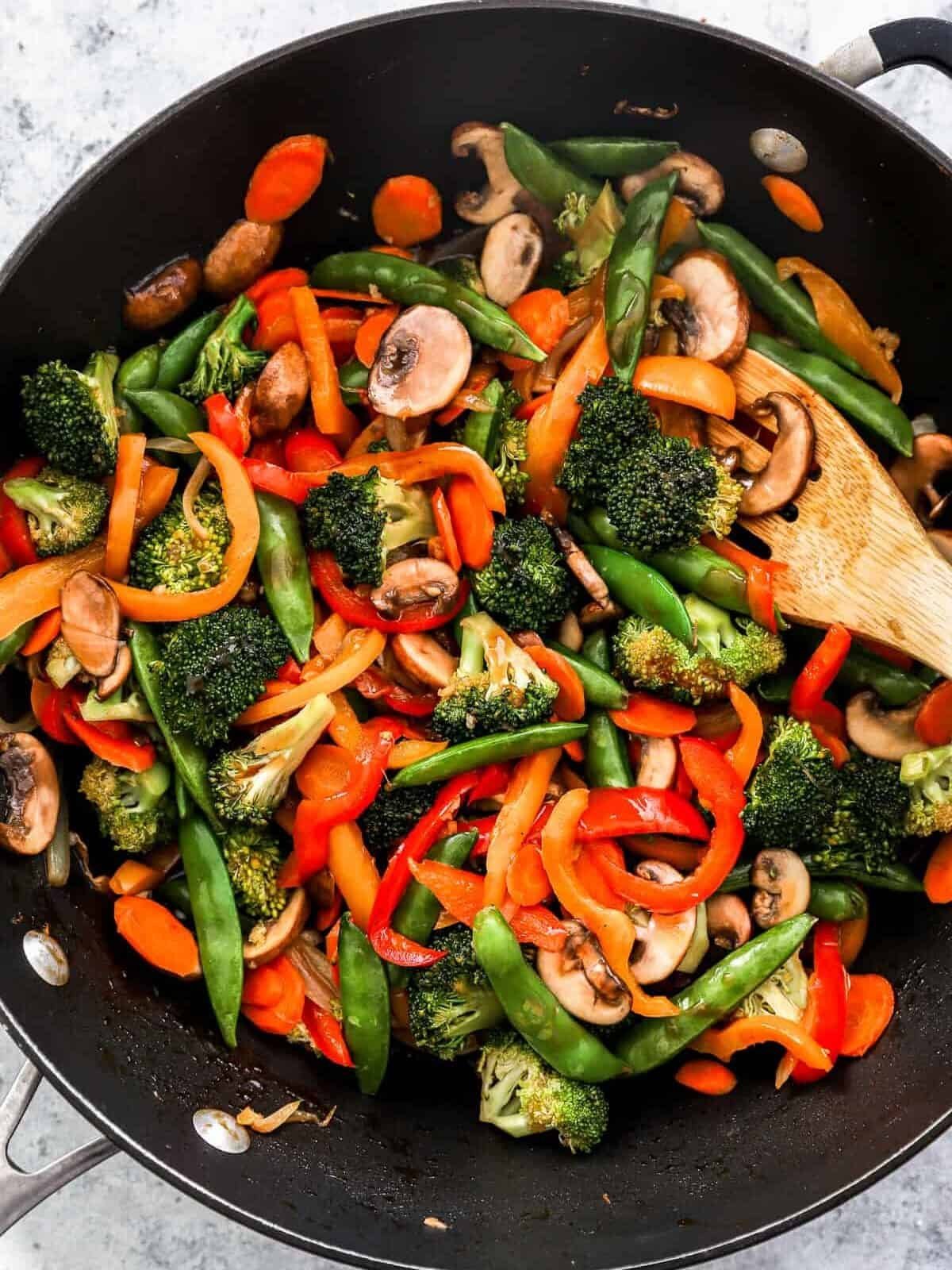
Getting restaurant style stir fry at home is all about heat, speed and preparation. Restaurants cook on burners far hotter than yours, but you can get remarkably close with the right technique.
I went through a phase of deeply disappointing homemade stir fries: soggy veg, grey chicken, sauce like dishwater. Then I learned what restaurants actually do differently, and now mine genuinely rival the takeaway. Here’s the whole playbook.
Restaurant Style Stir Fry At Home Without the Stress
Forget overcomplicated advice. This is the straightforward version that works in a real kitchen on a real weeknight.
Prep everything before the heat goes on
Stir frying takes minutes, so there’s no time to chop mid-cook. Cut all vegetables into similar-sized pieces, slice meat thinly against the grain, and mix your sauce in a jug beforehand. Restaurants call this mise en place, and it’s the single biggest difference between chaotic home stir fries and smooth professional ones. Have everything within arm’s reach of the hob.
It’s tempting to cut corners on this step. Resist: this is where it all comes together.
Get your pan properly hot
Heat your wok or largest frying pan until it’s genuinely smoking before any oil goes in, then add oil and swirl. That fierce heat is what gives you wok hei, the smoky breath-of-the-wok flavour that defines restaurant stir fry. On a domestic hob, cook in small batches: crowding the pan drops the temperature and steams everything instead of searing it.
It’s a small detail, but it’s exactly the kind of thing that separates a decent result from a great one.
Related reading: our take on make coffee taste better at home.
Velvet your meat like restaurants do
Toss sliced chicken, pork or beef with a teaspoon of cornflour, a teaspoon of soy sauce and a teaspoon of oil, and leave for 15 minutes. This coating, called velveting, protects the meat from the fierce heat so it stays silky and tender instead of going tough and dry. It’s the reason takeaway chicken is always juicier than homemade.
This is the step most people skip, and it’s the one that makes the biggest difference.
Cook in the right order
Hard vegetables first (carrots, broccoli), then softer ones (peppers, mushrooms), then leafy greens and aromatics (garlic, ginger, spring onions) last so they don’t burn. Meat goes in first, gets seared hard and removed, then goes back in at the end. Everything should keep moving: if your arm isn’t tired, you’re not stirring enough.
Get this bit right and everything that follows becomes noticeably easier.
Master the sauce formula
A great stir fry sauce is 2 tablespoons soy sauce, 1 tablespoon oyster sauce, 1 teaspoon sugar, 1 teaspoon cornflour mixed with 2 tablespoons water, plus optional chilli or sesame oil. Pour it in at the very end and toss for 30 seconds until it thickens and glosses everything. Add it too early and it just boils away into nothing.
I learned this through trial and error so you don’t have to.
Finish with texture and freshness
Take the pan off the heat and finish with a drizzle of sesame oil, a scattering of spring onions, toasted sesame seeds or crushed peanuts. Serve immediately over jasmine rice or noodles. Stir fry waits for no one: have the rice ready before you start cooking, not after.
It sounds fussy, but it takes seconds and the payoff is real.
What Tends to Go Wrong
A quick heads-up on the usual pitfalls, so you can sidestep them entirely.
Crowding the pan
Too much food at once drops the temperature and everything steams. Cook meat in batches if needed: it takes two extra minutes and transforms the result.
Adding garlic too early
Minced garlic burns in under a minute on high heat and turns bitter. Add it in the last minute of cooking.
Drowning it in sauce
Restaurant stir fries are glossy, not swimming. Two to three tablespoons of sauce per portion is plenty.
A Few Things That Genuinely Help
Think of these as the finishing touches. Small effort, noticeable difference.
- A flat-bottomed wok works better on UK electric and induction hobs than a round-bottomed one, which wobbles and heats unevenly. Simple, but surprisingly effective.
- Day-old cooked rice makes far better egg fried rice than fresh. Fresh rice is too wet and goes mushy. I wish someone had told me this years ago.
- Frozen stir fry veg mixes are genuinely decent and save a lot of chopping on busy nights. No reason not to do this every time.
- Groundnut or vegetable oil for cooking (high smoke point); sesame oil only as a finishing drizzle, never for frying. It takes seconds and saves headaches.
Related reading: our take on cook a steak perfectly on a home hob.
The UK Angle
Before you start, here’s what’s worth knowing about doing this on this side of the Atlantic.
A decent carbon steel wok costs £15 to £25 from kitchen shops or Amazon UK and, once seasoned, becomes naturally non-stick. Avoid cheap non-stick woks: the coating can’t handle the heat stir frying needs.
It’s also worth checking the NHS Eat Well guide if you want to dig deeper.
Lee Kum Kee and Amoy soy and oyster sauces are in every major supermarket and cost a couple of pounds each. They last for months and are the backbone of the sauce formula above.
What People Usually Ask
Here are the things people usually want to know once they’ve read the main guide.
Can I stir fry without a wok?
Absolutely. Your largest, heaviest frying pan works fine. The key is high heat and small batches, not the specific pan shape. A wok is nicer but not essential.
Why is my stir fry always watery?
Usually too much food in the pan at once, vegetables that weren’t dried, or sauce added too early. Dry your veg, cook in batches, and add sauce at the very end.
The Short Version
If you skimmed the above, this is the part to actually read: the essentials, nothing else.
- Prep everything before the heat goes on — Stir frying takes minutes, so there’s no time to chop mid-cook. Cut all vegetables…
- Get your pan properly hot — Heat your wok or largest frying pan until it’s genuinely smoking before any oil…
- Velvet your meat like restaurants do — Toss sliced chicken, pork or beef with a teaspoon of cornflour, a teaspoon of…
- Cook in the right order — Hard vegetables first (carrots, broccoli), then softer ones (peppers, mushrooms), then leafy greens and…
- Master the sauce formula — A great stir fry sauce is 2 tablespoons soy sauce, 1 tablespoon oyster sauce,…
- Finish with texture and freshness — Take the pan off the heat and finish with a drizzle of sesame oil,…
Wrapping It Up
Let’s pull it all together.
Restaurant stir fry at home means: prep everything first, get the pan smoking hot, velvet the meat, cook in order, sauce at the end, serve immediately. It’s a technique, not a recipe, and once it clicks you’ll wonder why you ever ordered takeaway on a Tuesday.
So that’s restaurant style stir fry at home, demystified. It’s one of those things that seems complicated until you’ve done it once, and then you wonder what all the fuss was about.
Related reading: our take on make curry taste like a takeaway at home.
It’s also worth checking the Food Standards Agency if you want to dig deeper.