Ray tracing is the graphics buzzword of the decade — the technology behind those jaw-dropping reflections, shadows, and lighting effects in the latest games. It is also, famously, expensive: for years, experiencing it meant a high-end graphics card costing more than some entire PCs. So if you are in Belfast on a tight budget, is understanding ray tracing even worth your time? Can you grasp it — let alone see it — without spending a fortune?
Yes on both counts. Understanding ray tracing costs nothing, and experiencing it is far cheaper in 2026 than the technology’s luxury reputation suggests. Here is what ray tracing actually is, why it matters, and the realistic budget routes to seeing it with your own eyes.
What Ray Tracing Actually Is
Forget the marketing. Traditional game graphics use clever shortcuts — “rasterisation” — to fake light: pre-baked shadows, approximated reflections, lighting that looks right without being physically accurate. It is fast and it works, which is why games have used it for decades.
Ray tracing does it properly. It simulates the actual paths of light rays as they bounce around a scene — off mirrors, through glass, scattering in fog — the way light behaves in the real world. The result is reflections that show what is genuinely behind you, shadows that soften naturally with distance, and lighting that feels photographic rather than painted. Once you have seen true ray-traced reflections in a rain-slicked city street in a game, the old faked versions look flat by comparison.
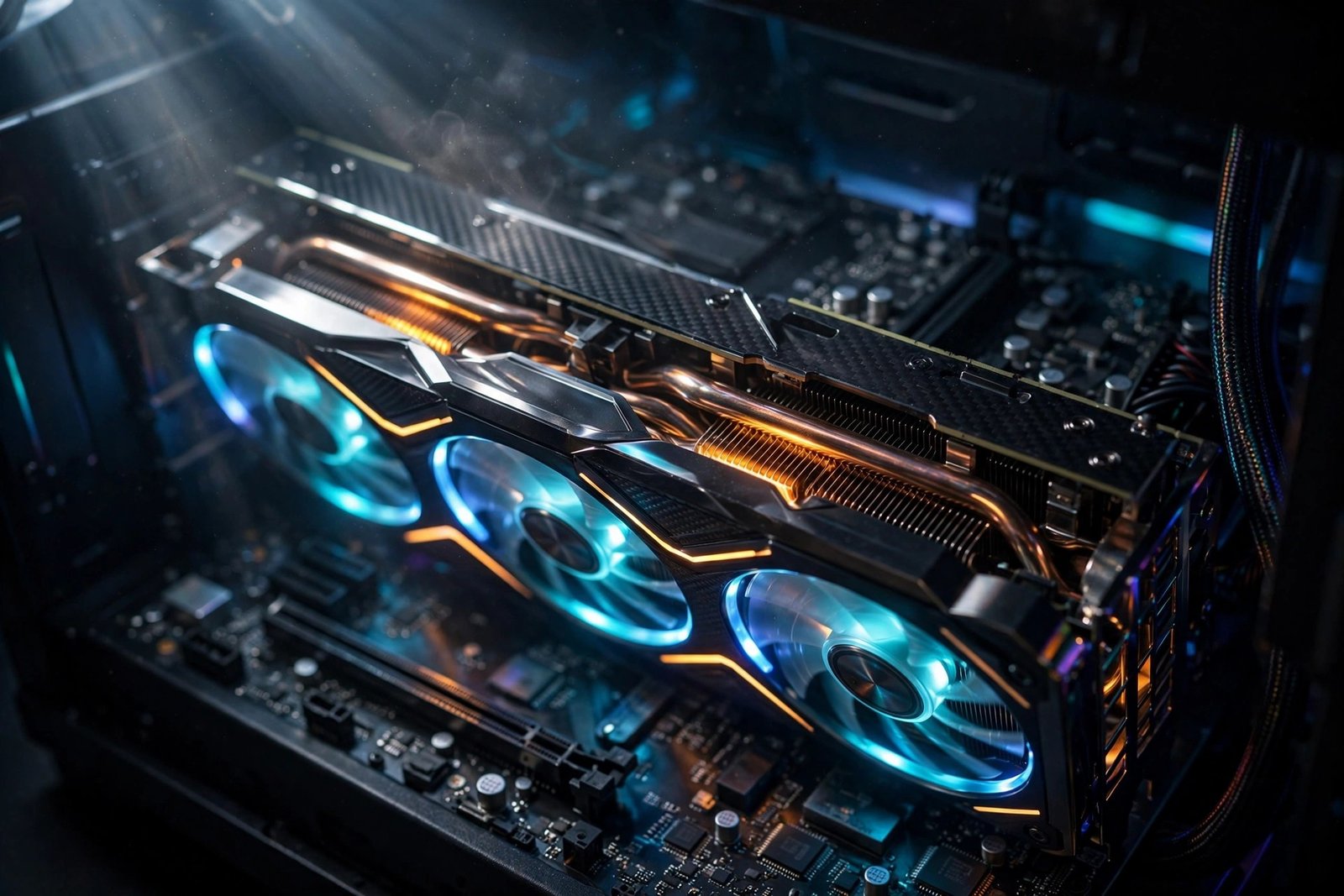
The catch has always been computational cost. Simulating millions of light rays per frame is enormously demanding — which is why ray tracing needed dedicated hardware (RT cores in NVIDIA’s RTX cards, equivalents in AMD cards and current-gen consoles) before it became practical in real-time games.
Understanding It Costs Nothing
The knowledge tier is entirely free, and Belfast learners have good options. The concept itself takes an hour: light rays, bounces, why it is expensive, what RT cores do. NVIDIA’s RTX and ray tracing explainers are marketing-adjacent but technically solid and free. Digital Foundry’s video analyses — the gold standard of graphics explainers — break down exactly what ray tracing adds in specific games, with side-by-side comparisons that make the abstract concrete.
Belfast Central Library’s computing and gaming sections stock the background reading, and YouTube hosts university-level computer graphics lectures for free. For side-by-side analysis of what ray tracing changes in real games, Digital Foundry’s technical breakdowns are the gold standard. Total cost of understanding: £0 and a weekend. The expensive part was never the knowledge — it is the hardware, and that is where the good news starts.
Seeing It on a Tight Budget: The Real Options
Here is what changed: ray tracing is no longer a luxury exclusive. Current-gen consoles — the PlayStation 5 and Xbox Series X — include hardware ray tracing, and both appear regularly on Belfast’s second-hand market and in seasonal sales. A used current-gen console is now the cheapest ticket to ray-traced gaming, full stop.
On PC, budget RTX cards have brought the entry price down dramatically. Cards in the £200–£300 range now handle ray tracing at 1080p in many titles, especially paired with upscaling technologies (DLSS, FSR) that render at lower resolution and intelligently reconstruct the image — effectively giving you ray tracing’s visuals at a fraction of the performance cost. Upscaling is the budget ray-tracer’s best friend: it is the difference between a slideshow and a smooth game.
And there is a free option hiding in plain sight: cloud gaming. Services that stream games from powerful remote servers let you play ray-traced titles on a modest laptop or even a phone — the heavy lifting happens in a data centre. A month’s subscription costs less than a takeaway and is a legitimate way to see ray tracing before deciding whether to invest in hardware.
What Budget Ray Tracing Actually Looks Like
Honesty matters here: budget ray tracing involves compromises. At the entry level you will typically choose between ray tracing at 30fps or traditional graphics at 60fps+ — and many players reasonably prefer smoothness. Not every game implements ray tracing well; in some titles the difference is subtle, in others (reflections-heavy city games, horror titles with flashlight lighting) it is transformative.
The smart budget approach: enable ray tracing selectively, in games where it shines, and lean on upscaling. Pair the experience with a decent display — a budget 4K TV under £500 shows off the lighting beautifully — and make sure the rest of your setup is not bottlenecking you, since a struggling machine will mask any visual gains.
Ray Tracing Beyond Games: Why the Knowledge Transfers
Here is the underappreciated reason to learn ray tracing even if you never buy the hardware: the same technology now powers film, architecture, and product design. The photorealistic CGI in modern movies is ray-traced — often with the same fundamental algorithms, running on render farms instead of in real time. Architects walk clients through ray-traced building visualisations; car configurators render paint and chrome with real light simulation. When you understand ray tracing for games, you understand a pillar of the entire modern visual world.
It is also the clearest illustration of a pattern that defines computing: an effect that once required a film studio’s render farm eventually runs on a £250 console. Real-time graphics history is the story of “impossible” becoming “standard” on a roughly decade-long delay. Learning ray tracing now gives you a front-row seat to that transition — and the vocabulary to understand whatever the next impossible-becomes-standard technology turns out to be. That kind of technological literacy compounds far beyond gaming.
Is It Worth It? The Verdict
Understanding ray tracing: absolutely, and it is free. It is the clearest window into where game graphics are heading, and the concepts — light simulation, the rasterisation-to-ray-tracing transition — will stay relevant for a decade.
Paying for ray tracing on a tight budget: worth it only via the cheap routes — a used current-gen console, a budget RTX card with upscaling, or a month of cloud gaming to try before you buy. Do not stretch your finances for top-tier ray tracing hardware; the mid-range experience delivers 80% of the wow for a fraction of the cost. And remember the golden rule of graphics: no lighting technology matters more than whether the game itself is fun.
Frequently Asked Questions
What is ray tracing in simple terms?
It is a graphics technique that simulates how light rays actually bounce around a scene, producing realistic reflections, shadows, and lighting — instead of the approximations games traditionally used.
Can I get ray tracing on a budget PC?
Yes. Budget RTX graphics cards (£200–£300) handle ray tracing at 1080p in many games, especially with upscaling (DLSS/FSR) enabled. A used current-gen console is even cheaper.
Is ray tracing worth the performance cost?
It depends on the game and your priorities. In visually rich games it is transformative; in fast competitive games, most players prefer higher frame rates. Try it via cloud gaming before investing in hardware.
Do I need a special monitor or TV for ray tracing?
No special display is required, but ray tracing’s lighting subtleties show best on a good screen — a decent 4K TV or a monitor with good contrast makes the difference visible.