A 1/6 keg — also called a sixth-barrel or “sixtel” — holds 5.16 US gallons, which is 19.8 litres. That works out at about 55 twelve-ounce servings, or roughly 35 UK pints (568ml each).
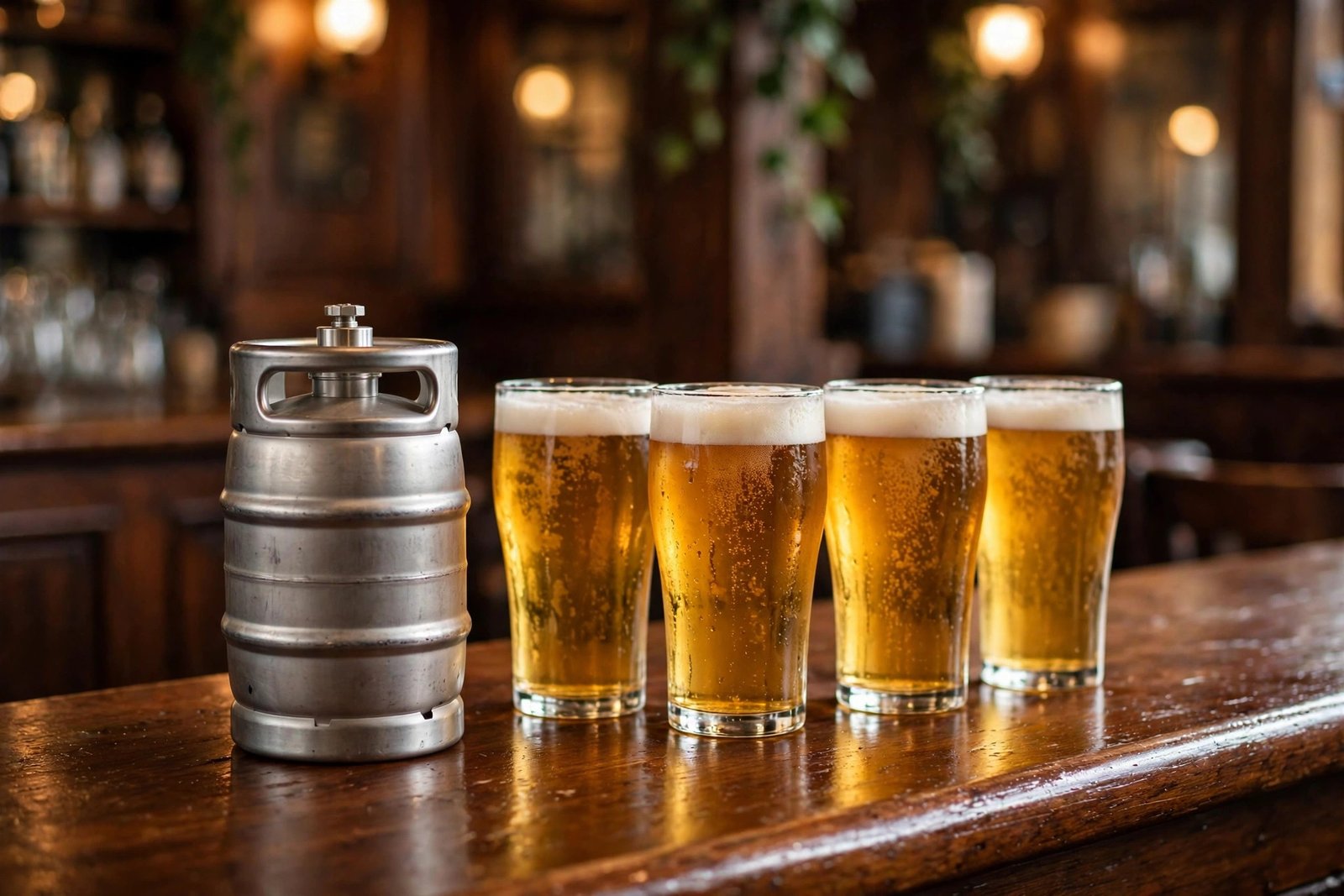
The sixth-barrel is the baby of the keg world: tall, slim and far easier to handle than a full-size keg. It’s an American sizing, so you’ll mostly encounter it at craft beer bars and in guides written for the US market — but the maths translates neatly, and it’s worth knowing if you’re comparing options for a party or a home bar.
What exactly is a 1/6 keg?
As the name suggests, a sixth-barrel is one-sixth the size of a full US beer barrel (31 US gallons). It holds 5.16 US gallons (19.8 litres) and stands about 23 inches tall — roughly the height of a standard office water-cooler bottle, but slimmer. In the trade it’s often nicknamed a “sixtel”.
Because it’s an American measure, sixth-barrels are less standardised in the UK than metric kegs. British breweries and wholesalers tend to sell 20-litre kegs instead, which are near-identical in capacity (about 35 pints) but built to UK fittings. If a UK supplier quotes you a “20L keg”, treat it as the British equivalent of a sixtel. For the full-size comparison, see our guide to how much beer is in a keg.
The maths: litres, pints and servings
Here’s the breakdown, using both American serving sizes and proper UK pints:
- Capacity: 19.8 litres (5.16 US gallons)
- US servings: about 55 × 12oz pours (the standard American serving)
- UK pints: about 35 × 568ml pints, allowing a little for foam and wastage
- Alcohol units: roughly 79 units at 4% ABV — worth bearing in mind for responsible serving
The reason American guides say “55 beers” while the UK figure is 35 comes down to serving size: a US 12oz can (355ml) is much smaller than a British pint (568ml). Always check which measure a guide is using before you order — it’s the single most common source of keg confusion.
How many people will it serve?
Using the party rule of thumb of two to three pints per person over an evening, a 1/6 keg (35 pints) comfortably covers 12–18 guests. That makes it the sweet spot for:
- Dinner parties and small gatherings where a full keg would be overkill
- Home bars and kegerators — a sixtel fits where a 50-litre keg won’t
- Trying a craft beer in volume without committing to 88 pints of something experimental
- Weddings and events as a second or third tap alongside more mainstream options
One practical note: at 19.8 litres of beer plus the steel, a full sixtel weighs around 25kg — liftable by one reasonably strong person, unlike a full-size keg. Our guide to how much a keg weighs compares every common size. If your crowd are light drinkers or you’re also serving wine, one sixtel can stretch to 20 guests; for a thirsty rugby-club crowd, plan on one per 10.
How a sixth-barrel compares with other small formats
The sixtel isn’t the only small keg. Here’s how the alternatives stack up:
- UK 20-litre keg: the direct equivalent — about 35 pints, with UK-standard fittings.
- 30-litre keg: about 53 pints. A step up for bigger parties, still manageable to move.
- Cornelius (“corny”) keg (19L): the homebrewer’s favourite — similar capacity to a sixtel, designed for home dispense setups.
- Mini-keg (5L): about 9 pints. A fun option for a couple of people, widely sold in supermarkets.
For most UK buyers, the real choice is between a 20L keg from a brewery and a 5L mini-keg from the shops — the American sixth-barrel mainly enters the picture at craft beer venues or when you’re following a US guide.
What does a 1/6 keg cost in the UK?
Because sixth-barrels are an American format, you’ll usually be buying the UK equivalent 20-litre keg from a brewery shop or specialist supplier. Expect to pay £50–£90 for the beer depending on style, plus a refundable deposit of £20–£30 on the keg itself.
That works out at roughly £1.40–£2.60 per pint — comparable to buying beers by the case, but with less packaging and, fans insist, a fresher pour. Tap and CO2 hire for a weekend typically adds £30–£60 if you don’t already have the kit, though many suppliers bundle it in. Deposits are refunded when you return the empty keg — keep the receipt, as some suppliers are strict about the return window.
When a sixth-barrel beats a full keg
Choose the smaller size when variety matters more than volume. Two sixtels of different beers cost little more than one full keg and let your guests choose — a lager and an IPA, say, or a stout for the colder months. They’re also the right call when fridge space is tight, when you’re unsure how a beer will go down, or when you simply don’t want 88 pints of commitment. Sixtels suit tasting events and beer festivals too, where several styles in smaller volumes keep the queue moving and the choice wide. The Campaign for Real Ale (CAMRA) and trade press like the Morning Advertiser both note the steady UK shift toward smaller keg formats in pubs chasing variety over volume.
Quick answers
- How many 12oz beers are in a 1/6 keg? About 55 — that’s the standard American figure you’ll see quoted.
- How many UK pints are in a 1/6 keg? Roughly 35 pints of 568ml, after allowing for foam and wastage.
- How big is a 1/6 keg physically? Around 23 inches tall and slim enough to fit in most under-counter fridges and kegerators.
- Is a 1/6 keg the same as a 20-litre keg? Near enough — 19.8 litres vs 20 litres. UK suppliers sell 20L kegs; treat them as interchangeable for serving maths.
- How long does beer last in a 1/6 keg once tapped? 6–8 weeks on CO2; 2–3 days on a party pump that lets air in. Unopened, it keeps for months stored cool.