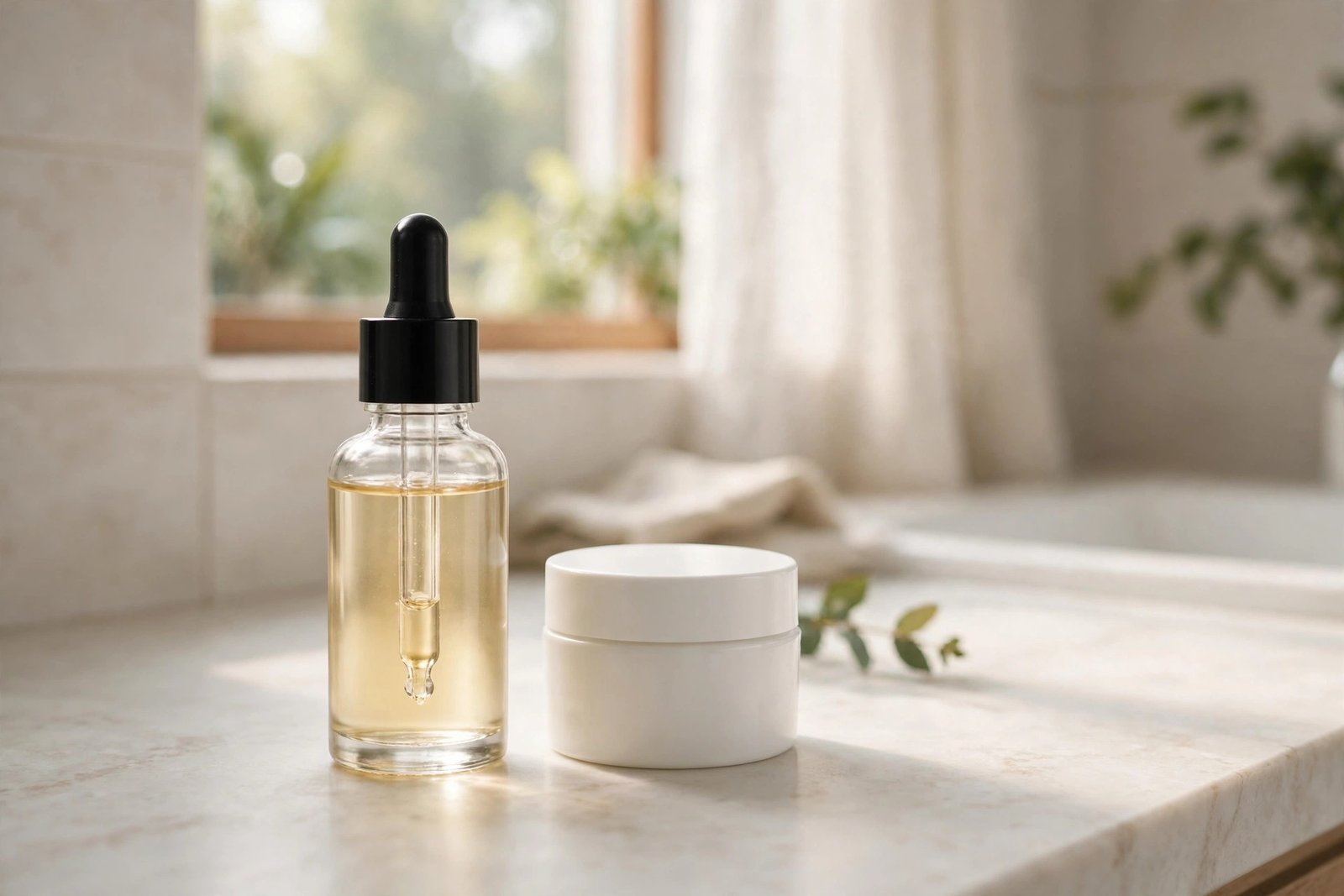
If you have just bought your first tube of retinol and are checking the mirror every morning for a transformation, you are not alone. Retinol is one of the most researched skincare ingredients in the world, yet it is also one of the most misunderstood — especially around timelines. Unlike a moisturiser that makes your skin feel softer instantly, retinol works beneath the surface, quietly rewriting how your skin cells behave. That means results take weeks and months, not days. Here is the honest, evidence-based timeline for what actually happens when a beginner starts retinol, plus the mistakes that make people quit before it works.
What Retinol Actually Does to Your Skin
Retinol is a form of vitamin A. When you smooth it on, enzymes in your skin convert it into retinoic acid, the active compound that binds to receptors in your skin cells and tells them to behave like younger cells. Dermatologists have prescribed its stronger cousins (tretinoin and adapalene) for decades, and over-the-counter retinol is the gentler, beginner-friendly entry point.
At the cellular level, three things happen: cell turnover speeds up, so dull dead cells shed faster; collagen production increases in the deeper layer of the skin; and melanin clusters that cause dark marks begin to disperse more evenly. That combination is why retinol is the rare ingredient that addresses fine lines, uneven tone, rough texture and breakouts at the same time. No single serum does more heavy lifting per pound, which is why dermatologists keep recommending it despite all the noise about newer actives.
The Real Beginner Timeline: Week by Week
Weeks 1–2: The Adjustment Phase
Expect very little visible change, and possibly a bit of dryness, tightness or mild flaking. This is your skin’s barrier adjusting. Many beginners panic here and either apply more (disaster) or give up (a shame). What you should do instead: keep applications to two or three nights per week, use a pea-sized amount for the whole face, and always follow with a simple, fragrance-free moisturiser. Avoid layering strong acids like glycolic or salicylic acid in the same routine during this period — the NHS guidance on everyday skin care emphasises gentle, consistent routines over aggressive ones.
Weeks 3–6: Subtle Texture Improvements
This is when most people notice their skin feels smoother to the touch. Makeup applies more evenly, and pores can look a little tighter — not because pores have shrunk (they cannot), but because clearer, less congested pores reflect light differently. Breakouts may temporarily increase for some people, a phenomenon called “purging”: retinol speeds up the turnover of cells that already had developing spots beneath them. Purging is annoying but self-limiting, usually settling within a few weeks, whereas irritation that spreads or burns is a sign to pause.
Weeks 8–12: The Turning Point
Clinical studies consistently show that meaningful, visible changes — reduced fine lines, more even tone, fewer blackheads — become measurable around the 12-week mark. A 2021 review in the British Association of Dermatologists’ published guidance notes that retinoid benefits for photo-ageing build over months of consistent use. If you have been using it three nights a week, most dermatologists suggest you can now try every other night, as long as your skin is comfortable.
Months 4–6: The Real Payoff
Collagen remodelling is slow, and the visible firming and wrinkle-softening that people buy retinol for genuinely need four to six months. Dark spots fade more convincingly in this window, and overall luminosity improves. This is the stage where people start asking what you have “done” — the answer being patience and sunscreen. Dermatologists often say the best retinol results appear between six and twelve months, so month six is the beginning of the payoff, not the end.
Beginner Mistakes That Waste Your Money
The single biggest mistake is starting too strong. High-percentage retinol (1% and above) on a beginner’s barrier usually buys you weeks of peeling and zero extra benefit, because consistency beats concentration. Start at 0.3–0.5%, or even a retinoid ester if your skin is sensitive. The second mistake is skipping sunscreen. Retinol increases sun sensitivity, and UV damage actively undoes the collagen gains you are paying for — a broad-spectrum SPF 30 worn daily is non-negotiable, which is also a useful excuse to review how vitamin D and sunlight work together in UK skin health.
The third mistake is over-application. A pea-sized amount is genuinely enough for the whole face; more product does not mean more results, it means more irritation. Dot it on the forehead, cheeks and chin, then spread. Avoid the eye corners and nostril creases, where skin is thinnest. Finally, stop expecting miracles from products that combine retinol with heavy fragrance, essential oils or multiple acids in one formula — each extra irritant narrows your margin of safety. Simple formulations from reputable brands consistently outperform fancy ones in the long run.
What Your Money Should Actually Buy
You do not need a £60 tube. Independent testing and dermatologist consensus agree that well-formulated retinol serums at £10–£25 from pharmacy brands perform as well as luxury options, because the active ingredient is what matters. Look for opaque, air-restrictive packaging (a pump or sealed tube, not a jar) since retinol degrades with light and air exposure. Check the percentage is stated clearly, and avoid products that hide retinol behind a proprietary “retinol complex” with no concentration listed — that is usually code for “barely any”.
Pair your purchase with three supporting products you probably already own or can buy cheaply: a gentle non-foaming cleanser, a plain moisturiser with ceramides, and daily sunscreen. That four-product routine, used consistently for six months, will outperform a shelf full of expensive serums used sporadically. If you are building a full routine around your skincare goals, it is worth reading about how healthy eating on a budget supports skin from the inside and the early signs of vitamin D deficiency in the UK, since low vitamin D is common in Britain and linked to skin and hair complaints.
When Retinol Is Not Right for You
Retinol is not suitable during pregnancy or while trying to conceive — topical retinoids carry advisory warnings, and this is one case where the cautious route is the only route. Very sensitive skin conditions like active eczema or rosacea flare-ups may also need calming first. If you have persistent redness, stinging or peeling that does not settle after two weeks of reduced use, stop and consider alternatives: bakuchiol offers some retinoid-like effects with far less irritation, and niacinamide (vitamin B3) helps tone and pores without the adjustment phase. The NHS acne treatment pages also explain when it is worth speaking to a GP about prescription-strength options rather than persisting with over-the-counter products.
Conclusion
Retinol rewards patience like almost nothing else in skincare: minor texture gains by week six, visible tone and line improvements around week twelve, and the real firming payoff between months four and six. The beginners who get results are the ones who start low, apply little, wear sunscreen religiously and keep going when nothing seems to be happening. Buy a well-packaged 0.3–0.5% formula at a pharmacy price, use it three nights a week, and judge it at the six-month mark — that is the honest timeline, and anything promising faster is selling you hope in a jar.
Frequently Asked Questions
Can I use retinol every night as a beginner?
No — start with two to three nights per week. Most beginners can increase to alternate nights after about 12 weeks if their skin tolerates it, but daily use from day one usually causes irritation that forces you to stop entirely.
Why is my skin peeling after starting retinol?
Mild flaking in the first two to four weeks is normal as cell turnover accelerates. Buffer it by applying moisturiser first, then retinol, and reduce frequency. Persistent burning, spreading redness or raw skin means you should pause and let the barrier recover.
Do I need sunscreen if I only use retinol at night?
Yes. Retinol increases your skin’s sensitivity to UV even on days you do not apply it, and sunlight actively reverses its anti-ageing benefits. A broad-spectrum SPF 30 every morning is essential, whatever the British weather looks like.
How long does an unopened retinol product last?
Most last 12–24 months unopened, but once opened, aim to finish within three to six months since the active ingredient degrades with air exposure. Opaque pump packaging slows this, but jars accelerate it — never buy retinol in a jar.
Is prescription tretinoin better than over-the-counter retinol?
Tretinoin is stronger and acts faster, but it also irritates more and requires a prescription. For most beginners, over-the-counter retinol used consistently for six months delivers excellent results with far less risk of abandoning the routine.