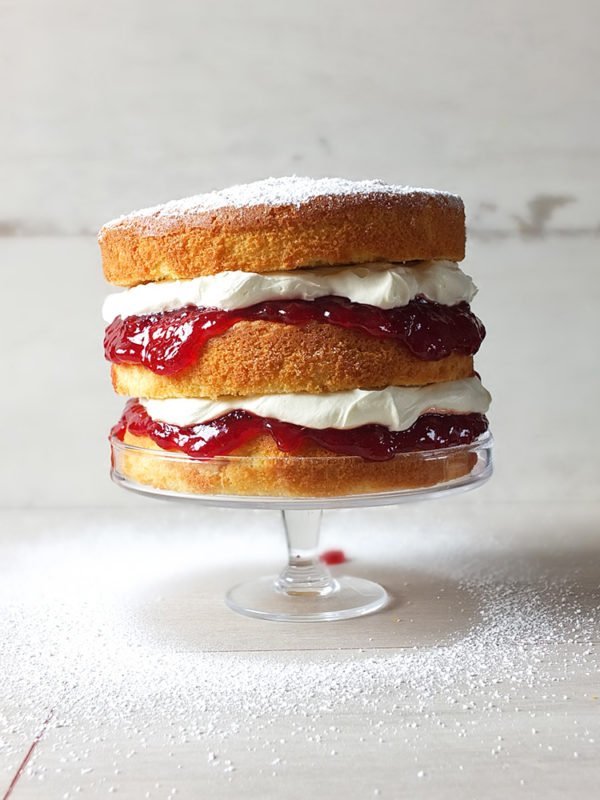
Making a victoria sponge like your grandmother did comes down to a beautifully simple formula: equal weights of butter, sugar, eggs and flour, good jam, and cream that’s whipped just enough. No fancy techniques, no gadgets.
This is the cake of village fetes, WI meetings and Sunday afternoons, and it’s survived because the formula is basically perfect. Here’s how to get that light, golden, old-fashioned sponge with the jam oozing slightly at the edges.
Victoria Sponge Like My Grandmother Did: The Method That Actually Works
Here’s how I do it, in order. Nothing fancy here, just the steps that actually move the needle.
Use the weighing method
Here’s the traditional trick: weigh your eggs first (in their shells), then weigh out exactly the same weight of butter, caster sugar and self-raising flour. Three large eggs usually come to about 175g, which fits two 20cm sandwich tins perfectly. This ratio is why grandmother’s cakes always worked: it’s balanced by design, not by luck.
The difference this makes is out of all proportion to the effort involved.
Cream the butter and sugar properly
Beat soft (not melted) butter with caster sugar for a full three to four minutes until pale, fluffy and noticeably increased in volume. This step traps the air that makes the sponge light. Then beat in the eggs one at a time with a spoonful of the flour to stop the mixture curdling. A teaspoon of vanilla extract goes in with the eggs.
Trust the process here even if it feels counterintuitive at first.
For more ideas along these lines, have a look at make curry taste like a takeaway at home.
Fold the flour in gently
Sift the self-raising flour over the mixture and fold it in with a large metal spoon using a figure-of-eight motion, stopping the moment you can’t see any flour. Overmixing knocks out the air you just worked so hard to beat in. The batter should drop lazily off the spoon: if it’s stiff, loosen it with a tablespoon of milk.
It’s tempting to cut corners on this step. Resist: this is where it all comes together.
Bake until golden and springy
Divide between two lined 20cm tins, level the tops, and bake at 180°C (160°C fan) for 20 to 25 minutes. The sponges are done when golden, springy to the touch, and shrinking slightly from the tin edges. Cool in the tins for five minutes, then turn out onto a wire rack and cool completely before filling.
It’s a small detail, but it’s exactly the kind of thing that separates a decent result from a great one.
Fill it the classic way
Spread the bottom sponge generously with good raspberry or strawberry jam, right to the edges so it oozes slightly when you press the top on. Then add softly whipped double cream: whipped just to soft peaks, not stiff, so it stays silky rather than buttery. Some grandmothers used buttercream; the jam-and-cream version is the lighter, fresher classic.
This is the step most people skip, and it’s the one that makes the biggest difference.
Dust and serve with pride
Sit the second sponge on top, dust generously with icing sugar or caster sugar through a sieve, and serve within a few hours. A Victoria sponge is at its absolute best the day it’s made, when the crumb is tender and the cream is fresh. Cut it in proud, generous wedges: this is not a cake for slivers.
Get this bit right and everything that follows becomes noticeably easier.
Doing This in Britain
Here’s the UK-specific bit: what’s available, what it costs, and where I’d actually spend my money.
Self-raising flour is the traditional choice and every UK supermarket stocks it. If you only have plain flour, add two teaspoons of baking powder per 150g of flour as a substitute.
If you want the official word, the Food Standards Agency covers it well.
A tin of good raspberry jam (Bonne Maman or a farm shop conserve) costs £2 to £3 and transforms the cake. This is not the place to economise.
Handy Tips Worth Knowing
Once you’ve got the basics down, these are the small habits that make everything easier next time round.
- Room temperature ingredients are non-negotiable. Cold butter won’t cream and cold eggs can curdle the mixture. Worth doing from day one.
- Good jam makes all the difference. A proper conserve with whole fruit beats the cheapest own-brand every time. This one’s free and it works.
- Don’t overwhip the cream. Soft peaks that just hold their shape are perfect; stiff cream tastes buttery and heavy. Simple, but surprisingly effective.
- If one sponge domes, level it with a serrated knife so the sandwich sits flat and looks neat. I wish someone had told me this years ago.
For more ideas along these lines, have a look at defrost meat safely and quickly.
Where It Usually Goes Wrong
If something goes wrong, it’s almost always one of these. Worth a quick read before you start.
Using butter that’s too cold or melted
Cold butter won’t trap air; melted butter makes a greasy, dense sponge. It should dent easily when pressed but still hold its shape.
Overbaking
Even five extra minutes dries out a sponge. Start checking at 20 minutes and trust the springy-touch test.
Filling while warm
Warm sponge melts the cream into a sad puddle. Cool completely, however impatient you’re feeling.
Questions I Hear All the Time
Short answers to the questions I’m asked most often about this.
Why is it called a Victoria sponge?
It’s named after Queen Victoria, who reportedly enjoyed a slice with her afternoon tea. The cake became fashionable in her era and the name stuck.
Can I make it the day before?
You can bake the sponges a day ahead and keep them wrapped in cling film, but fill it on the day you serve it. Cream-filled cake doesn’t keep well and the sponge is best fresh.
In a Nutshell
Here’s everything above boiled down to the bits that matter most.
- Use the weighing method — Here’s the traditional trick: weigh your eggs first (in their shells), then weigh out…
- Cream the butter and sugar properly — Beat soft (not melted) butter with caster sugar for a full three to four…
- Fold the flour in gently — Sift the self-raising flour over the mixture and fold it in with a large…
- Bake until golden and springy — Divide between two lined 20cm tins, level the tops, and bake at 180°C (160°C…
- Fill it the classic way — Spread the bottom sponge generously with good raspberry or strawberry jam, right to the…
- Dust and serve with pride — Sit the second sponge on top, dust generously with icing sugar or caster sugar…
The Bottom Line
Right, the short version of everything above:
Equal weights, proper creaming, gentle folding, good jam, softly whipped cream. That’s the whole secret, and it’s been the secret for over a century. Bake it for someone you love, dust it with sugar, and serve it with tea. Some things don’t need improving.
The bottom line on victoria sponge like my grandmother did: it’s simpler than it looks once you break it into steps. Work through the method above at your own pace, and don’t be afraid to adapt it to your situation.
For more ideas along these lines, have a look at healthy snacks for kids lunchboxes.
If you want the official word, BBC Good Food’s recipe collection covers it well.