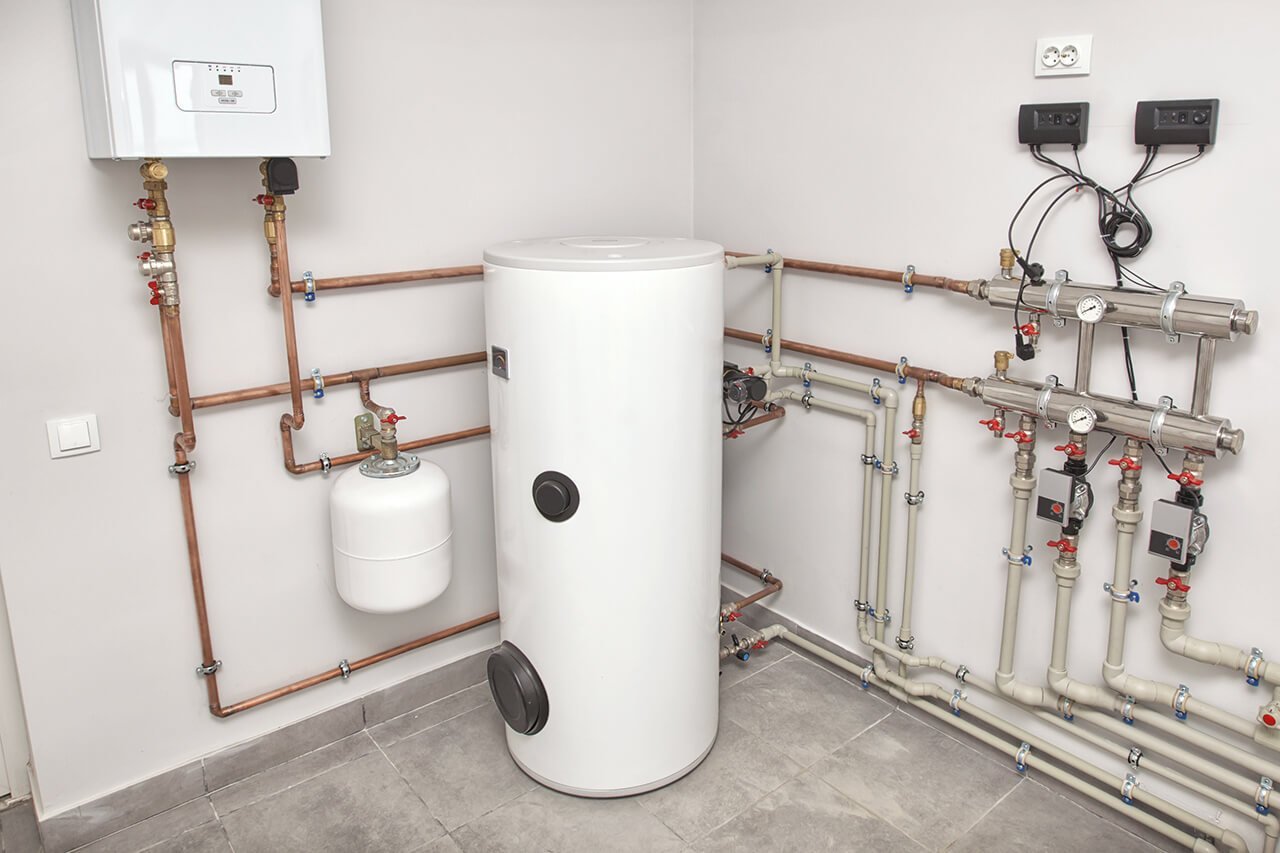
A new boiler is a £2,500–£4,500 decision you’ll live with for 12–15 years, so getting it wrong is expensive in every direction — too small and the showers run cold, too big and you’re burning money. When people ask how do I choose the right boiler for a 4 bedroom house, the answer starts with your hot water habits, not just the bedroom count.
I’ve replaced boilers in two 4-bed houses and learned that installers’ recommendations vary wildly — because the right answer genuinely depends on your bathrooms, your mains pressure and your future plans. Here’s how to work out what you actually need.
How do I choose the right boiler for a 4 bedroom house? Start with type
For most 4-bed houses with one or two bathrooms, a combi boiler is the default choice: it heats water on demand, needs no tanks or cylinders, and frees up the airing cupboard. The catch is flow rate — a combi can only heat so much water at once, so two simultaneous showers can overwhelm smaller models. If your household regularly runs two showers plus the dishwasher, or you have 2+ bathrooms and teenagers, consider a system boiler with an unvented hot water cylinder instead: stored hot water means proper simultaneous showers, at the cost of space and a higher installation price.
Regular (heat-only) boilers with separate tanks are now the niche choice — mainly for houses with very low mains pressure, complex old systems, or solar thermal integration. The decision tree is simple: good mains pressure + 1–2 bathrooms + limited space = combi; high hot-water demand or 2+ bathrooms = system boiler with cylinder; awkward old system = get a heating engineer’s assessment before assuming. Don’t let anyone sell you a like-for-like swap without discussing whether the old type was actually right.
- Combi: best for 1–2 bathrooms, good mains pressure, no space for tanks
- System + unvented cylinder: best for 2+ bathrooms, simultaneous showers
- Regular: niche — low pressure areas, complex old systems
- Check your mains flow rate first (bucket test: aim for 12+ litres/min)
- Heat pumps: worth considering if you’re renovating anyway
Sizing: the kW question
Boiler size is about hot water output for combis, and heating load for system boilers — and oversizing is the classic mistake. For a 4-bed house, a combi in the 30–35kW range suits most households; go bigger (35–40kW) only if you have high simultaneous demand or a very large, draughty property. Bigger is not better: an oversized boiler short-cycles (constantly firing up and shutting down), which wastes fuel, wears components and actually heats less efficiently. Modern boilers modulate down, but only within limits.
The right way to size is a heat-loss calculation for your specific house — any decent installer does this, measuring rooms, windows and insulation levels. If an installer quotes without asking about insulation, window types or hot water habits, get another quote. As a rough sanity check, a reasonably insulated 4-bed detached needs roughly 15–20kW for heating; the combi’s headline kW is mostly about hot water. And check your gas supply pipe: high-output combis sometimes need the gas pipe upgrading from 22mm to 28mm, a cost that should be in the quote, not a surprise on installation day.
Costs, brands and the installation
Budget £2,500–£3,500 for a straightforward combi swap (same location, no pipework changes) from a reputable local Gas Safe installer; system boiler with new unvented cylinder runs £3,500–£4,500. National firms charge 20–40% more for the same boiler — the premium buys you finance options and a big-brand guarantee, not a better installation. Get three quotes from local Gas Safe engineers with recent reviews; the installer’s quality matters more than the badge on the boiler.
On brands, Worcester Bosch, Vaillant and Viessmann dominate reliability surveys, with Ideal and Baxi offering strong value. Warranties now run 7–12 years when installed by accredited installers — register it immediately, and get the system power-flushed (or at least properly cleaned) and a magnetic filter fitted; sludge is the number one killer of new boilers and the number one excuse for voided warranties. Ask every quoter: heat-loss calculation? Power flush included? Filter included? Warranty length and who honours it? The answers tell you everything about who to hire.
Servicing, maintenance and making it last 15 years
An annual service (£80–120) isn’t just a warranty requirement — it’s how boilers reach 15 years instead of 10. The engineer cleans the burner, checks the flue, tests the combustion, and spots the weeping seal or corroding electrode before it becomes a Christmas-Eve breakdown. Between services, your jobs are small but real: keep the pressure at 1–1.5 bar (top up via the filling loop if it drops), bleed radiators annually, check the condensate pipe isn’t frozen in cold snaps (the number one winter callout — insulate the external run or pour warm water over it), and listen for kettling (limescale rumble — a system filter and inhibitor help).
The lifespan levers: a magnetic system filter fitted at installation (captures the sludge that kills heat exchangers), inhibitor chemical in the system water (topped up at each service), and a powerflush or chemical clean when fitting to an old system (fitting a new boiler onto 20 years of sludge voids warranties and kills efficiency). Watch for the end-of-life signs: frequent breakdowns, parts becoming scarce, efficiency noticeably dropping, repairs costing more than 30% of replacement. A 15-year-old boiler owes you nothing — replace on your schedule, not in a January emergency when engineers charge premiums and you’re choosing in a panic.
- Annual service £80–120 — warranty requirement and lifespan extender
- Keep pressure 1–1.5 bar; bleed radiators yearly
- Insulate the external condensate pipe — prevents winter freeze-ups
- Magnetic filter + inhibitor — the sludge defence
- Replace on your schedule at 12–15 years, not in a January emergency
Boiler buying in one paragraph
Combi for most 4-beds with good pressure and 1–2 bathrooms; system boiler with cylinder for high demand; 30–35kW is the sweet spot; get three Gas Safe quotes; prioritise the installer’s quality and a long warranty over the brand badge. Done right, it’s 15 years of quiet, efficient heat.
To cut the bills the new boiler produces, reduce my heating bills this winter is essential, and best energy saving upgrades for an old house ranks wider energy upgrades. For impartial efficiency data, the Energy Saving Trust’s advice is the gold standard, with the UK government’s energy efficiency guidance for official guidance.
The boiler-ownership philosophy: buy right (sized, quality installer, long warranty), maintain lightly but consistently, and replace deliberately. Heating is the background hum of home life — invisible when it works, all-consuming when it doesn’t. Fifteen quiet years is the goal, and it’s entirely achievable.