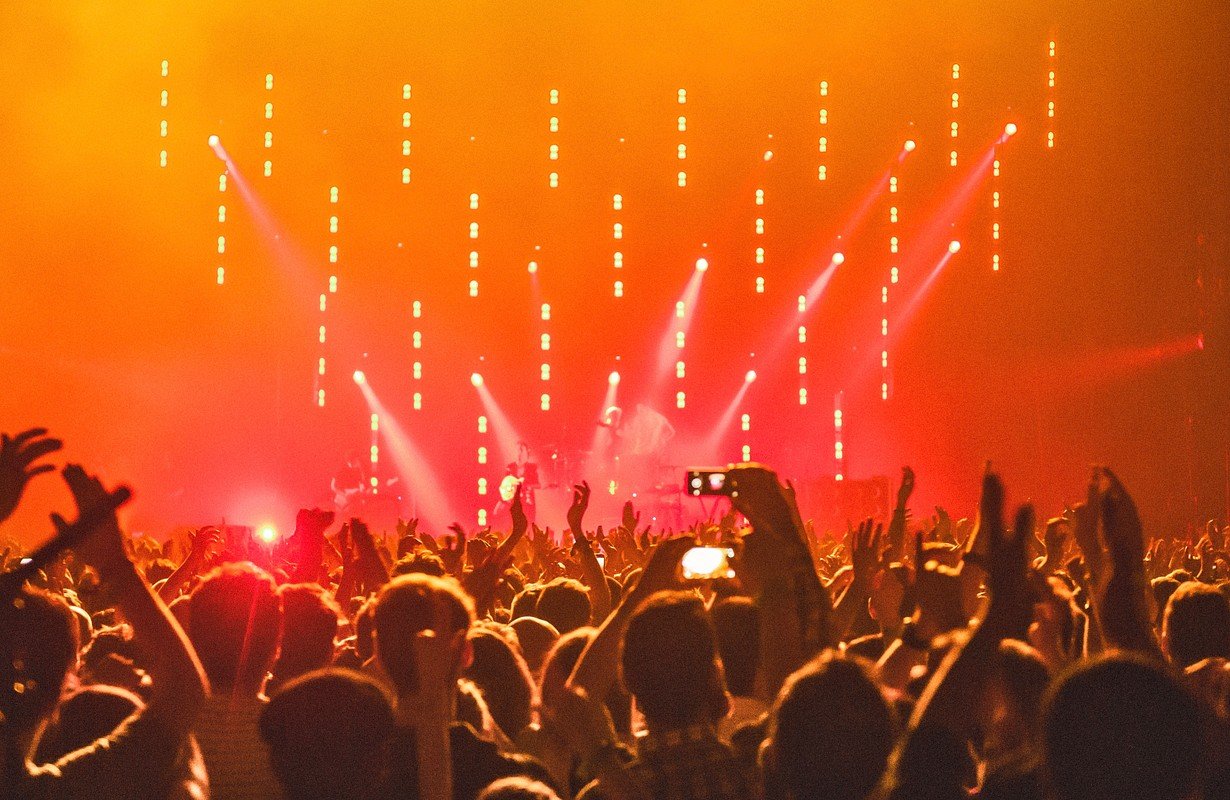
There’s a special kind of ringing in your ears at 1am after a gig — half euphoria, half warning siren. Enjoy it in the moment, but know this: that ringing means your ears just took damage. Learning how to protect your hearing at concerts doesn’t make you boring or old; it makes you someone who’ll still enjoy music properly in twenty years. And with UK gigs, festivals and clubs regularly hitting 100–110 decibels, your ears need the help.
Here’s the scale that matters: normal conversation is about 60dB. A typical rock concert runs 100–110dB. At 100dB, safe exposure is about 15 minutes; at 110dB, under two minutes. A three-hour gig without protection isn’t just loud — it’s a genuine injury risk. Hearing damage from noise is cumulative and, crucially, irreversible. But it’s also almost entirely preventable.
How to protect your hearing at loud concerts: the essentials
1. Wear proper earplugs (not tissue)
This is the big one, and modern earplugs have solved every old objection:
- High-fidelity / musician’s earplugs (£15–£30). Brands like Loop, Eargasm and Alpine reduce volume evenly across frequencies — the music sounds exactly the same, just quieter. No muffling, no missing the vocals. This is what sound engineers and musicians themselves wear.
- Foam earplugs (£5 for a multi-pack). The orange ones from Boots. They muffle more and dull the treble, but they cut 30dB+ and they’re infinitely better than nothing. Keep a pair in every bag and coat pocket.
- Custom-moulded plugs (£100–£150). Made by audiologists to fit your ears exactly, with interchangeable filters. Worth it if you’re a regular gig-goer or work in music.
The old excuses don’t hold: good plugs don’t ruin the sound (cheap ones slightly do, good ones don’t), nobody can see them, and you can still hear your friends — conversation is actually easier with plugs because you’re not shouting over the din.
2. Mind your position
Sound intensity drops fast with distance. Standing right against the speaker stack can mean 115dB+; moving twenty metres back might cut it to 100dB — still loud, but a fraction of the damage. Avoid standing directly in front of PA speakers, and take advantage of quieter zones at festivals to give your ears breaks.
3. Take listening breaks
Your ears recover partially during quiet periods. Step outside or to a chill-out area for 10–15 minutes every hour at festivals. It also helps with the general sensory overload — you’ll enjoy the headliner more after a reset.
4. Limit the afterparty volume too
Clubs after gigs, the car ride home with music cranked, headphones at full volume the next day to “test” your hearing — it all adds to the same cumulative total. Give your ears 24 hours of relative quiet after a loud night.
Know the warning signs of damage
- Tinnitus — ringing, buzzing or hissing that persists beyond the morning after. Occasional post-gig ringing that fades is common; ringing that stays for days needs attention.
- Muffled hearing after the sound should have cleared.
- Difficulty following conversation in noisy rooms — often the first sign of developing loss.
- Hyperacusis — everyday sounds feeling painfully loud.
If any of these persist beyond 24–48 hours, see your GP, who can refer you for a hearing test. The NHS page on hearing loss covers causes and when to seek help, and the charity RNID has excellent practical guidance on protecting your hearing at gigs and festivals.
Festival-specific tips
Multi-day festivals are the highest-risk scenario — cumulative exposure over three days with no recovery. Pack high-fidelity plugs and actually wear them (not in your tent, in your ears), use the quiet campsite areas, stay hydrated and rested (fatigue worsens tinnitus perception), and consider which sets genuinely need front-row intensity versus which you’d enjoy just as much from the hill. If you’re heading to your first big one, our guide to UK music festivals for first-timers covers the practical side.
What about the kids?
Children’s ears are more vulnerable than adults’. Proper child-size ear defenders (£15–£25, from SnugSafe or Alpine) are non-negotiable for under-10s at loud events — and honestly sensible for teens too. If it’s too loud for you, it’s definitely too loud for them.
Concert hearing protection: what’s worth buying
Foam earplugs from the chemist work, but they muffle everything into mud — which is why people don’t wear them. Modern options protect your hearing without ruining the music.
High-fidelity earplugs (£15–£30). Brands like Loop, Eargasm and Alpine use acoustic filters that turn the volume down evenly instead of muffling. Music stays clear, just quieter — typically 16–27dB reduction. Loop Engage and Alpine MusicSafe are the usual recommendations. At £20ish, they’re the best-value hearing protection that exists, and they live on your keychain so you actually have them.
Custom-moulded plugs (£100–£200). Made from impressions of your ears by an audiologist. The gold standard for gig regulars, musicians and crew — comfortable for hours, flattest attenuation, lasts years. Worth it if you go to 20+ loud events a year; overkill for the occasional arena show.
Foam plugs (pennies). Still better than nothing — 30dB+ reduction. Roll them thin, insert deep, hold while they expand. The muffled sound is the trade-off, but for a one-off event they’re infinitely better than bare ears.
Where to stand matters too. Sound pressure drops significantly even a few metres from the speakers. The front-row-centre spot by the PA stack can hit 120dB+; moving back or to the side can cut 10dB — that’s perceived as roughly half as loud. Balconies and raised areas are usually kinder than the floor.
The morning-after test: if your ears are ringing or everything sounds dull the next day, you’ve had a temporary threshold shift — a warning, not a badge of honour. Repeated shifts become permanent. Tinnitus is famously described by musicians as the worst thing about their career; a £20 pair of plugs is cheap insurance against a lifetime of ringing.
Parents: children’s ears are more vulnerable, and kids at concerts or festivals should have proper ear defenders (£15–£25, snug fit). Their lifetime exposure starts now.
Your takeaway: plugs in, worries out
To protect your hearing at concerts, invest £20 in high-fidelity earplugs, keep foam spares everywhere, stand back from the speakers, and take breaks. The music sounds just as good — better, because you’ll still be able to hear it properly in thirty years. Future you, still front-row at 60, says thanks.