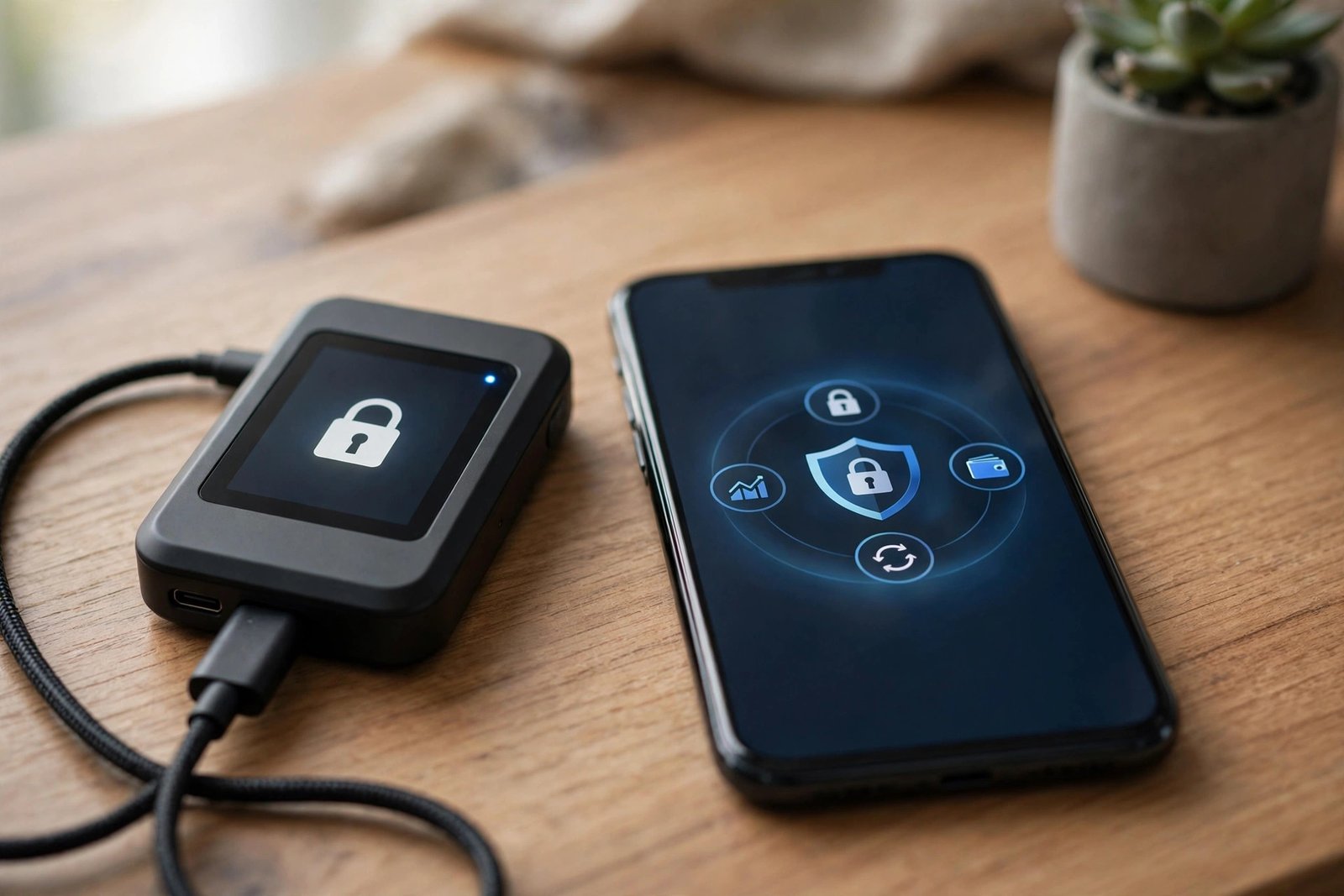
Every crypto beginner eventually faces the wallet question: keep coins in a convenient app on your phone, or lock them away on a physical device that looks like a USB stick? The crypto world calls these hot and cold wallets, and choosing wrongly costs people real money — either through hacks of convenient wallets or through lost fortunes on misplaced hardware. The good news: the right answer is not one or the other. It is both, used for different jobs. Here is how to compare them without wasting money on gear you do not need.
Hot Wallets: Convenience With a Catch
A hot wallet is any crypto wallet connected to the internet: a phone app, a browser extension, or an exchange account. They are free, take minutes to set up, and make sending, swapping and interacting with apps effortless. For a beginner buying their first £50 of Bitcoin, a hot wallet is exactly right — it is the current account of the crypto world.
The catch is the attack surface. Because the private keys (the secret codes that control your coins) live on an internet-connected device, they are exposed to malware, phishing, fake apps and SIM-swap attacks. Billions have been lost from hot wallets over the years, almost always through user-targeted tricks rather than broken cryptography: a fake wallet app, a “support” message asking for a seed phrase, a malicious browser extension. The wallet software is usually fine; the human is the vulnerability. Strengthening your general digital hygiene helps enormously — see how to check if your email has been in a data breach and which password manager is safest for a family to share, since credential reuse is how many wallet compromises begin.
Cold Wallets: Security With Friction
A cold wallet keeps your private keys on a dedicated hardware device that stays offline except during the seconds it signs a transaction. The leading devices cost £50–£150 — a one-time purchase, no subscription. Even if your computer is riddled with malware, the keys never leave the device, and every transaction must be physically confirmed by pressing buttons on it. This defeats remote hacking almost entirely.
The friction is real, though. Every transaction involves connecting the device, entering a PIN and confirming on a tiny screen. It is the savings vault, not the spending wallet — deliberately inconvenient. And the security model shifts the risk from hackers to you: lose the device and its recovery phrase, and the crypto is gone forever. There is no password reset, no customer service, no “forgot my keys” link. The FCA’s cryptoasset guidance stresses this irreversibility point — consumer protections that cover bank accounts simply do not exist here.
The Comparison That Actually Matters
Forget the tribal debates; compare on the dimensions that affect your money:
- Cost: hot wallets are free; cold wallets cost £50–£150 once. If your total crypto is worth less than the device, the maths does not work yet.
- Hacking risk: cold wallets win decisively. Hot wallets are safe only with excellent personal security habits.
- Loss risk: hot wallets win slightly — a reputable exchange or a backed-up app is more forgiving of human error than a lost piece of hardware with a lost recovery phrase.
- Convenience: hot wallets win by miles for daily use, trading and app interaction.
- Recovery: both rely on the seed phrase backup; the difference is that cold-wallet users are forced to take it seriously, while hot-wallet users often skip it.
The Sensible Setup: Use Both
The approach that experienced users converge on is a two-tier system. Keep a hot wallet as your “spending money” — small amounts for learning, experimenting and regular transactions, an amount you could afford to lose without tears. Move everything else to cold storage as your “savings”. A practical rule of thumb: when your holdings exceed what you would comfortably carry in cash, it is time for a hardware wallet.
This split also matches how you actually use crypto. You do not want to plug in a hardware device to claim a £3 reward or test a new app — the friction would stop you learning. And you do not want your life savings sitting in a phone app that could be compromised by one careless tap on a phishing link. Each wallet does the job it is designed for.
Buying a Hardware Wallet Without Getting Scammed
If you decide to buy one, buy it direct from the manufacturer — never second-hand, never from a marketplace seller. A tampered device can steal your crypto the moment you set it up, and this scam specifically targets bargain hunters. When it arrives, check the tamper-evident packaging, and during setup the device must generate a brand-new recovery phrase for you. If a device arrives with a pre-filled phrase card (“here is your recovery phrase”), it is compromised — do not use it.
Choose an established brand with a long track record and open, audited firmware. You do not need the flagship model with the touchscreen; the basic model from a reputable maker secures your coins just as well. Fancy features are conveniences, not security upgrades. Budget £50–£80 for a solid entry-level device rather than £150+ for the premium version.
The Seed Phrase: The Real Security
Here is the secret the marketing glosses over: the hardware device is replaceable; the 12 or 24-word recovery phrase is everything. Anyone with those words controls your crypto from anywhere in the world, forever. Write it on paper (or stamped metal for fire resistance), store copies in two separate secure locations, and never photograph it, type it into a website, or tell it to anyone — including anyone claiming to be “support”. No legitimate company will ever ask for it. For the official UK consumer warnings on exactly these scams, the FCA consumer pages are worth reading before you hold any meaningful amount.
Conclusion
Hot wallets versus cold wallets is not a contest — it is a division of labour. Start free with a hot wallet while your holdings are small and you are learning. Buy a hardware wallet direct from the manufacturer when your crypto becomes worth protecting, keep spending money hot and savings cold, and guard your recovery phrase like the master key it is. That setup costs under £100 total, defeats the two biggest loss scenarios (remote hacking and your own mistakes), and scales with you from your first £50 to a serious portfolio.
Frequently Asked Questions
Do I need a hardware wallet as a complete beginner?
No. If you hold a small amount for learning, a reputable hot wallet with good security habits is fine. Consider hardware when your holdings exceed what you would comfortably carry as cash.
Can a hardware wallet be hacked?
Remote hacking is effectively defeated because keys never leave the device. The realistic threats are physical theft (mitigated by the PIN), supply-chain tampering (mitigated by buying direct), and seed-phrase theft (mitigated by secure offline storage).
What happens if I lose my hardware wallet?
Nothing, provided you kept your recovery phrase. Buy a new device from the manufacturer, enter the phrase, and your crypto is restored. Lose both the device and the phrase, and the funds are unrecoverable.
Are exchange accounts hot wallets?
Functionally yes — and with an extra risk: you do not control the keys at all. Exchanges are convenient for buying and trading, but history is full of exchange failures. Move significant holdings to a wallet you control.
Should I ever buy a used hardware wallet to save money?
Never. Tampered devices are a known scam vector. The £30–£50 saving is not worth the risk of total loss. Buy new, direct from the manufacturer.