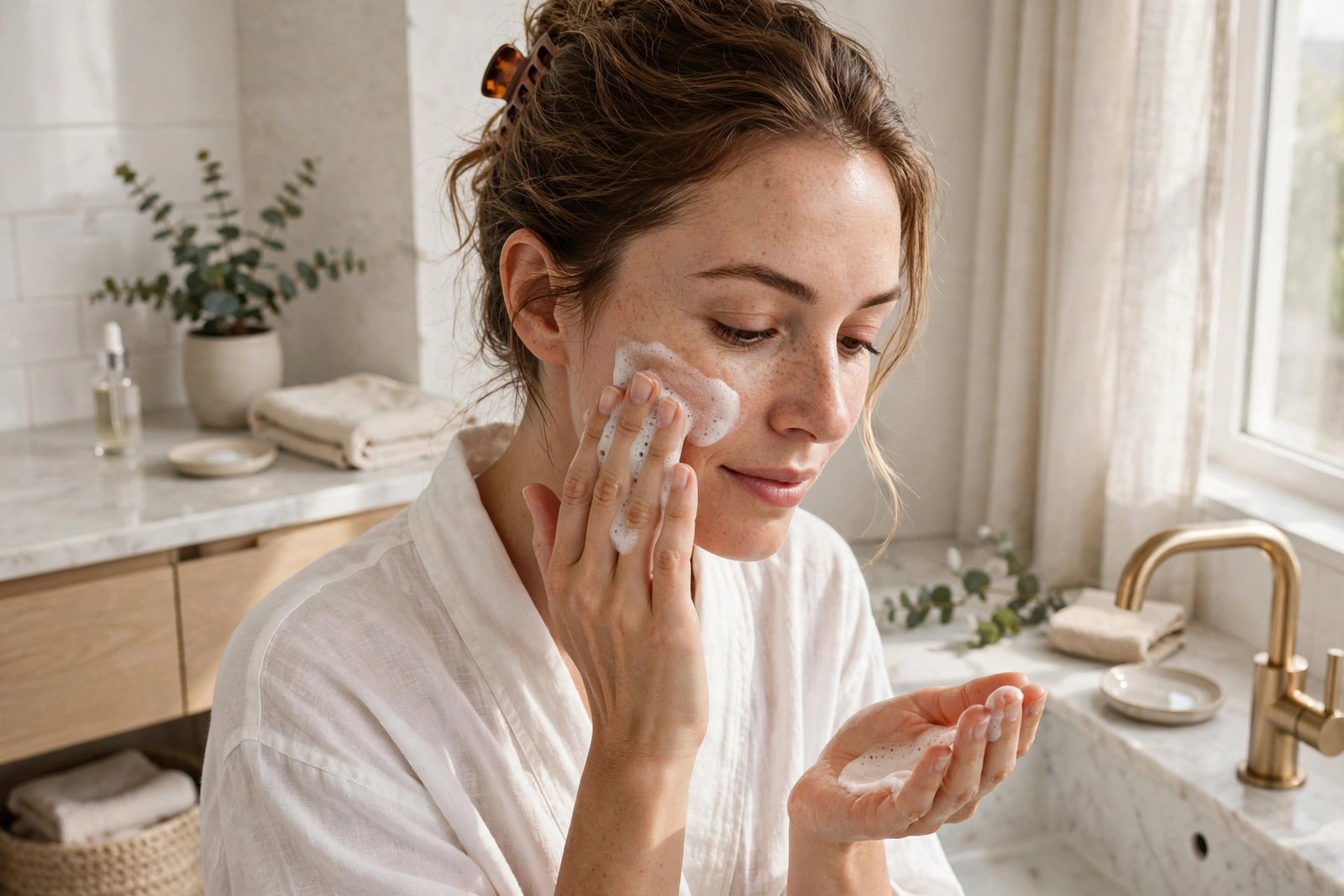
Acne was supposed to end with adolescence. For millions of UK adults — particularly women in their 20s, 30s and 40s — it never got the memo. Adult acne is common, persistent and psychologically brutal in a way teenage spots never were, because you expected to be past this. The causes differ from teenage acne, the treatments that work differ too, and much of the internet’s advice is recycled teen guidance that fails adults. Here is what actually works.
Why Adults Get Acne: It Is Not Your Fault
Adult acne has distinct drivers. Hormonal fluctuations top the list — menstrual cycles, pregnancy, post-pregnancy shifts, perimenopause and conditions like PCOS all move the androgen dial that drives oil production. Stress is a genuine physiological trigger: cortisol increases sebum production, which is why breakouts cluster around deadlines and life crises. Then there are the adult-specific culprits: comedogenic skincare and hair products (pomade acne along the hairline is classic), masks and phone screens (friction + occlusion), and medications including some contraceptives, steroids and lithium.
What adult acne usually is not: poor hygiene or bad diet in any simple sense. Washing harder damages the barrier and worsens inflammation; the chocolate-and-greasy-food myths were debunked decades ago (though high-glycaemic diets show modest associations in some studies). Understanding the real causes matters because it directs you to real solutions — and away from the punishing scrub-everything approach that fails. Diet does support skin overall, and eating healthily on a budget helps the general picture, but no diet cures hormonal acne alone.
The Evidence-Based Treatment Ladder
Step 1: The basics (weeks 1–4)
Gentle non-foaming cleanser twice daily, a lightweight non-comedogenic moisturiser (skipping moisturiser is a classic adult error — dehydrated skin overproduces oil), and daily sunscreen. Introduce one active at a time. This foundation alone calms mild cases and prepares skin for treatments.
Step 2: Over-the-counter actives (weeks 4–12)
Benzoyl peroxide (2.5–5%) kills acne bacteria — start with short-contact therapy (apply, leave ten minutes, rinse) to limit irritation. Azelaic acid (10–20%) is the unsung hero for adult acne: antibacterial, anti-inflammatory, fades post-acne marks, and safe in pregnancy. Niacinamide regulates oil and calms redness. Retinoids (adapalene 0.1% is available OTC in some markets; otherwise retinol) normalise cell turnover — the long-game ingredient. Pick one, use consistently for 8–12 weeks, then assess. Rotating five actives simultaneously is how adults destroy their barriers.
Step 3: Prescription options (when OTC is not enough)
See your GP or a pharmacist — in the UK, effective prescription treatments are accessible and cheap. Topical retinoids (tretinoin, adapalene combinations), antibiotic combinations, and for women, hormonal options including co-cyprindiol or spironolactone (off-label but widely used). Isotretinoin (Roaccutane) remains the most effective treatment for severe, scarring or treatment-resistant acne, prescribed through dermatology with proper monitoring. The NHS acne treatment guide sets out the full pathway — and “just live with it” is not on it. Adults often suffer years longer than necessary from reluctance to seek prescription help; the GP appointment is the highest-ROI step in this entire guide.
What to Stop Doing Immediately
- Picking and squeezing: the single behaviour that turns a week-long spot into a month-long scar. Hydrocolloid patches (£5–£8) satisfy the urge productively — they protect, absorb and prevent touching.
- Over-exfoliating: daily acids plus scrubs plus retinoids is barrier destruction, not treatment. If your skin stings at everything, you have overdone it — strip back to cleanser and moisturiser for two weeks.
- Chasing “natural” cures: lemon juice, baking soda and undiluted essential oils damage skin. “Chemical-free” is marketing; everything is chemicals, including water.
- Changing products weekly: every treatment needs 8–12 weeks. Product-hopping guarantees nothing ever works and everything irritates.
- Skipping sunscreen: UV darkens post-acne marks and several acne treatments increase sun sensitivity. Non-negotiable.
The Mindset Part Nobody Talks About
Adult acne carries a specific psychological weight: the sense of a problem you should have outgrown, visible in professional settings where teenage skin never had to perform. Studies link adult acne to measurable impacts on self-esteem, social confidence and even career behaviour. Name it plainly: this is a medical condition, not a personal failing, and treating it as such — with the same matter-of-factness as any health issue — is itself therapeutic.
Practical coping while treatment works: non-comedogenic makeup is fine (mineral formulas are least problematic); “skin positivity” content helps some and harms others — curate your feed ruthlessly; and consider that stress management is acne management, since cortisol is a genuine driver. Sleep, in particular, shows up repeatedly in skin research — and vitamin D status is worth checking in the UK, where deficiency is widespread and linked to inflammatory skin complaints. For the days you need to look polished regardless, looking polished on video calls covers the presentation side.
Scarring: Prevention and Treatment
The aspect of acne adults regret most is not the spots but the scars — and most scarring is preventable. Do not pick (the mantra bears repeating: every picked spot risks a permanent mark), treat inflammation early rather than waiting it out, and use sunscreen religiously since UV darkens post-inflammatory marks and makes them linger for months instead of weeks. For existing scarring, options exist on a ladder: fading ingredients (azelaic acid, vitamin C, retinoids) for discolouration; silicone gels and microneedling for texture; and dermatologist procedures (subcision, lasers, peels) for deeper atrophic scars.
Set expectations honestly: discolouration fades over months with consistent treatment; textural scarring improves but rarely vanishes completely. The British Association of Dermatologists’ patient information details which scar types respond to which treatments. The best scar treatment, though, remains prevention — which is another argument for seeking prescription help early rather than enduring years of inflammation that etches itself permanently. Future-you will thank present-you for the GP appointment.
Conclusion
Adult acne is a treatable medical condition with a clear ladder: gentle basics, one proven OTC active at a time, then prescription help without delay or shame when needed — while stopping the picking, over-exfoliating and product-hopping that sabotage progress. Most adults see major improvement within three months of the right regimen. You were never supposed to just live with it; the treatments exist, the GP will prescribe them, and clear skin at 35 is as achievable as it was at 15.
Frequently Asked Questions
Why am I getting acne in my 30s?
Hormonal fluctuations are the most common cause — menstrual cycles, perimenopause, stress-related cortisol and conditions like PCOS. Adult acne is extremely common and not caused by poor hygiene.
What is the best over-the-counter treatment for adult acne?
Azelaic acid and benzoyl peroxide have the strongest evidence for adults. Use one consistently for 8–12 weeks before judging. Adapalene or retinol addresses the cell-turnover side for longer-term control.
Should I see a GP about adult acne?
Yes, if OTC treatments have not worked after 8–12 weeks, if acne is severe or scarring, or if it significantly affects your wellbeing. Prescription options in the UK are effective and inexpensive.
Does diet affect adult acne?
High-glycaemic diets and possibly dairy show modest associations in some studies, but diet is a minor factor compared to hormones and genetics. No diet cures acne alone; focus on proven treatments first.
Can I wear makeup with acne?
Yes — choose non-comedogenic, preferably mineral formulas, remove thoroughly but gently each evening, and clean brushes regularly. Makeup does not cause acne; comedogenic ingredients and poor removal can worsen it.