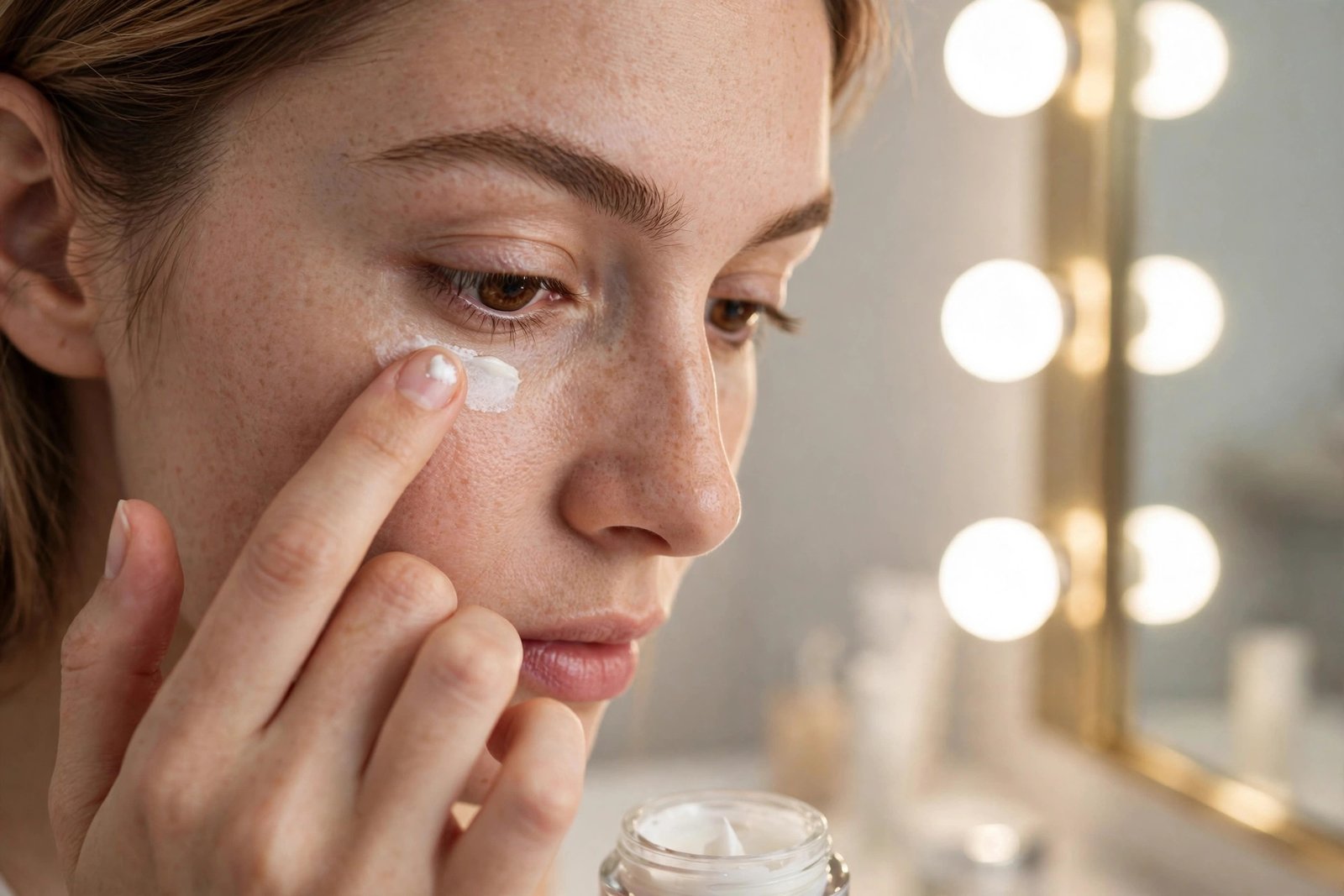
Dark circles are the great leveller — they afflict the well-rested and the exhausted alike, and concealer only goes so far. The £5 billion eye-cream industry thrives on a simple confusion: dark circles have several completely different causes, and a cream that helps one type does nothing for another. Understanding which type you have is the entire battle. Here is how to diagnose your dark circles and fix them with what actually works.
The Four Types (Identify Yours First)
1. Pigmentation (brown circles): excess melanin in the under-eye skin, common in deeper skin tones and worsened by sun exposure and eye-rubbing (allergies, eczema). The skin itself is darker. Test: stretch the skin gently — if the darkness stays put, it is pigmentation.
2. Vascular (blue/purple circles): thin under-eye skin revealing the blood vessels beneath. Worse with fatigue, dehydration, illness and pale skin. Test: the colour has a bluish-purple cast and fluctuates with sleep and health.
3. Structural (shadows): not discolouration at all, but shadow cast by tear-trough hollows, puffiness above, or age-related volume loss. Test: look in a mirror with overhead light versus light from the front — if the darkness dramatically changes with lighting angle, it is structural shadowing.
4. Mixed: the most common reality — a bit of each, which is why single-ingredient creams disappoint.
This diagnosis dictates everything. Pigmentation responds to brightening ingredients and sun protection; vascular responds to sleep, hydration and circulation; structural responds to nothing topical — only fillers, fat repositioning or acceptance. Buying a random “dark circle cream” without this diagnosis is why most people conclude eye creams do nothing.
What Actually Works (By Type)
For pigmentation
Daily sunscreen around the eyes (mineral formulas sting less) prevents worsening — UV is the primary driver. Vitamin C serums (10–20% L-ascorbic acid or gentler derivatives) inhibit melanin production with consistent use over 8–12 weeks. Niacinamide and azelaic acid help more gently. Treat allergies and stop eye-rubbing — the friction itself deposits pigment over years (a process called post-inflammatory hyperpigmentation). For stubborn cases, dermatologists offer prescription hydroquinone or laser — effective, but specialist territory.
For vascular circles
Sleep is the headline intervention, and not just duration — consistent timing matters. How much sleep adults really need and falling asleep faster without pills cover the foundations. Hydration, limiting alcohol (which dilates vessels and disrupts sleep), and cold compresses (which constrict vessels temporarily — the teaspoon-in-the-fridge trick has genuine physiology behind it) all help. Caffeine-containing eye products constrict vessels mildly — a real but temporary effect, useful before events.
For structural shadows
Honesty first: no cream fills a hollow. Options are dermal fillers (tear-trough filler, £300–£600, lasts 9–18 months, must be done by an experienced medical practitioner — this is a high-risk area anatomically), accepting it, or optical tricks: a peach-toned corrector neutralises blue/purple before concealer, and keeping the under-eye hydrated prevents crepey texture that deepens shadows. Good lighting — the reason video-call veterans look rested — matters more than any product; see looking polished on video calls for the setup.
The Lifestyle Foundations
Whatever your type, four fundamentals move the needle: consistent sleep (the single biggest lever for vascular circles), sun protection (the single biggest lever for pigmentation), allergy management (antihistamines or nasal sprays if you rub your eyes — see your GP or pharmacist), and not smoking (which degrades collagen, thinning the skin further). Hydration helps modestly; dramatic water-loading does not erase circles, whatever wellness influencers claim.
Diet’s role is supportive, not transformative: iron-deficiency anaemia can worsen pallor-related circles, so persistent dark circles with fatigue warrant a blood test — anaemia is common and fixable. The NHS guidance on iron deficiency lists the symptoms to watch for. Beyond that, no superfood targets under-eyes specifically.
What to Stop Buying
The eye-cream market is mostly moisturiser in a smaller, pricier tube. A £40 eye cream and a £8 fragrance-free moisturiser perform near-identically for hydration — and hydration is most of what topical products can do. The ingredients with actual evidence (vitamin C, niacinamide, retinoids, caffeine) work in regular serums too; there is nothing magical about the “eye” label except the price. If you buy one eye-specific product, make it a sunscreen you will actually use daily around the eyes — everything else is optional.
Also skip: jade rollers and gua sha for permanent change (temporary de-puffing at best — pleasant, not transformative), haemorrhoid cream (a persistent internet myth; the vasoconstrictors irritate delicate eye skin), and any product promising to “erase” dark circles in days. Structural and genetic circles are features, not failures — the goal is improvement, not erasure.
When to See a Professional
Most dark circles are cosmetic, but some warrant medical attention. See your GP if circles appear suddenly with other symptoms (fatigue, paleness, breathlessness — possible anaemia), if under-eye skin shows persistent eczema or dermatitis (treatable conditions that worsen pigmentation through rubbing), or if puffiness is severe, one-sided or accompanied by vision changes. A dermatologist can distinguish the types definitively and advise on prescription options for stubborn pigmentation — the British Association of Dermatologists’ patient leaflets explain what specialist treatments involve and what results to realistically expect.
For the aesthetic route, manage expectations ruthlessly: reputable practitioners will tell you what fillers can and cannot do, show you their complication rates, and decline unsuitable candidates. Anyone promising “erasure” or offering suspiciously cheap treatment is a red flag — the under-eye area’s vascular anatomy makes it one of the highest-risk zones for injectables, and bargain hunting here is genuinely dangerous. The best cosmetic outcome is often the conservative one: modest improvement, natural result, honest practitioner.
Conclusion
Dark circles yield to diagnosis, not to shopping: identify whether yours are pigmentation, vascular, structural or mixed; treat pigmentation with sunscreen and vitamin C, vascular with sleep and circulation, structural with honest expectations and optical tricks; and stop paying the eye-cream tax on repackaged moisturiser. Most people see real improvement within two to three months of the right targeted approach — and the rest learn that good lighting and eight hours beat any tube.
Frequently Asked Questions
Why do I have dark circles even when I sleep well?
Because sleep only addresses the vascular component. Pigmentation (genetics, sun, eye-rubbing) and structural shadowing (tear-trough hollows) persist regardless of rest — identify your type to treat the right cause.
Do eye creams actually work?
Mostly as moisturisers — which helps texture but not colour or hollows. Products with vitamin C, niacinamide or caffeine have modest evidence for specific types; nothing topical fixes structural shadowing.
What is the fastest way to reduce dark circles before an event?
Cold compresses (constricts vessels), a caffeine eye product, peach-toned colour corrector under concealer, and good front lighting. These are temporary but genuinely effective for the day.
Can lack of iron cause dark circles?
Iron-deficiency anaemia can worsen the pale, vascular appearance. If dark circles come with fatigue, get a blood test — it is common, especially in women, and easily treated.
Is tear-trough filler safe?
It is effective but anatomically high-risk — the under-eye area has critical blood vessels. Only consider it with an experienced medical practitioner (doctor, dentist or nurse prescriber), never a beautician, and research complications beforehand.