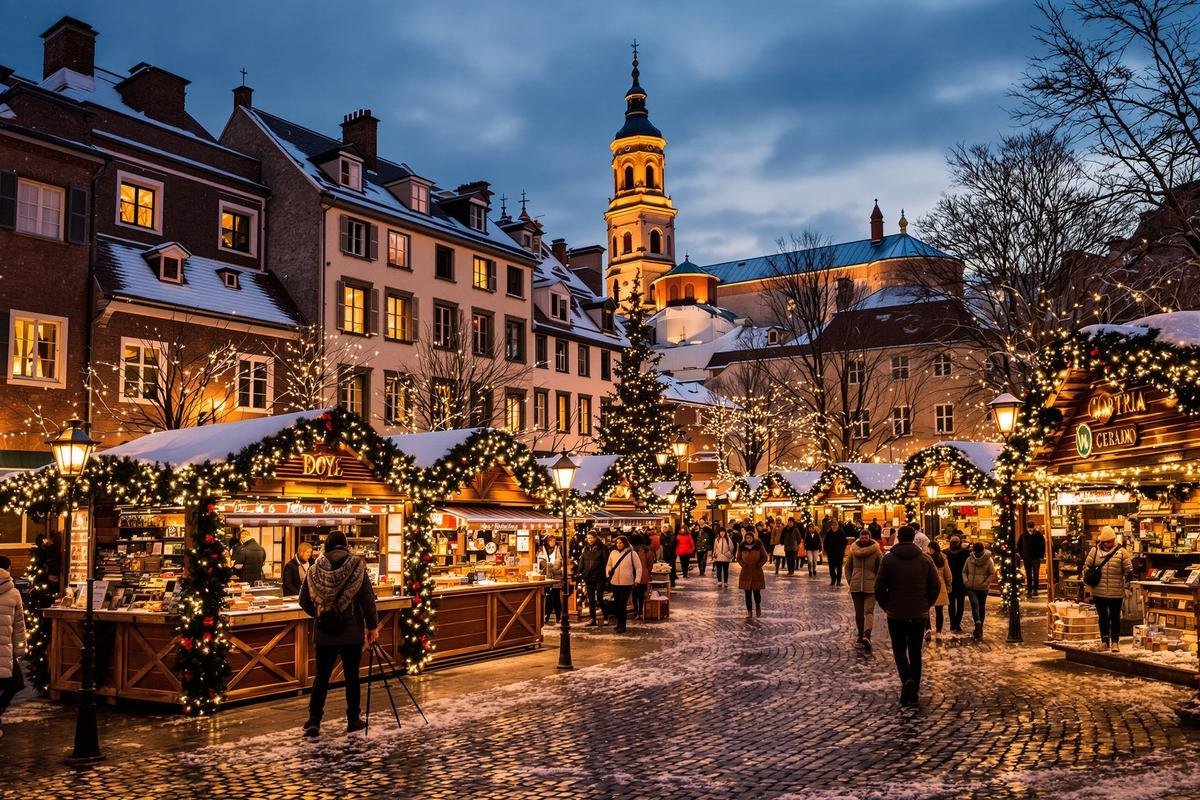
I’ll be honest: I used to think Christmas markets were all the same — identical wooden huts, overpriced mulled wine, the same tinny carols. Then a friend dragged me to Vienna in early December and I realised how wrong I was. If you’re wondering what are the best christmas markets to visit in europe, the answer depends on what you want: old-town romance, serious shopping, or just the biggest mug of glühwein you can carry.
After five Decembers of market-hopping across the continent, I’ve got firm opinions. Some famous markets are overhyped tourist traps, while a few lesser-known ones are pure magic. Here’s my honest ranking of the eight I’d actually spend my own money to revisit, plus the practical stuff — when to go, where to stay, and how not to blow your entire gift budget on roasted almonds.
What are the best christmas markets to visit in Europe? My top picks
Vienna is the one I recommend to first-timers without hesitation. The Rathausplatz market in front of the city hall is enormous, beautifully lit, and the Austrians take the food seriously — we’re talking proper käsekrainer sausages, not sad hot dogs. The whole city leans into it, with smaller markets in Spittelberg and at Schönbrunn Palace that feel like different worlds. Fly into Vienna in the first two weeks of December for the best balance of atmosphere and bearable crowds.
Strasbourg calls itself the Capital of Christmas and, for once, the marketing isn’t lying. The entire old town becomes one sprawling market, with the half-timbered streets around the cathedral strung with lights and over 300 stalls. It’s busier than Vienna and the accommodation books up fast, but there’s nothing else quite like it. Go midweek if you can — weekends in December are genuinely shoulder-to-shoulder.
- Vienna, Austria — best all-rounder, superb food, multiple markets across the city
- Strasbourg, France — the most atmospheric old town, book accommodation early
- Tallinn, Estonia — fairy-tale medieval square, excellent value, cheap flights from the UK
- Nuremberg, Germany — the classic Christkindlesmarkt, famous lebkuchen gingerbread
- Cologne, Germany — seven markets including a lovely one by the cathedral
- Budapest, Hungary — great prices, thermal baths as a bonus, Vörösmarty Square market
- Prague, Czechia — stunning backdrop, but stick to daytime to dodge the stag parties
- Copenhagen, Denmark — Tivoli Gardens at Christmas is worth the trip alone
When to go for the best experience
Timing matters more than destination. Most major markets open in the last week of November and run until the 23rd or 24th of December, with a few — Vienna, Budapest — stretching into the new year. The sweet spot is the first fortnight of December: everything’s open, the lights are up, and you can still move through the stalls without elbowing anyone. The final weekend before Christmas is the busiest everywhere and hotel prices spike accordingly.
I always aim for a Sunday-to-Wednesday trip. Flights from the UK are cheapest midweek, markets are calmer, and you’ll actually get served at the glühwein stands without a ten-minute queue. Evenings are when the markets look their best, so plan a slow afternoon — a museum, a long lunch — and head out as the light fades around 4pm.
One more timing trick: midweek evenings are when locals go. Strasbourg’s market is dramatically calmer on a Tuesday evening than a Saturday afternoon, and stallholders actually have time to chat. Arriving Sunday and leaving Wednesday dodges both the weekend crowds and the weekend hotel premiums, which can easily save £100 on a three-night stay.
Keeping the costs under control
Christmas market trips can quietly become expensive, mostly through accommodation and on-site spending rather than flights. Budget airlines fly to Vienna, Budapest, Tallinn and Cologne for surprisingly little in early December if you book six to eight weeks out — I’ve paid under £60 return to Budapest. The killer is hotels: December rates in Strasbourg and Vienna can double, so book as early as you dare and consider staying one metro stop out of the centre.
At the markets themselves, set a daily spending limit before you go. The mugs are collectable (most stalls charge a small deposit you get back if you return the mug — or keep it as a souvenir), the food adds up fast at €5–€8 a go, and the craft stalls are dangerously tempting. I give myself €40 a day for food and drink at the markets and eat one proper sit-down meal elsewhere, which keeps the whole trip sane.
What to buy (and what to skip)
The best souvenirs are the edible ones: stollen from Dresden or Nuremberg, lebkuchen hearts, proper mustard, local honey, and small-batch spirits. Handmade wooden decorations from the Erzgebirge region in Germany are genuinely beautiful and pack flat. What I’d skip: anything with the city’s name printed on it in bulk, mass-produced ‘traditional’ hats, and phone-case stalls that have nothing to do with Christmas.
One practical tip: bring a tote bag or small backpack. You’ll accumulate mugs, food, and gifts faster than you expect, and market carrier bags are flimsy. And if you’re flying with a budget airline, remember the liquids rule for anything edible in jars — mustard and honey go in hold luggage or get confiscated at security, a lesson I learned the expensive way in Nuremberg.
Planning your market trip
My honest advice: pick Vienna or Tallinn for your first Christmas market trip. Vienna for the full classic experience, Tallinn if you want the same magic at half the price. Go in early December, stay midweek, and book flights before the end of October. The markets will still be there in the busy week before Christmas, but you’ll enjoy them far less and pay far more.
If you’re building a winter city break around it, cheapest european city breaks from london covers the cheapest ways to get there from London, and plan a weekend in edinburgh on a budget is a brilliant UK-based alternative if you’d rather stay closer to home. Before you travel, skim official UK government foreign travel advice for any entry or documentation changes.