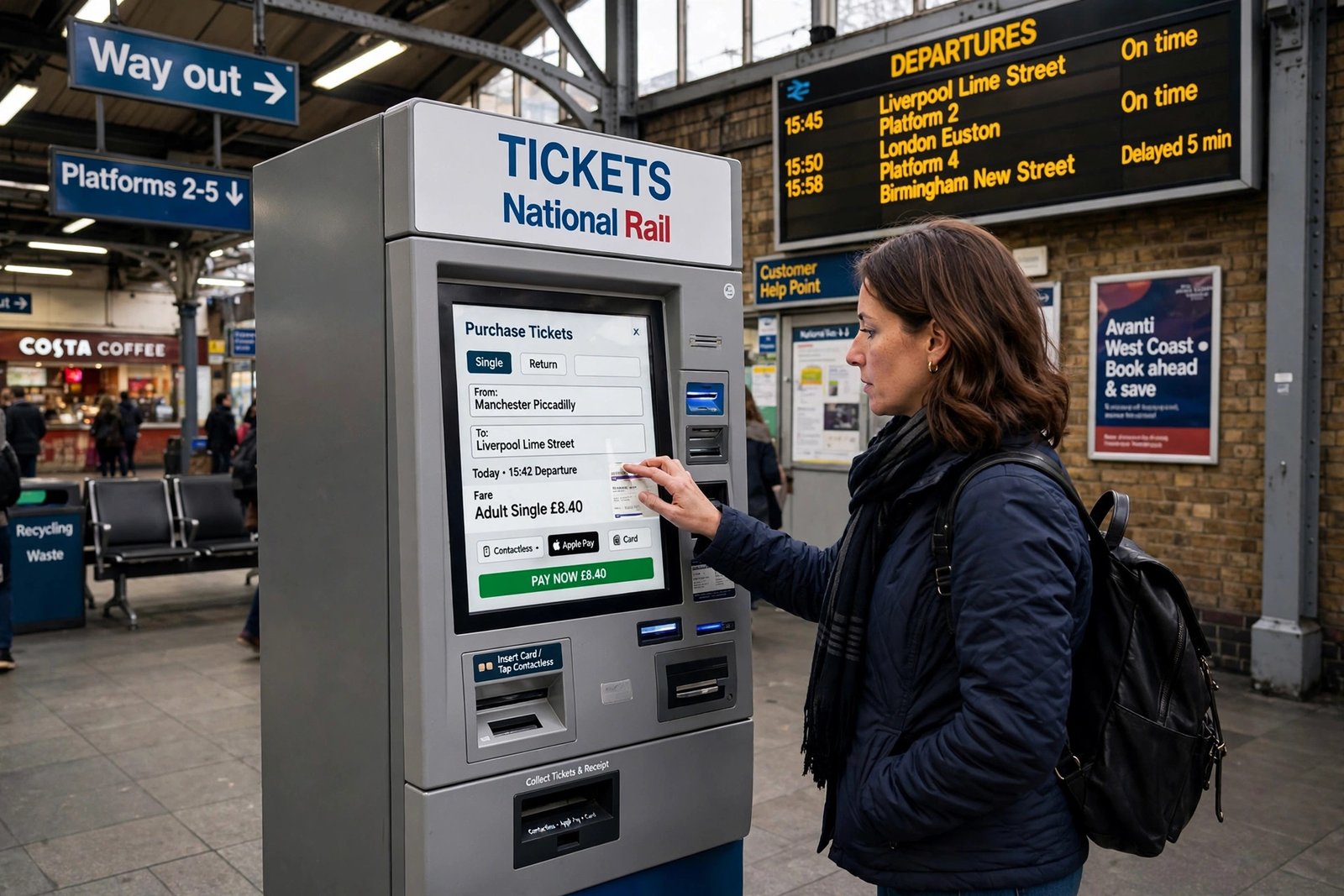
Train travel across Britain feels far more inviting when the fare no longer makes you wince. A small plastic card or phone app, matched to the journeys you already take, can quietly transform what regular trips cost over a year.
How to get cheaper rail tickets with a railcard anywhere in the UK comes down to a sequence of sensible steps, done in the right order. First you match a card to your circumstances, then you buy it through the proper channel, time your travel around its restrictions, and stack its saving on top of advance fares and split tickets. Each step is simple on its own. Together they compound, so a regular journey that once felt like a treat becomes ordinary, affordable travel. The wider habits behind travelling Britain by train affordably sit naturally alongside the card itself, because the card rewards exactly the planning that careful travellers already do.
Matching Card Types to Your Circumstances
Step one is choosing the right card, and that begins with an honest look at how you actually travel. The Rail Delivery Group, which administers railcards on behalf of train companies, oversees a family of cards that typically reduce eligible fares by a third for groups such as younger travellers, couples and families. You can compare the full range through railcards available in Britain before deciding, but the principle is simple. A card only saves you anything if its group fits your life and its routes fit your journeys.
- List the journeys you make most often, including rough times of day and who travels with you.
- Match that pattern against the card groups, such as younger travellers, couples travelling together, families and regular companions.
- Check whether your most common routes and times fall inside each card’s rules before you commit.
The young person’s railcard scheme covers travellers in their late teens and twenties, along with mature students studying full time, which makes it the natural starting point for students and younger commuters who travel off peak. Couples who almost always travel together gain more from a joint card than from two separate ones they rarely use side by side. Families benefit most on longer leisure trips, where a third off a handful of fares quickly outweighs the cost of the card itself. If you travel alone, at peak times, on short hops, the sums are tighter, so count your likely journeys across a full year rather than judging by one expensive trip.
Buying Safely From the Official Seller
Step two is buying through the official railcard channels, either online or at a staffed station, and nowhere else. Unofficial sellers appear in search results with convincing names, extra booking fees and cards that may not arrive or may not be valid when an inspector asks to see them. The official route asks for proof of eligibility, such as age or student status where the card requires it, and issues a physical card by post or a digital card held in the official app.
- Apply through the official railcard website or app, or at a staffed station ticket office.
- Provide the eligibility proof requested, and keep a copy until the card arrives.
- Choose digital if you always carry your phone, or physical if you prefer a card in your wallet.
- Note the expiry date in your diary the moment the card is issued.
Digital cards arrive quickly and suit most travellers, but they live on your phone, which creates the one weakness covered later in these steps. Physical cards take longer to arrive, so apply well before a big journey rather than the night before. Whichever format you choose, the name on the card must match the traveller, and for joint cards both named travellers must be present for the discount to apply on each journey. Buying for someone else as a gift works well, provided their details, not yours, go on the application.
Timing Weekday Journeys Around Morning Restrictions
Step three is learning the time rules, because most disappointment with railcards comes from one misunderstanding. Many cards restrict discounted travel during the weekday morning peak, when trains into major cities are at their busiest. A minimum fare may apply before a set morning hour, which means the headline saving shrinks or vanishes on an early commute, even though the same card gives a full third off later in the day and throughout the weekend.
- Check the morning rules for your specific card, not railcards in general.
- Shift flexible appointments to after the restricted window whenever you can.
- Compare the discounted later train against the full fare earlier one before deciding.
- Remember that weekends and bank holidays usually carry no morning restriction.
This is where leisure travellers gain most. A day trip planned for a mid morning departure, a visit to friends that starts after the rush, or a holiday connection timed for late morning all qualify comfortably. Regular commuters need to do the arithmetic honestly. If every journey falls inside the restricted window, a season ticket or a different card may serve you better, and forcing a railcard into a pattern it was not designed for only breeds frustration. Travelling a little later, where your work allows it, often saves more across a month than any other single change.
Combining Discounts With Advance Fares
Step four is where the real savings begin, because a railcard discount is added on top of advance fares rather than instead of them. Advance tickets are cheaper single fares released ahead of travel for specific trains, and they reward booking early and committing to a set departure. National Rail describes the network of franchised and open-access operators on which discounted tickets are generally valid across Britain, and you can use the National Rail network overview to understand how those operators fit together. On most advance fares, you select your train, apply your railcard during booking, and watch a fare that was already reduced fall by a further third.
- Book as early as your plans allow, when the cheapest advance fares are still available.
- Enter your railcard type during booking, every time, rather than assuming it is stored.
- Travel on the exact train booked, because advance fares are not flexible.
- Keep the booking confirmation with the card itself for inspection.
The discipline here is commitment. An advance fare ties you to one train, so leave sensible margins around appointments, flights and connections you cannot move. For flexible days, a discounted off peak return may beat a cheap advance single paired with a full fare return. Compare the whole round trip, not just the eye catching outward price. Travellers who book early, travel off peak and apply a card at every stage routinely pay a fraction of the walk up fare for the same seat on the same train.
Splitting Long Journeys Into Cheaper Legs
Step five is split ticketing, a legitimate method where a long journey is bought as two or more tickets covering sections of the same route. Fares are priced by demand on each section, so a through ticket sometimes costs more than the sum of its parts, especially where one section is popular and the rest is quiet. Your railcard discount can apply to each leg, deepening the saving further, provided every leg complies with its own time rules.
- Check both the through fare and the split fares for the same train before booking.
- Make sure the train actually stops at the station where your tickets split.
- Carry every ticket for the journey, and show the right one when asked.
- Apply your railcard to each leg during booking, and check morning rules per leg.
Splitting needs care rather than cleverness. The train must call at the split station, even if you stay in your seat, and if you change trains as part of the split, leave enough time for the connection. Keep all confirmations together on your phone or in one envelope, because showing only the second leg to an inspector on the first section causes needless trouble. Used calmly on longer routes, splitting plus a railcard plus advance booking is the strongest combination available to an ordinary traveller.
Carrying Proof and Keeping Phones Charged
Step six protects every saving you have made, because a discounted ticket without the card that supports it is not valid. Inspectors can ask to see the card at any point, and if you cannot show it, you may have to buy a full fare ticket for that journey and lose the benefit of the original one. For digital cards, that means your phone becomes part of your ticket, with all the risk that carries on a long day.
- Charge your phone before departure and carry a small power bank on long trips.
- Open the digital card before you board, while you still have signal, and keep it accessible.
- Carry photo identification where your card type links the card to you personally.
- Store a screenshot only as a backup, and rely on the live card in the official app as proof.
Physical card holders should keep the card in the same wallet as their payment cards, checked as part of leaving the house, rather than in a coat they may not wear. If a card is lost or a phone fails, speak to staff before travelling rather than boarding and hoping. Stations can often help, and honesty at the ticket office is far cheaper than an argument on the train. Treat the card like cash, because for fare purposes that is exactly what it is.
Reviewing Renewals Before Cards Expire
Step seven keeps the habit alive across years. Cards expire, circumstances change, and the card that suited a student may be the wrong one for a graduate, a partner or a parent. Set a reminder a few weeks before expiry, review how much you actually saved, and renew or switch while the old card still covers your travel. Letting a card lapse and then taking a big trip at full fare is the most avoidable waste in the whole system.
Renewal is also the moment to reassess your pattern. Count the journeys you made, note how often morning restrictions caught you, and check whether a different card in the family now fits better. Multi year options, where offered, suit travellers whose circumstances are stable and who dislike annual admin. Keep the new expiry in the same diary note as the old one, and update any stored railcard details with the retailers you book through, so the discount applies automatically at checkout.
Work through these steps once, carefully, and they become routine. Match the card, buy it properly, respect the mornings, book ahead, split where it helps, carry your proof and renew on time. None of it requires insider knowledge or luck. It simply asks you to treat fares as something you can shape, rather than something that happens to you at the ticket machine.