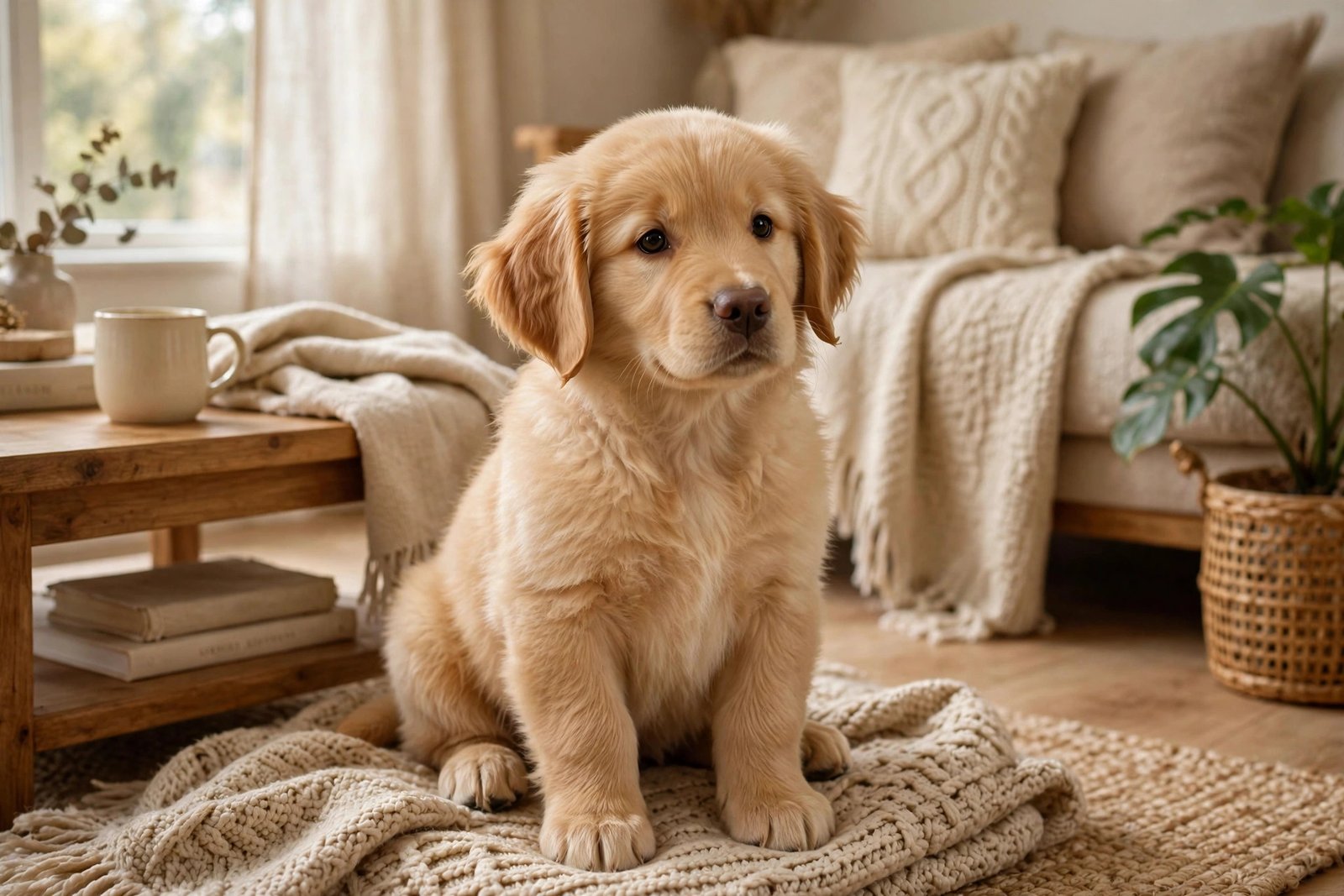
The puppy is coming in two weeks. You’ve bought the cute collar, you’ve named it (three times, it’s changed), and you’ve watched seventeen TikToks of puppies doing adorable things. What you haven’t done is look at your home through the eyes of a small, teething land-shark with no bladder control and a PhD in finding the one thing you didn’t want chewed. Knowing how to prepare your home for a new puppy is the difference between a joyful first month and a month where you cry into your coffee while mopping.
Here’s the full checklist — what to buy, what to move, and what to expect in week one.
How to prepare your home for a new puppy: puppy-proof room by room
Before the puppy arrives, get down on your hands and knees — literally, at puppy height — and scan every room they’ll access:
- Cables and wires: the number one puppy hazard. Tuck them behind furniture, use cable tidies, or lift them off the floor. A chewing puppy and a live cable is an emergency vet visit.
- Cleaning products, medicines, and chemicals: move to high cupboards or fit childproof latches. Puppies explore with their mouths, and antifreeze, ibuprofen, and chocolate are all potentially fatal.
- Small objects: hair ties, socks, children’s toys with small parts, coins — all choking or blockage hazards. Do a floor-level sweep of every room.
- Bins: get ones with lids, or put kitchen bins inside a cupboard. Chicken bones from the bin are a classic emergency vet story.
- Houseplants: check yours against the toxic list — lilies, sago palm, and many common houseplants are dangerous to dogs. Move them out of reach or rehome them temporarily.
- Shoes and valuables: the hallway shoe rack is a puppy’s favourite shop. Everything precious goes behind closed doors for the first few months.
The RSPCA’s advice on getting a puppy has a full hazard checklist worth printing — and if you’re still choosing a breed, their guidance on matching a dog to your lifestyle is essential reading.
The essential shopping list (and what to skip)
Pet shops want to sell you everything. You actually need:
- A crate (£25–£50) — sized so the puppy can stand, turn, and lie down. Not a cage; a den. Cover it with a blanket and it becomes their safe space. Crate training is the single fastest route to a housetrained, settled puppy.
- Food — a bag of whatever the breeder or rescue was feeding (change diets gradually over a week to avoid stomach upsets). Ask for a week’s supply to take home.
- Bowls — heavy ceramic or stainless steel, one for food, one for water. Avoid plastic (harbours bacteria, some dogs are allergic).
- A collar, ID tag, and lead. By law in the UK, dogs must wear a collar with the owner’s name and address when in public. Microchipping is also legally required.
- Puppy pads or newspaper — for the crate and the early accidents. Lots of them.
- Enzyme cleaner (£8–£12) — normal cleaners mask urine smell to you but not to the puppy, who’ll return to the same spot. Enzyme cleaners actually break down the proteins.
- Chew toys — Kongs, rope toys, rubber chew toys. A puppy without appropriate things to chew will find inappropriate things to chew. This is non-negotiable.
- Treats for training — small, soft, smelly. Training runs on treats the way cars run on petrol.
Skip for now: the expensive bed (they’ll chew it — use old towels in the crate), the wardrobe of outfits, the “puppy perfume,” and any gadget promising to housetrain them for you. You’ll know what you actually need after week two.
Set up the puppy zone
Don’t give a new puppy the run of the house on day one — it’s overwhelming for them and destructive for you. Set up one puppy-proofed area (the kitchen usually works — easy-clean floors, doors that close) with the crate, water, toys, and pads. Use baby gates (£15–£25) to section it off. Expand their territory gradually over weeks as housetraining progresses. This isn’t cruel — it’s how puppies feel secure. A small, predictable world beats a big, scary one.
The first 48 hours: what actually happens
- Night one will be hard. The puppy has left everything it’s ever known. Expect crying. Put the crate in your bedroom for the first few nights — your presence is the comfort. You can move it gradually once they’re settled. This isn’t “spoiling” them; it’s basic welfare.
- Toilet breaks every 1–2 hours — after waking, after eating, after playing, after excitement. Take them to the same spot, use the same phrase (“go toilet”), praise like they’ve won the lottery when they go. Accidents indoors are your fault for missing the signs, not theirs — never punish, just clean with the enzyme spray.
- Start the routine immediately. Same feeding times, same walk times (once vaccinations allow — check with your vet, usually a week after the second jab), same bedtime. Puppies thrive on predictability.
- Book the vet now. A check-up within the first week, vaccination schedule confirmed, flea and worming plan sorted, and pet insurance in place from day one — vet bills start at “ouch” and go up to “remortgage.”
The stuff nobody warns you about
The biting phase (8–16 weeks) is brutal — those needle teeth on your hands, twenty times a day. It’s normal, it’s developmental, and it passes. Yelp, withdraw attention for ten seconds, redirect to a toy. The sleep deprivation is real — puppies are newborns with teeth. And the “puppy blues” hit most new owners around week two or three: the overwhelming feeling of what have I done. It’s normal, it’s temporary, and it lifts as the routine beds in. Talk to other puppy owners (your vet, training classes, the school-gate dog crowd) — they’ve all been there.
Plan for the longer term too: puppies grow into dogs who need holidays, so bookmark our guide to finding pet-friendly cottages in the UK for when they’re ready to travel. And invest in a solid cleaning routine that actually works — with a dog in the house, the daily reset isn’t optional anymore.
The takeaway
To prepare your home for a new puppy: puppy-proof at floor level (cables, chemicals, small objects, bins, toxic plants), buy the essentials not the gimmicks (crate, enzyme cleaner, chew toys, treats), set up one contained puppy zone with baby gates, and brace for a hard first fortnight — it’s normal and it passes. The preparation takes a weekend. The payoff is a decade of the best company you’ll ever have.