A dedicated home charging point turns electric car ownership from a slow overnight trickle into a simple routine of plugging in and waking up ready. What you pay to have one fitted, though, depends far more on your house and wiring than on the badge on the unit.
The work a standard home installation usually involves
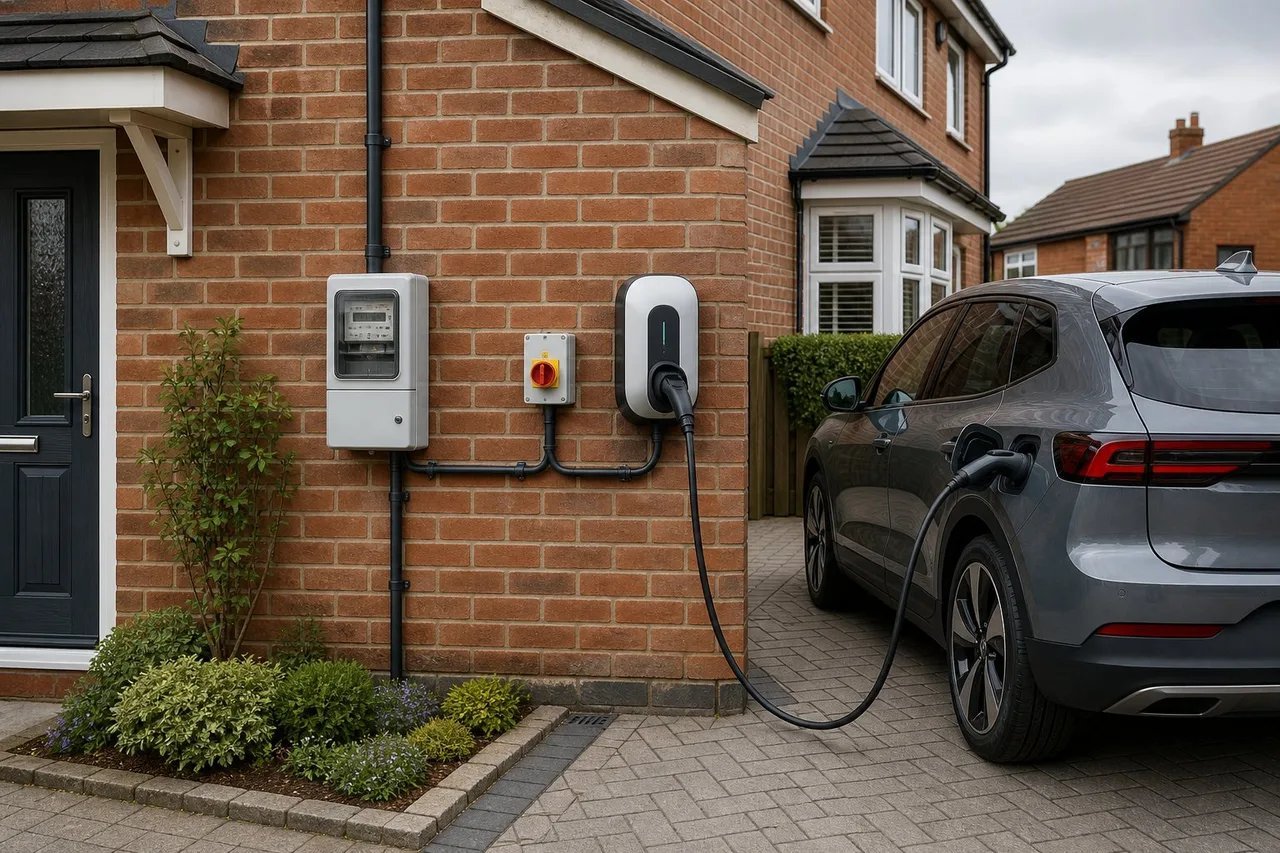
A standard installation assumes a straightforward house. The installer fits the charging unit to an external wall or inside a garage, runs a relatively short cable from the consumer unit, adds the required protective devices, tests everything, and registers the work properly. Most British homes take a unit rated at around seven kilowatts, which is enough to refill a typical electric car across the night, so the vehicle is ready each morning without any planning heroics.
Planned in sterling terms, the overall outlay for most households usually falls somewhere between eight hundred and one thousand five hundred, with a straightforward job using a good smart unit commonly planned at around one thousand to one thousand two hundred. Treat those figures as a planning range rather than a promise, because the survey described later can move a particular house within it considerably. Homeowners used to budgeting household work will recognise the pattern from what a boiler service costs in Britain each year, where a familiar job still varies with the property, the engineer and what the inspection uncovers.
The unit itself accounts for a substantial share of the total. The remainder buys skilled labour, cable, protective equipment, notification to the local network, and the paperwork that keeps your home insurance and any future house sale untroubled. A quotation that seems strikingly lower than others deserves a careful read, since something in that list may have been quietly assumed away.
The way the choice of unit changes the total
Charging units range from plain and capable to elaborate. At the simpler end sit units that charge the car safely, respond to an application on your phone, and schedule sessions for chosen hours. Paying more typically buys a tidier design, a longer or tethered cable that lives on the unit, better application polish, solar integration, load balancing for houses with heavy electrical demands, and sometimes a longer warranty with more responsive support.
Decide which of those extras answer a real need. A tethered cable saves coiling a separate lead with cold hands every night, which many owners value daily. Solar integration matters only where panels exist or are firmly planned. Load balancing matters where an electric shower, a heat pump and a car might otherwise compete at the same hour. Paying for capability your house will never call upon is the easiest way to inflate the project, while skimping on cable convenience is the saving owners most often regret.
Appearance plays a part on a front wall, and slimmer units in muted colours upset nobody. Whatever the styling, insist on a recognised make with a UK support presence, because a charging point is a long lived electrical appliance rather than a gadget. Background on the wider family of equipment sits at the development and types of charging stations for electric vehicles, which puts the humble home unit in its proper context.
Wiring distance and consumer unit complications
Distance is the great mover of quotations. A consumer unit on the other side of the house from the parking place means a long cable run, and cable must be routed safely: clipped along walls, buried in a trench where it crosses a garden, or taken through a building with drilling and making good afterwards. Groundworks in particular add labour quickly, and a route crossing a shared drive or a public path may be impractical altogether.
The consumer unit itself may need attention. Older fuse boards without spare capacity or modern protection often require an upgrade, or a small additional unit fitted alongside, before a charger can be added responsibly. Installers also check the main supply coming into the house; where that supply is shared with a neighbouring property in an arrangement common in older streets, the local network operator may need to carry out supply work first, which adds both time and uncertainty.
None of this should frighten anyone away. It simply explains why two neighbours with identical cars receive different figures, and why a responsible installer insists on photographs or a visit before quoting firmly. Send clear pictures of your consumer unit, the meter area, the proposed unit position and the route between them, and the quotation you receive will rest on evidence rather than optimism.
Support schemes that still help some households
The broad grant that once helped homeowners generally has ended, and anyone budgeting on the assumption that it still exists will miscalculate. Support has narrowed rather than vanished. Schemes remain aimed at particular groups, including some renters, some owners of flats, landlords providing parking for tenants, and workplaces fitting charging for staff and fleets. Eligibility rules and amounts change, and the detail matters, so the only safe habit is checking the current government pages at the moment you plan the work.
Flats bring their own complications beyond money. The building owner or management company usually has a say, the parking space may be shared or allocated informally, and running power to a bay can involve communal areas. Early conversation with whoever manages the building saves abortive surveys. Renters similarly need landlord agreement in writing before an installer is booked, however supportive the landlord seems in conversation.
Where support does apply, follow its process exactly. Schemes often require approved equipment, an approved installer, and evidence submitted in a particular order, with the paperwork completed before installation rather than afterwards. A good installer who works under the scheme regularly will guide the sequence, which is another reason to choose experience over a marginal saving on the unit.
Running the car on cheaper overnight electricity
The fitting outlay is only half the financial story. The lasting economy of home charging comes from when the electricity is drawn. Many suppliers offer tariffs with cheaper overnight hours intended for exactly this purpose, and a smart unit can be scheduled to charge mainly inside those hours automatically. You plug in when you arrive home, the car waits, charges while you sleep, and is ready by morning, with the bulk of its energy bought at the gentler rate.
How much that saves depends on mileage, the car, and the tariff available to you, so be wary of anyone promising a fixed payback period for an average driver who does not exist. High mileage households recover the installation outlay faster; a car used for a short school run may take far longer. The honest calculation uses your own mileage and your own tariff, and treats anything else as illustration rather than prediction. The broader motoring context, for readers who like their background thorough, is covered by the history and growth of the electric vehicle, which shows how quickly home charging became the default pattern.
Homes with solar panels gain a further option. Smart units can divert surplus generation into the car on bright days, which feels splendid even where the sums are modest. Treat that as a pleasant bonus layered on top of overnight scheduling, not as the foundation of the financial case.
Parking and supply checks before booking
Off street parking is close to essential for home charging. A driveway, a garage or a private bay beside the house gives the unit somewhere lawful and practical to live. A cable trailing across a public pavement creates hazards and invites disputes, and most councils discourage or forbid it, so households relying on street parking should explore public charging, workplace schemes or shared local facilities instead of forcing a home solution that does not fit.
Check the practicalities of your own space with fresh eyes. Where exactly will the car sit, and can its charging socket reach the unit without the cable pulling tight or crossing a walkway? Is the wall solid enough, and is there mobile signal or home wireless coverage at that spot for a smart unit’s features? Will the installation block a gate, a bin store or a future plan for the garden? Ten minutes with a tape measure answers most of these.
Supply checks belong on the same list. Find your consumer unit and meter, note anything that looks ancient or crowded, and photograph labels where they exist. If your home has an economy meter arrangement, storage heating, or an older supply shared with next door, mention it when seeking quotations. Installers welcome the warning and plan accordingly, rather than discovering complications with the wall already drilled. Mention also whether access is easy on a weekday, whether a vehicle must be moved to free the drive, and whether any pet needs keeping indoors while gates stand open, because small domestic details like these determine whether the appointment runs smoothly or unravels into delays that nobody budgeted time for at all.
Getting comparable quotes from qualified installers
Finish by gathering several quotations built on the same information. Give each installer identical photographs, the same preferred unit or type, and the same parking arrangements, then compare the written breakdowns rather than the headline totals alone. Look for explicit mention of cable length allowed, consumer unit work included or excluded, groundworks, certification and registration, and what happens if the survey on the day reveals something extra.
Use installers who are properly registered electricians with specific experience in vehicle charging work. Membership of a competent person scheme, clear insurance, and familiarity with notifying the network operator are baseline expectations, not luxuries. Reviews from local customers carry weight, especially where they describe how a firm handled an installation that turned out to be less standard than hoped.
Once a quotation is accepted, agree the sequence in writing: survey, any network operator involvement, installation day, and handover showing you how scheduling works before the installer leaves. Keep that paperwork with your house documents. A home charging point, chosen patiently and fitted properly, becomes one of those improvements you stop noticing within a month, precisely because plugging in each evening and leaving with a full battery each morning feels like the most natural thing in the world.