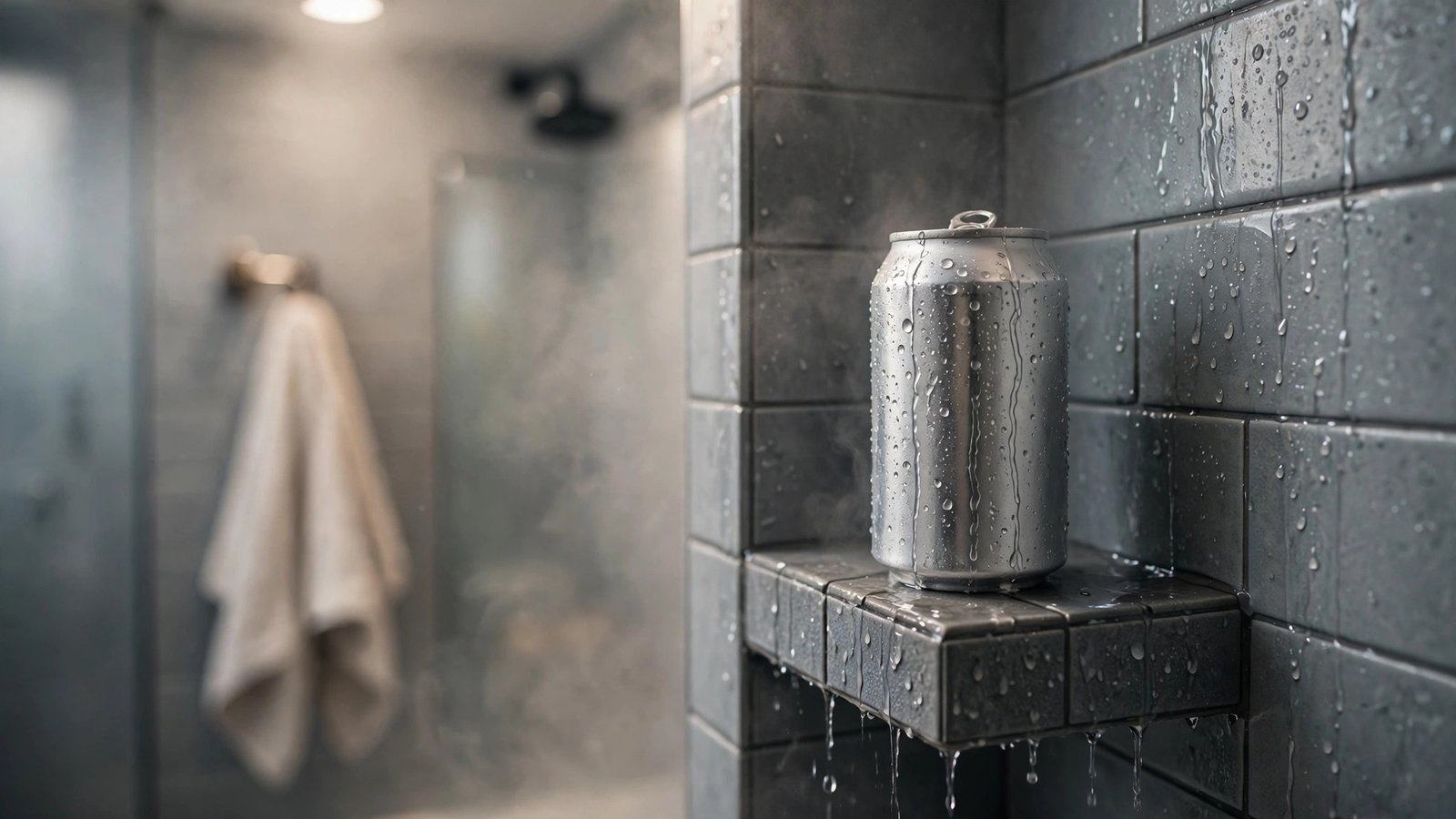
Cold beer, hot water: a tiny ritual with devoted followers.
A shower beer is simply what the name promises, a chilled beer taken into a hot shower and enjoyed while the water runs. Nothing is cooked, mixed, or performed. There is no recipe to master and no equipment beyond a can, a shower, and a few unhurried minutes at the end of a long day. Its fans describe it less as drinking and more as a pause, a small ceremony that marks the border between work and evening, effort and rest.
Why Does Hot Water Make Cold Beer Taste Better?
The appeal is contrast, and contrast sharpens everything. Hot water relaxes tense shoulders and fills the room with steam, while the beer stays bracingly cold, so each sip lands colder by comparison than it would at a kitchen table. Warmth also dulls nothing here because the beer itself never warms much during a short shower, especially if it goes in straight from the fridge. The senses, busy with heat, scent of soap, and the sound of water, leave the flavour of a simple beer feeling surprisingly clear and vivid.
There is also a matter of setting and expectation. A shower is private, brief, and free of screens, which is a rare combination in a modern evening. A modest pleasure taken slowly, without a phone in the other hand, tends to register more strongly than the same pleasure grabbed between tasks. Anyone settling afterwards in front of how to watch classic British comedy online will recognise the same principle at work: the ritual around a simple pleasure often matters as much as the pleasure itself. The beer has not changed in the shower. The drinker has slowed down enough to notice it.
Can or Bottle: Which Belongs in the Shower?
The can, and it is not a close contest. Glass in a wet, tiled space, handled with soapy hands and set down near bare feet, is an accident looking for a moment to happen. A dropped bottle breaks into sharp pieces that hide in water and grout, and clearing them safely from a wet floor is nobody’s idea of relaxation. A dropped can, by contrast, dents, fizzes, and can simply be picked up again. That single practical fact explains the near universal etiquette of the custom. Drinks have travelled into bathhouses, boats, and barracks across beer and its long history, yet the shower is surely the first setting to make the container a rule of the custom itself.
Cans bring smaller virtues too. They chill quickly, they are light to hold, and their narrow opening keeps shower water and soap out of the beer far better than a wide bottle mouth does. The background in the beverage can and its design shows how much quiet engineering sits inside such an ordinary object, from its tapered top to the lining that keeps the drink tasting of itself rather than of metal. Choose a can, keep the bottle for the table afterwards, and the whole ritual stays as carefree as it is meant to be.
A word about the water itself is due here. Bottles sweat, labels loosen, and condensation makes every surface more treacherous by the minute, which is another reason the sealed, label free can behaves so well in steam. It also keeps its contents properly its own: no soapy splash reaches the drink, no shower gel scent rides back on a wet rim to the lips. Small dignities, perhaps, but the ritual is made of small dignities, and each one removed makes the whole thing feel less like a treat and more like an accident.
Where Does the Can Sit Without Disaster?
Find its home before the water goes on. The safest spots are flat, broad, and out of the direct stream: a corner shelf built into the tiles, the wide rim of a bath where a shower runs over it, or a sturdy caddy that cannot tip. The can should sit where an elbow or a reaching hand for the shampoo will not sweep it away, and where stray spray will not steadily dilute the drink through its opening. A moment spent choosing the spot beats fishing a floating can out of soapy water.
Test the surface with a dry hand first. Smooth wet tile can be deceptively slick, and a can that stood firmly while you arranged the towels may wander once everything is wet and vibrating faintly with the plumbing. If the only ledge is narrow, drink a little first so the can is lighter at the top and steadier, and set it down gently rather than parking it mid sip. Never balance it on the shower controls, where a knock could change the temperature as well as spill the beer, and never leave it on the floor, where feet, soap, and drained water all converge.
Placement has a social side in shared bathrooms too. A can left balanced in a family shower will be knocked over by the next user as surely as the tide comes in, so the perch is a temporary arrangement, not a fixture. Set it up when you go in, take it with you when you leave, and treat holders and caddies bought for the purpose with the same suspicion as any ledge: check the suction, check the screws, and never trust a gadget more than a broad, honest shelf of tile.
Which Beers Suit Steam and Soap Best?
Light, cold, and refreshing wins every time. A straightforward lager, a pale ale with a gentle hand, or a crisp pilsner style beer keeps its character in the heat and asks nothing of the drinker. Heavy, dark, and warming styles belong to armchairs and cold evenings; in steam they quickly feel cloying, and their richer flavours blur. Sour and sharply fruity beers divide opinion, though some fans swear their bite cuts through the heat beautifully. The honest rule is to take a beer you already enjoy cold and uncomplicated, rather than experimenting in the shower.
Temperature matters more than brand. The beer should be properly fridge cold when it goes in, because the warm room begins its slow work at once and a merely cool beer will taste tired before the shower ends. A short shower helps too. This is a brief ritual, not a long soak, and the drink is at its best in those early minutes when the contrast is sharpest. Anyone curious about the drink itself, beyond the ritual, will find the long story of the drink a reminder that simple beers, honestly made, have refreshed working people for a very long time indeed, long before anyone thought of taking one into a shower.
Strength deserves a mention alongside style. A modest beer suits the heat best, because the warm, steamy setting can make a strong drink feel stronger than it is, and the point of the exercise is refreshment rather than effect. Wheat beers and gentle golden ales sit comfortably in the middle ground for many people, cold, soft, and uncomplicated. What never suits is anything you would not happily drink at the table. The shower improves the moment, not the contents, and a poor beer taken into steam remains a poor beer, merely warmer around the edges.
What Are the Safety Rules Nobody Skips?
The rules are plain and none of them is optional. No glass, as already settled. Keep the beer away from electrical items, which should never be within reach of a shower in any case. Mind the heat of the water if you have been drinking beforehand, because hot showers and alcohol both nudge the body in the same direction, towards light headedness, and a slippery floor forgives nothing. One beer, unhurried, is the custom. The shower is a place for the first drink of the evening, not the last of several.
Clean up after yourself with the same care. Rinse away any spill before it turns the tiles slick for the next person, take the empty can out with you rather than leaving it to rust or topple, and leave no trace for a housemate, partner, or hotel cleaner to deal with. In shared houses the etiquette extends to discretion and timing: a long shower with the bathroom locked at the busiest hour will make the ritual unpopular whatever its charms. Respect the space, keep it brief, and nobody has grounds to object.
Children, borrowed bathrooms, and other people’s houses set obvious boundaries, and the custom, being a home ritual, should stay at home. It is also worth saying that nobody needs alcohol to claim the pause the ritual protects. A cold soft drink in a can, taken into the same hot shower at the same hinge of the day, delivers the contrast and the quiet in full, and plenty of people who enjoy the ceremony enjoy it exactly that way. The beer is the traditional prop, not the point.
Is It a Real Custom or Internet Nonsense?
It is a real custom, albeit a young and cheerfully unserious one. The shower beer spread through online communities where devotees swapped rules, photographs, and earnest debates about the ideal beer and the ideal shelf, and it settled into a small body of shared etiquette: can only, cold and light, secure perch, short shower, tidy exit. Customs do not need centuries behind them to be genuine. They need people who repeat them, enjoy them, and pass on the details that make them work, and by that measure the shower beer qualifies comfortably.
Whether it is worth trying depends on what you expect from it. Nobody should expect a revelation, and the beer itself will taste, on honest reflection, much like the same beer on a sofa, only colder seeming and better framed. What the ritual offers is a pause with a beginning and an end, a few minutes in which the day is washed off in every sense before the evening starts. Judged as a drink, it is pleasant. Judged as a tiny ceremony of contrast and quiet, it earns its devoted followers, and it asks so little that trying it once, properly, with a can on a safe shelf, is the easiest way to settle the question for yourself.