A year of undergraduate tuition at a Japanese national university costs ¥535,800 (roughly £2,820), while private universities typically charge between ¥800,000 and ¥1,200,000 (about £4,200 to £6,300) per year. On top of tuition, expect a one-off admission fee of around ¥282,000 at national universities, plus living costs of roughly ¥100,000–¥150,000 a month if you’re based in Tokyo.
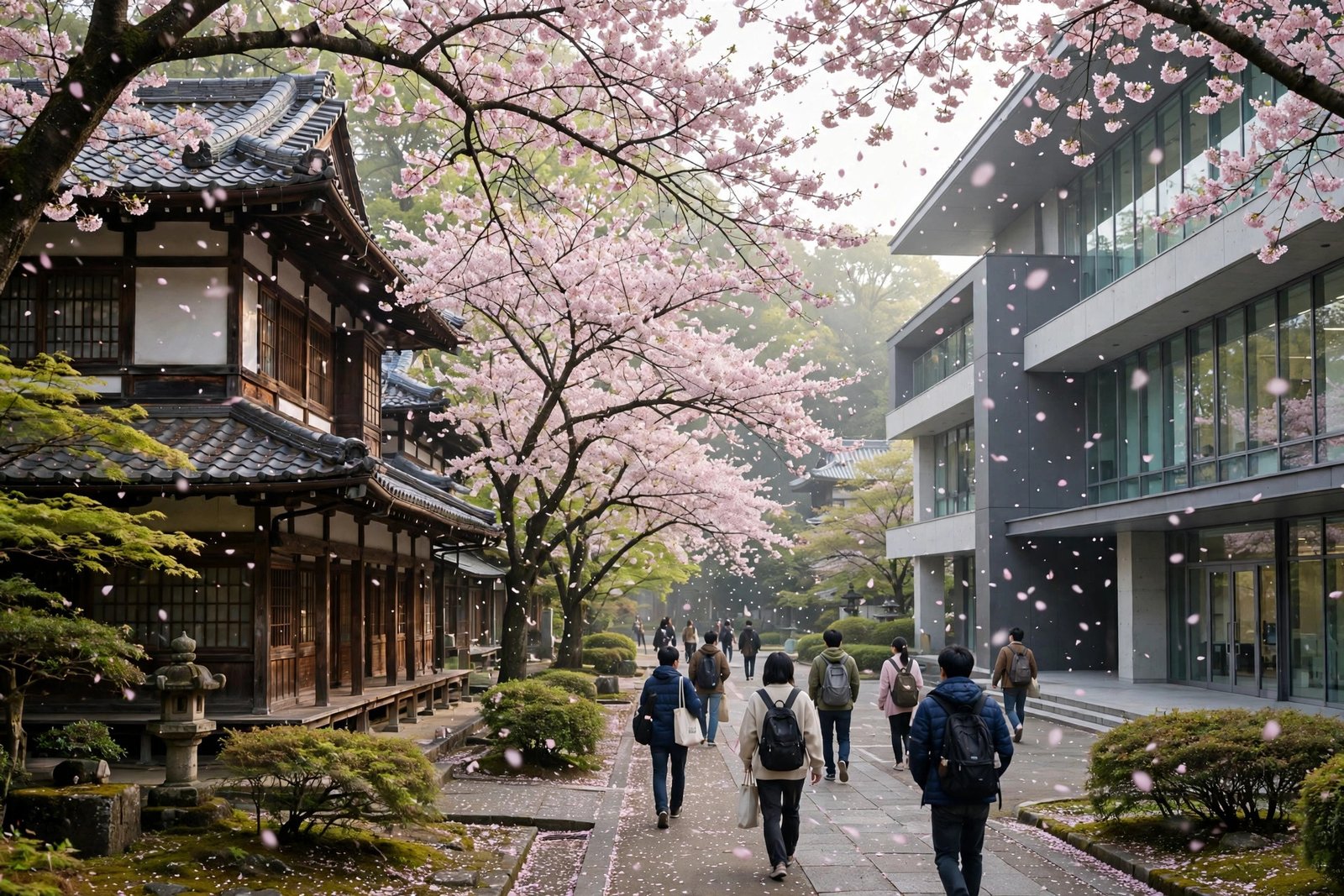
If you’re a UK student daydreaming about swapping rainy lecture halls for cherry-blossom campuses, the good news is that Japanese higher education is remarkably affordable by British standards. The bad news? The fee structure works very differently from the UK’s, and the headline tuition figure is only part of the story. Here’s the full breakdown in yen, with pound conversions so you can actually plan.
How Japanese university fees break down
Japan has three tiers of university — national, public, and private — and which one you attend makes the biggest single difference to what you’ll pay.
National universities (国立大学)
These are the big, prestigious institutions like the University of Tokyo and Kyoto University, funded directly by the central government. Tuition is standardised nationwide at ¥535,800 per year, and every national university charges exactly the same. There’s also a one-off admission fee (nyūgakukin) of ¥282,000, paid when you enrol. At roughly £2,820 a year, that’s less than a third of the £9,250 maximum annual fee for UK undergraduates.
Public universities (公立大学)
Run by prefectural or city governments, public universities charge slightly more — typically around ¥540,000–¥580,000 per year, with admission fees in the same ballpark as national institutions. Some offer reduced fees for students from the local area, though that discount rarely applies to international students.
Private universities (私立大学)
Private institutions educate the majority of Japanese students, and their fees vary enormously. A humanities or social sciences degree typically costs ¥800,000–¥1,000,000 per year, science and engineering courses run ¥1,100,000–¥1,400,000, and medicine or dentistry can reach an eye-watering ¥3,000,000–¥5,000,000 annually. Admission fees at private universities are higher too, often ¥200,000–¥300,000, and some charge additional facility or equipment fees each year.
Costs beyond tuition you need to budget for
Tuition is only the beginning. Japanese universities charge an entrance examination fee (jukenryō) of around ¥17,000–¥35,000 just to sit the admissions exam — and many students apply to several universities, so these add up fast. Textbooks and materials typically cost ¥50,000–¥100,000 a year, and you’ll need national health insurance (around ¥20,000 a year for students) plus possibly a guarantor arrangement for renting accommodation.
The other significant expense is the shikikin (deposit) and reikin (key money) system when renting a flat — upfront costs that can equal four to six months’ rent. University dormitories sidestep most of this and are dramatically cheaper, so apply for halls early if you can.
What about living costs?
Where you live in Japan matters almost as much as where you study. A student in Tokyo should budget ¥120,000–¥150,000 per month (£630–£790) for rent, food, transport, and basics. In regional cities like Fukuoka, Sendai, or Sapporo, ¥90,000–¥110,000 (£475–£580) is more realistic. University canteens (gakushoku) serve filling meals for ¥400–¥600, and the student commuter rail pass keeps transport costs manageable.
All in, a year at a national university including modest living costs works out at roughly ¥2,000,000–¥2,400,000 (£10,500–£12,600) — comparable to a single year’s tuition alone at many UK universities.
Can UK students actually study in Japan?
Yes, and it’s more accessible than many people assume. An increasing number of Japanese universities offer full degree programmes taught entirely in English — the government’s “Top Global University” initiative has pushed dozens of institutions to expand English-taught courses. You’ll still want some Japanese for daily life, but you don’t need fluency to enrol.
Practically speaking, you’ll need a student visa (your university sponsors it), proof of funds, and to arrange things like your UK student finance position — note that Student Finance England generally doesn’t cover full degrees abroad, so most UK students self-fund or win scholarships. It’s also worth reading the official guidance on living in and travelling to Japan on gov.uk before you commit, which covers visas, healthcare, and practical essentials.
If you’re weighing up different routes into higher education, it’s worth understanding how other systems structure their qualifications — for instance, how many years an associate degree takes in the US, or how difficult the GRE is if you’re considering postgraduate study abroad.
Scholarships that bring the cost down
The best-known option is the MEXT scholarship from the Japanese government, which covers full tuition plus a monthly stipend of around ¥117,000 for undergraduates — effectively making your degree free. It’s competitive and applied for through the Japanese embassy in London, usually a year before you’d start.
Beyond MEXT, many universities offer their own tuition reductions for international students (often 30–50% off), and the JASSO scholarship for privately funded international students provides ¥48,000 a month to those with strong grades. Always check what your target university offers before assuming you’ll pay the sticker price.
Frequently asked questions
Is university in Japan cheaper than in the UK?
Considerably. A national university degree costs about £2,820 a year in tuition versus up to £9,250 in England. Even after adding living costs, a full year in Japan often costs less than UK tuition alone — though UK students can’t usually get Student Finance England loans for degrees taken entirely abroad.
Do I need to speak Japanese to study there?
Not necessarily. Many universities now run full English-taught programmes, particularly at postgraduate level. That said, learning basic Japanese will transform your daily life, part-time job prospects, and social experience — most universities offer subsidised language classes for international students.
How much is ¥535,800 in pounds?
At typical recent exchange rates of around ¥190 to the pound, ¥535,800 works out at roughly £2,820. Exchange rates move around, so check the current rate when budgeting — a weaker yen makes Japan even cheaper for UK students.
Can I work part-time as a student in Japan?
Yes. International students can work up to 28 hours per week during term time (40 hours in holidays) with a work permit endorsement on their student visa, which is straightforward to obtain. Convenience store and restaurant jobs typically pay ¥1,000–¥1,200 per hour.