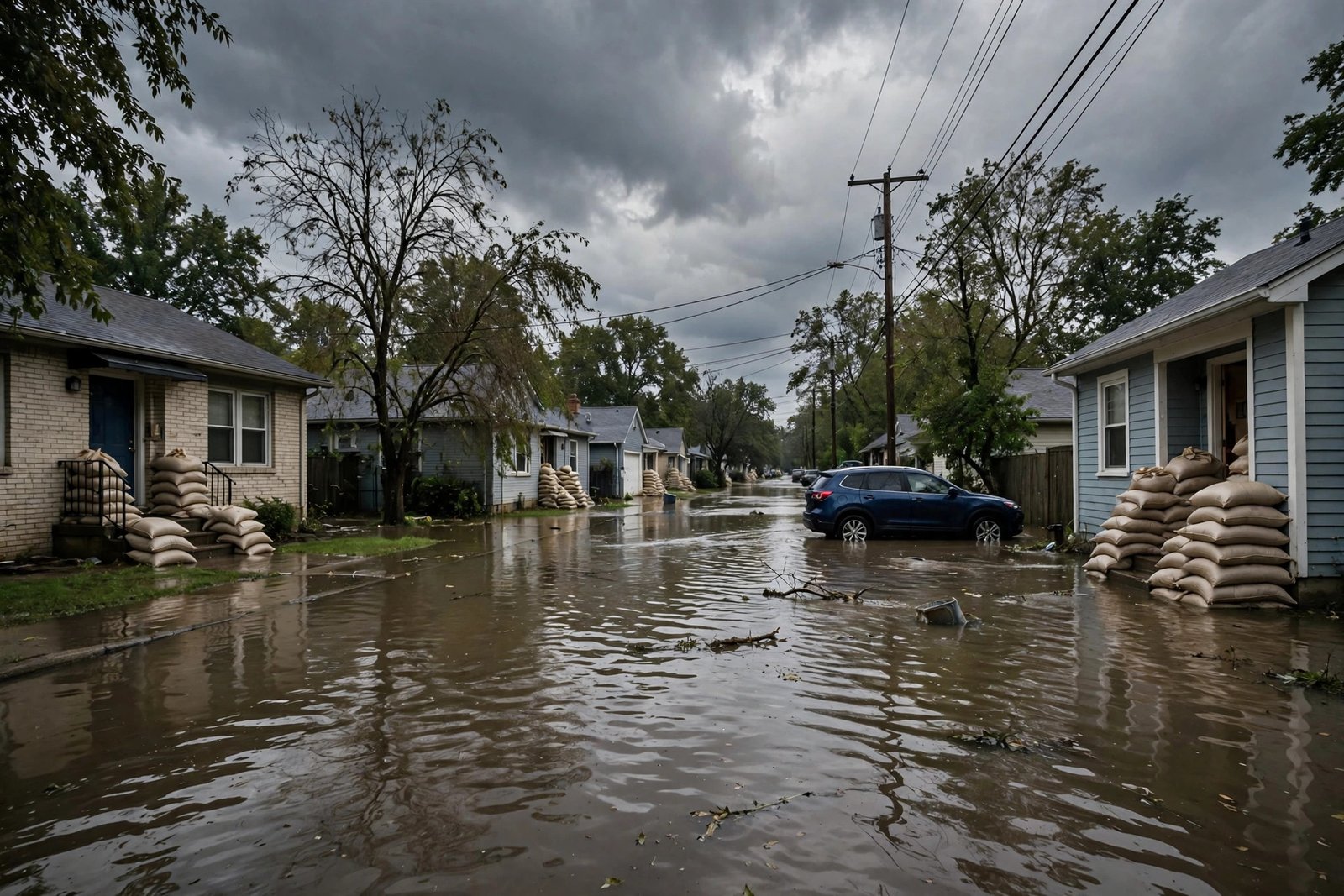
In December 2015, Storm Desmond dropped a month’s rain on Cumbria in 24 hours; in February 2020, Storm Dennis flooded 1,400+ properties across the UK; and every winter since has added new postcodes to Britain’s flood map. Yet most people’s understanding of flood risk stops at “we’re not near a river, so we’re fine” — which misses most of how flooding actually works. Surface-water flooding (overwhelmed drains) now affects more UK properties than river flooding, and climate change is intensifying rainfall faster than defences are being built. Understanding flood risk — what it is, how to check yours, and what to do about it — is part homebuyer due diligence, part emergency planning, and part civic literacy. This guide explains how it actually works.
The Four Types of Flooding (They Work Differently)
Fluvial (river) flooding: rivers overtopping banks after prolonged rain — the classic image, and the best-modelled risk. The Environment Agency maps these meticulously. Pluvial (surface water) flooding: intense rainfall overwhelming drains and sewers — the fastest-growing risk, affecting urban areas far from rivers. A summer thunderstorm can flood a street that has never seen a river. Coastal flooding: storm surges and high tides breaching sea defences — concentrated on the east and south coasts, parts of the Severn estuary, and low-lying areas like the Somerset Levels. Groundwater flooding: water tables rising through the ground in chalk and limestone areas — slow-onset, long-duration, and poorly understood by most homeowners.
The key insight: these combine. The worst events — 2007’s summer floods, 2015–16’s winter deluges — hit areas with multiple overlapping risks. And most flood insurance claims now involve surface water, the type least visible on a casual map glance.
Flood Zones: Reading the Map
England’s planning system uses three flood zones (Scotland, Wales and Northern Ireland have equivalent mapping): Zone 1 (low probability — less than 1 in 1,000 annual chance from rivers/sea), Zone 2 (medium — 1 in 100 to 1 in 1,000), Zone 3 (high — greater than 1 in 100 annual chance; Zone 3b is the functional floodplain). The free GOV.UK long-term flood risk checker gives any English address’s risk in 30 seconds — use it before every house viewing, not after the offer. Equivalent services exist for Scotland (SEPA), Wales (Natural Resources Wales) and Northern Ireland (DfI Rivers).
Understanding the numbers: “1 in 100 annual chance” does not mean once a century — it means a 1% chance every year, which compounds to ~26% over a 30-year mortgage. Zone 3 is not a rare-event zone; it’s a when-not-if zone. And zones describe river and sea risk primarily — always check the surface-water layer separately (the same checker shows it).
Why Risk Is Rising: The Three Drivers
Climate change: warmer air holds ~7% more moisture per degree — UK winter rainfall intensity is measurably increasing, and the Met Office projects wetter winters and more intense downpours. What was a 1-in-100 event is becoming 1-in-50 or 1-in-20 in many catchments. Development: paving over floodplains and greenfield sites replaces absorbent land with runoff-generating concrete — each new estate upstream raises downstream risk. Planning rules now restrict floodplain building, but decades of past development are baked in. Ageing defences: much of the UK’s flood defence stock was built for 20th-century rainfall; the Environment Agency’s maintenance backlog is a perennial funding battle.
For Homebuyers: The Due-Diligence Checklist
Flood risk is a price, insurance and mortgage issue, not just a wet-carpet issue:
- Check the free maps first (GOV.UK checker + SEPA/NRW/DfI equivalents) — before viewing, not after offering.
- Ask the seller directly (the TA6 property information form requires flood history disclosure — read it carefully).
- Commission the searches: the environmental search in conveyancing includes flood data; consider a specialist flood report (£30–£75) for any Zone 2/3 property — it details risk type, depth modelling and defence status.
- Price the insurance: get a buildings-insurance quote before exchanging — in high-risk areas, standard insurers may decline or load heavily. Flood Re (the government-backed reinsurance scheme) keeps most domestic flood insurance affordable, but it excludes post-2009 builds, commercial properties and some leaseholds — check eligibility.
- Check the mortgage: lenders require adequate buildings insurance; uninsurable = unmortgageable = unsellable later.
- Visit in rain: viewing a property during heavy rain is the single most informative viewing you’ll ever do — watch where water goes.
A property with managed, disclosed, insured flood risk can be a fine purchase (often at a discount). A property with hidden flood risk is a trap. The difference is the checklist. For the value dimension, adding value before selling covers how flood-resilience measures play in valuations.
For Homeowners: Protection and Resilience
Property-level protection (£500–£8,000)
Flood doors and barriers (£500–£2,000 per opening): demountable barriers for doors, airbrick covers, non-return valves on drains and toilets (sewage backflow is the horror nobody warns about). Resilient repair (£2,000–£8,000 for a full resilient refit): raised electrics (sockets at 1m+), water-resistant plaster and flooring (tile/concrete instead of carpet/chipboard), kitchen units on plinths, boilers moved upstairs. The philosophy: don’t just keep water out — make the house survive it. A resilient home dries in days; a conventional one takes months and £30,000+.
The flood plan (free, this weekend)
Sign up for flood warnings (free — Environment Agency Floodline, or the Scottish/Welsh/NI equivalents). Know your warning codes (Flood Alert / Flood Warning / Severe Flood Warning). Prepare a grab bag (documents, medications, chargers, torch, water, snacks). Know how to turn off gas, electricity and water. Move valuables upstairs when warnings issue. Photograph everything pre-flood (insurance claims live or die on evidence). And check on vulnerable neighbours — community resilience is the real defence.
After a flood: the recovery order
Safety first (electrics off, structural check, contamination awareness — floodwater is sewage-adjacent). Photograph everything before clearing. Contact insurers immediately (they have 24-hour flood lines). Don’t rush the drying — dehumidifiers for weeks, not days; premature redecoration traps moisture and breeds mould. And consider build back better: insurers and Flood Re increasingly support resilient reinstatement — the flood that costs £30,000 to repair conventionally is the opportunity to spend £35,000 and never face it the same way again.
The Water Quality Angle
Flooding and water safety connect directly: floodwater contaminates private supplies and overwhelms treatment. After any flood affecting your supply, follow the water company’s advice (usually boil notices). For everyday confidence in your drinking water, checking if your tap water is safe covers the testing and the standards.
Conclusion
Understanding flood risk means knowing the four types (river, surface water, coastal, groundwater), reading the zones properly (1-in-100 means 26% over a mortgage, not “once a century”), checking the free maps before every property decision, pricing insurance via Flood Re before exchanging, and — as an owner — combining property-level protection with a written flood plan and resilient repair. The risk is rising on all three drivers (climate, development, ageing defences), which makes today’s understanding tomorrow’s discount: the buyers and owners who know their risk pay less, insure properly, and recover faster. Check your postcode this week. Thirty seconds on the GOV.UK checker is the cheapest due diligence in property.
Frequently Asked Questions
How do I check my flood risk for free?
England: GOV.UK’s checker (river, sea and surface water, by postcode). Scotland: SEPA’s flood maps. Wales: Natural Resources Wales. Northern Ireland: DfI Rivers’ flood maps. All free, all authoritative — and all worth checking before any property decision.
What is Flood Re and does it cover me?
The government-backed reinsurance scheme keeping domestic flood insurance affordable in high-risk areas. It covers most homes built before 2009; exclusions include post-2009 builds, commercial premises, and some leaseholds. If you’re buying in a flood zone, confirm Flood Re eligibility and get a real quote before exchanging — “theoretically covered” and “affordably quoted” differ.
Should I buy a house in a flood zone?
It can be rational — with eyes open: price discount reflecting risk, confirmed affordable insurance (Flood Re), resilient construction or retrofit budget, and a flood plan. What’s irrational is buying without the checks. Zone 3 properties with full disclosure, protection and insurance are a calculated risk; Zone 3 properties bought blind are a gamble.
Does flood risk affect house prices?
Yes — measurably. Research finds flood-zone designation discounts prices (typically 5–15% depending on severity and recency of events), and the discount widens after actual floods. Conversely, proven resilience measures and Flood Re-backed affordable insurance narrow it. Flood history is disclosable on the TA6 — it will surface; price it upfront.
What should I do when a flood warning is issued?
Act on the warning level: Alert = prepare (move valuables, check defences, charge devices); Warning = act (deploy barriers, turn off utilities if instructed, move to safety); Severe = survive (immediate danger to life — follow emergency services, never drive through floodwater — 30cm of moving water floats a car). Sign up for warnings free via the Environment Agency or national equivalents.