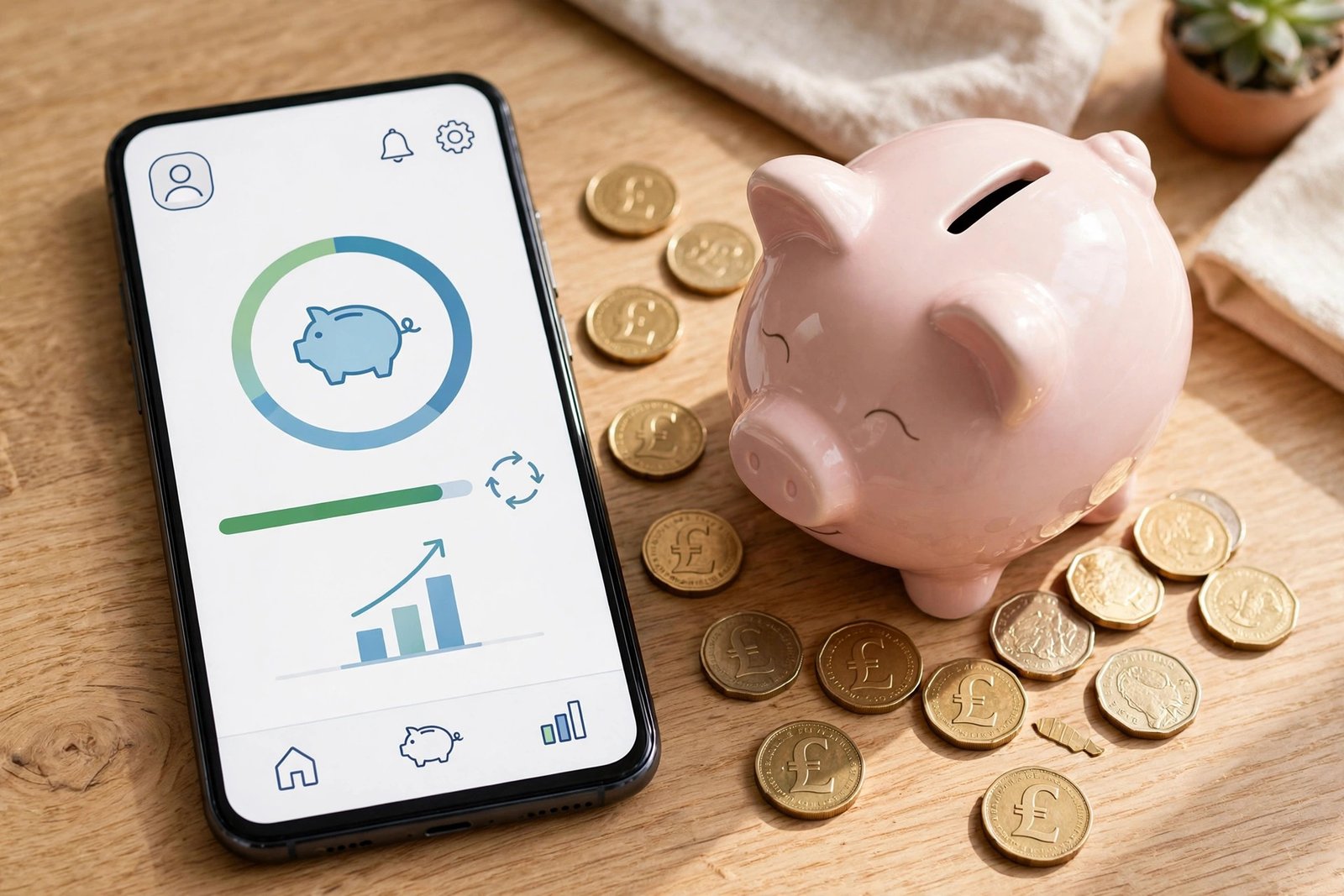
Good intentions evaporate quickly when saving depends on whatever survives until payday. Moving money automatically, the moment income lands, flips that struggle: the system stays disciplined so that you no longer have to be.
Mistake one: saving whatever survives the month
The leftover approach feels sensible because it sounds cautious. Save what remains, spend only what is needed, and nothing can go wrong. In practice the order is backwards. Spending expands quietly to fill whatever sits visibly in a current account, because the balance looks available even when part of it was quietly promised to the future. A meal out here, a small treat there, a replacement for something that still worked: none of it feels reckless, yet together it eats the margin that was meant to become savings.
By the final week there is usually a surprise as well. A bill lands higher than expected, a direct payment leaves earlier than remembered, or an ordinary repair cannot wait. The leftover shrinks to nothing, the transfer never happens, and the month is written off as a failure of character. It rarely is. It is a failure of sequence. Money left sitting in a spending account will be spent, not because anyone is careless, but because the account itself gives no signal about which part is spoken for.
That pattern is familiar to anyone interested in breaking stubborn habits for good rather than temporarily, because a plan that depends on mood and memory at month end asks willpower to do work that timing could do far more reliably. The honest first step is not a transfer at all. It is a month of watching where money genuinely goes, using the categories in a banking app or a simple written list, so the real surplus becomes visible. Most people find the surplus is smaller than hoped and larger than feared, and that truthful figure is the only safe foundation for automation.
Mistake two: setting the transfer painfully high
Enthusiasm creates the second mistake. A new saver, stung by months of leftovers that never materialised, sets the automatic transfer at a heroic level that assumes an almost perfect month. No treats, no surprises, no awkward weeks. Real life declines to cooperate. The transfer leaves the account short, everyday spending pushes towards an overdraft, and within days the money has to be pulled back from savings to keep ordinary life afloat.
That rescue matters more than the amount involved. Pulling money back once teaches the brain that the savings pot is simply a second current account with extra steps. Pulling it back twice turns the whole system into theatre. The amount was never truly saved; it was briefly parked. Worse, the saver often concludes that automation itself does not work for people like them, when the real fault was calibration.
The steadier approach is to automate most of the genuine surplus rather than all of it. Leave a deliberate cushion in the current account for the unevenness of real months: the week where two bills land together, the month with a family occasion, the repair that cannot be postponed. A modest transfer that never needs rescuing builds more over a year than an ambitious one that keeps being reversed. The amount can grow later, once it has proved itself boringly survivable. Boring, here, is a compliment. A system that attracts no attention is a system still running.
Timing matters as much as size. A transfer dated before pay has properly cleared invites failure even when the monthly maths is sound, so the instruction should sit just after payday, when income has landed and the month ahead is still fully funded.
Mistake three: mixing every goal in one pot
A single undifferentiated pot creates a quieter problem. Emergency money, holiday money, car repair money and longer term savings all sit in one balance, and every spending decision becomes an argument about which invisible portion is being spent. A balance can look healthy while being almost entirely committed, or look modest while quietly doing several jobs well. Without labels, nobody can tell.
Labels change behaviour in a way raw balances do not. Money named for a purpose feels owned by that purpose, and raiding it requires an honest admission rather than a vague shrug. Separate pots, whether within one account or across several, give each goal its own visible progress. The emergency pot becomes untouchable except for genuine emergencies. Short term goals, such as a trip or a replacement appliance, grow in their own space. Longer term saving sits further away, where everyday temptation reaches it less easily.
Order matters too. The emergency pot usually comes first, because without it every unexpected bill becomes borrowing or a raid on some other goal. Once a basic buffer exists, the other pots can grow in parallel, each at its own pace. Destinations should match time horizons in a broad, sensible way: money needed soon belongs somewhere accessible, money set aside for much later can live in arrangements designed for the longer term, including tax sheltered accounts and pensions where they fit the purpose. None of this needs to be complicated. It needs to be separated, named and left alone.
The test of a pot is simple. If you can say, in one sentence, what the money is for and what would count as a reason to touch it, the pot is doing its job. If not, it is just a number.
Mistake four: letting bill savings drift back into spending
Households regularly free up money without ever keeping it. A subscription is cancelled, a supplier is switched, an unused service is dropped, and for a brief moment the monthly outgoings genuinely fall. Then nothing changes in the savings system, so the freed amount dissolves into general spending within a month or two. Nobody notices where it went. It simply raised the everyday water level by a small amount.
The fix is immediate capture. On the same day a bill falls, the standing order rises by the amount freed, so the money changes address before spending habits adjust around it. The household feels no loss, because the total leaving the account for bills and savings combined has stayed roughly where it was. Only the destination improved. This is one of the few painless increases available in personal finance, and it works precisely because it never asks anyone to feel poorer.
A related drift happens with bills that arrive rarely rather than monthly. Annual and seasonal costs feel like emergencies when they land, even though they were entirely predictable. A labelled pot fed steadily through the year turns them back into ordinary expenses. When the bill arrives, the money is waiting, and the month carries on undisturbed. Without that pot, the same bill raids the emergency fund or the holiday savings, and several goals suffer for one foreseeable event.
Reviewing outgoings therefore belongs inside the savings system, not beside it. Every cancellation, every renegotiated bill, every service no longer used is a small pay rise the household gives itself, and it only becomes saving when the automatic transfer is adjusted to claim it.
The payday system that runs itself quietly
Put together, the corrected system is almost disappointingly simple. Track spending honestly for a short period and find the real surplus. Choose a modest portion of it that can leave without strain. Set a standing order for just after payday, sending that amount to a clearly labelled destination. Add round up features, where the banking app sweeps small change from card spending into savings, as a pleasant supplement rather than the main engine, because such sweeps are small and erratic by nature.
The mechanics deserve a moment of clarity. Wikipedia’s overview of personal finance frames the subject as managing income, spending and saving as an individual, and within that subject the standing order is the saver’s own instruction: you tell your bank to pay a set amount regularly, and you can change or stop it. That differs from the arrangement described in Wikipedia’s article on direct debit, which covers authorised payments collected directly from bank accounts by an organisation you have given permission to. Bills usually arrive by the second method. Savings should travel by the first, because the saver keeps direct control of the amount and the date.
Once the flow is running, destinations can be layered gently. The emergency pot fills first in an accessible home. Near term goals sit in their own labelled spaces. Longer term money can move towards sheltered or retirement arrangements suited to its horizon, and regular investing, for those who choose it after a buffer exists, removes any need to guess at market timing because contributions simply continue. The system asks for a short review now and then, not daily attention. Check the transfers are leaving, check the pots are growing, and otherwise let the machinery be dull.
Raising the amount as income grows
The final habit protects the system against its most predictable threat: rising income absorbed entirely by rising spending. When pay increases, everyday life expands almost automatically. Better groceries, nicer treats, a slightly larger home, a slightly newer car. None of it is wrong, yet if every improvement is claimed by spending, the saver ends up earning more and saving the same modest amount as years before, wondering where the benefit went.
The counter move is to decide in advance that part of every rise belongs to the future. When a pay increase lands, the standing order rises with it on the very next payday, before new habits form around the higher income. Because the household has not yet learned to expect the extra, saving it costs nothing in felt quality of life. The same treatment suits any regular improvement: a finished loan repayment, a reduced bill, a new source of steady income. Each is a moment where money is briefly unclaimed, and unclaimed money is the easiest money in the world to save.
Irregular extras need a lighter touch. A bonus, a refund or an unexpected payment can be moved manually, in the moment, while keeping the automatic baseline unchanged. That separation keeps the core system stable and lets good fortune add to it without distorting it.
Automation is not abdication. Circumstances change: a move, a new child, a period of reduced work. A good system bends at those moments, with the amount lowered honestly rather than abandoned, and raised again when life steadies. What matters is that the transfer survives in some form, payday after payday, quietly doing the job that leftovers never could.