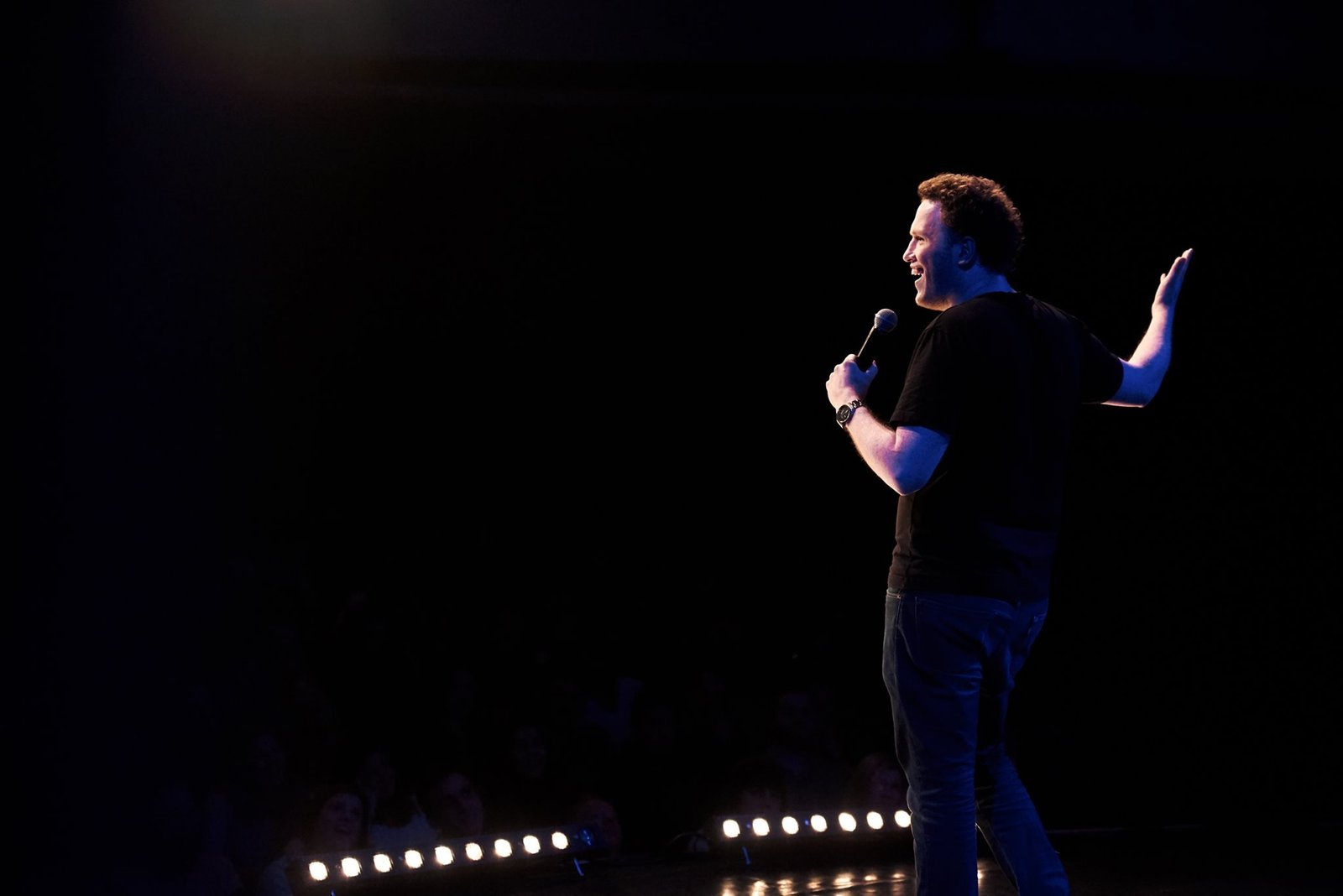
A great recorded special is an hour its performer refined across hundreds of rooms, and watching it whole reveals an architecture that clips can never show. The finest examples reward an evening of undivided attention.
A lockdown performance that reinvented the recorded special
Begin with the hour that turned a limitation into a form. The entry on Wikipedia for the lockdown special, created alone in a single room, records that the work blends comedy songs, sketches and reflection and was filmed without an audience or crew. That absence shapes everything. There is no laughter to ride, no applause to punctuate a difficult thought, so the performer builds rhythm from editing, music and silence instead. Songs arrive at a keyboard in the corner. Sketches play out with the same face in every role. Between them sit quieter passages about isolation, stalled plans and the strange guilt of creating anything at all while the world outside the door stood still. It also casts a sideways light on finding comedy tours worth leaving home for, because a performer this resourceful in solitude invites curiosity about what a roomful of listeners adds.
What lifts it beyond novelty is accumulation. Images return altered. A joke planted early grows teeth later. The room itself seems to change across the hour as light, costume and mood shift, until the small space feels like a diary kept in public. It will not suit everyone. Viewers wanting a rapid string of punchlines may find the reflective stretches demanding, and the songs ask for a tolerance of musical comedy that some never develop. Yet as a demonstration of what a recorded special can be when the stage is removed entirely, nothing else quite matches it.
A landmark hour that strained the form deliberately
The second landmark comes from the opposite direction: a packed theatre, a performer in full command, and a show that gradually announces it intends to break its own contract with the audience. Wikipedia’s article on the award-winning special by an Australian comedian explains that it deliberately challenges the structure of a traditional stand-up show while discussing art and personal testimony. Early passages behave like accomplished comedy, stories are shaped beautifully, and callbacks click into place with satisfying precision. Then the hour starts questioning its own machinery, asking what jokes can carry, what they flatten, and what a performer owes the people inside her stories.
Some viewers resist that turn, and the resistance is part of the design. The show wants the room slightly uncomfortable, aware of its own laughter and of where laughter stops. Discussion of art is woven through rather than bolted on, so a detour into painting illuminates the testimony rather than interrupting it. By the close, earlier routines read differently, which is the mark of construction rather than provocation for its own sake. Watch it with others and expect a conversation afterwards that lasts longer than the credits. Few hours divide a group so productively. Some will call it the most important special they have seen, others will call it an essay wearing comedy’s clothes, and both responses testify to the same thing: the form was strained on purpose, and the strain is where the meaning lives.
Linked hours built with watchmaker precision in Britain
Against those rule-breakers, set the builder. A British comedian’s sequence of interlinked hours stands as the construction peak of the modern special, each show engineered so that stories, props and throwaway lines lock together across not merely one evening but several. Wikipedia’s stand-up comedy article describes a performance in which a comedian speaks directly to a live audience, usually in monologue, building material through repeated performance, and here that building reaches an almost musical complexity. A phrase tossed away in an early show becomes a load-bearing beam in a later one. Objects on stage turn out to have been waiting patiently for their moment.
The pleasure is double. On the surface the material is warm, self-deprecating and full of family embarrassment, the sort of comedy a whole household can enjoy together. Underneath runs the quiet thrill of watching a mechanism assemble itself, so that the final minutes reframe stories you thought were finished. Committing to linked hours asks more of a viewer than a single special does, and the reward matches the commitment, provided you watch in order and resist skipping. First-time viewers are best beginning with the earliest hour of the sequence rather than with whichever title a platform promotes hardest. Seen straight through, the set demonstrates something clips can never convey: stand-up as long-form storytelling, where patience is not a cost but the very source of the biggest laughs near the end.
Dark confidence applied to love and modern relationships
Not every essential hour is an experiment. Some earn their place through sheer command of the classic virtues: timing, nerve and a point of view sharp enough to cut. A Scottish comic’s celebrated hour on love and modern relationships belongs in that company. The material stalks familiar territory, dating rituals, long partnerships, the performances couples stage for friends, but the angle of attack is unsentimental to the point of bracing honesty. Assumptions the audience brought in with them are examined one by one and rarely survive intact. What saves the hour from coldness is the performer’s evident delight in the room. The delivery is relaxed, almost conversational, which makes the darker turns land harder because nobody braced for them.
This is the special to choose when a group wants comedy that sparks argument on the walk home. Couples watch it together at their own cheerful risk, since several routines have a way of naming habits that partners recognise in each other instantly. The writing repays attention as well. Beneath the confidence sits careful structure, with early confessions quietly preparing later reversals, and a closing stretch that gathers the hour’s scattered provocations into something close to tenderness. It demonstrates that a traditional special, joke upon joke with no theatrical scaffolding, can still feel like an event when the voice is this distinct. If the form-breaking hours ask what stand-up could become, this one answers what it already is at its best.
Verbal precision on empire, identity and family life
Language itself becomes the instrument in the next hour. A British-Malaysian performer builds comedy from the friction between the tongues and cultures he grew up among, moving between accents, registers and generations with a precision that borders on musical. Empire is handled not as a lecture topic but as family history with jokes in it, the legacy of migration told through grandparents, schoolrooms and the small absurdities of belonging to two places at once. The stand-up traditions, monologue and live audiences that Wikipedia outlines are all here in classic form, yet the voice is unmistakably his own, courteous on the surface and quietly merciless underneath.
Family supplies the hour’s warmth. Parents appear as fully drawn characters rather than punchline fodder, their sayings and certainties tested against a son’s very different life with affection on both sides. Identity material can easily harden into slogan, and the pleasure here is watching it stay supple, curious and funny, with the performer as willing to mock his own certainties as anyone else’s. Viewers who share some of that background will catch extra layers, but the hour never locks anyone out. Its subjects are universal ones wearing specific clothes: what we inherit, what we translate, and what we politely never say at the family table. As an introduction to how much comedy can be carried by word choice alone, it is hard to beat.
An approachable hour on mental health and growing up
Every shortlist needs a door left open for the hesitant, and an American comic’s hour about mental health and growing up serves exactly that purpose. The tone is confessional without heaviness. School embarrassments, family chaos and the slow, uneven work of becoming a functioning adult are told with an energy that sweeps a room along, while the passages about anxiety and low mood are handled with a lightness that makes them easier to hear, not easier to dismiss. Nothing is dressed up as advice. The performer simply reports from inside his own experience with enough honesty that recognition does most of the work.
Approachable should never mean slight. The hour is tightly written, with callbacks that reward attention and a final stretch that gathers its themes into a genuinely moving close without abandoning the jokes. For younger viewers it offers the rare comfort of a successful adult admitting that growing up felt bewildering from the inside too. For older ones it works as a reminder of how recently those bewilderments were their own. Groups unsure which special to try first could do far worse than start here, because its welcome is broad and its craft only becomes apparent afterwards, when you realise how much ground was covered. It also travels well across households, asking for no specialist knowledge and giving every generation something to recognise.
Watching whole, trusting taste and following comics live
Running through every recommendation above is a single habit: watch whole. A special is built like an album or a play, with quiet passages placed deliberately between peaks, recurring ideas gathering weight, and endings designed to echo beginnings. Clips strip all of that away and leave only the peaks, which paradoxically makes great performers look interchangeable. Give an hour your full attention, in one sitting, with the phone in another room, and even a special you merely like will show you more about its maker than a dozen fragments. Trust your own taste as the final filter. Serious, form-straining hours suit reflective evenings. The lockdown special filmed alone in one room remains the clearest proof that constraint, handled honestly, can widen a form instead of narrowing it. Joke-dense confidence suits a crowd. Precision and warmth suit almost anyone. There is no universal ranking, only matches between a night and an hour.
Finally, let the screen point you back to the room. Recorded specials are advertisements, in the best sense, for the living art that produced them, and a comic you admire on a platform is very likely sharpening the next hour somewhere near you. Following that trail towards a living room of strangers closes the circle, because stand-up begins and ends with an audience in seats, breathing together. Watch a landmark hour at home, by all means, and watch it properly. Then go and sit in the dark with strangers while the next one is being born.