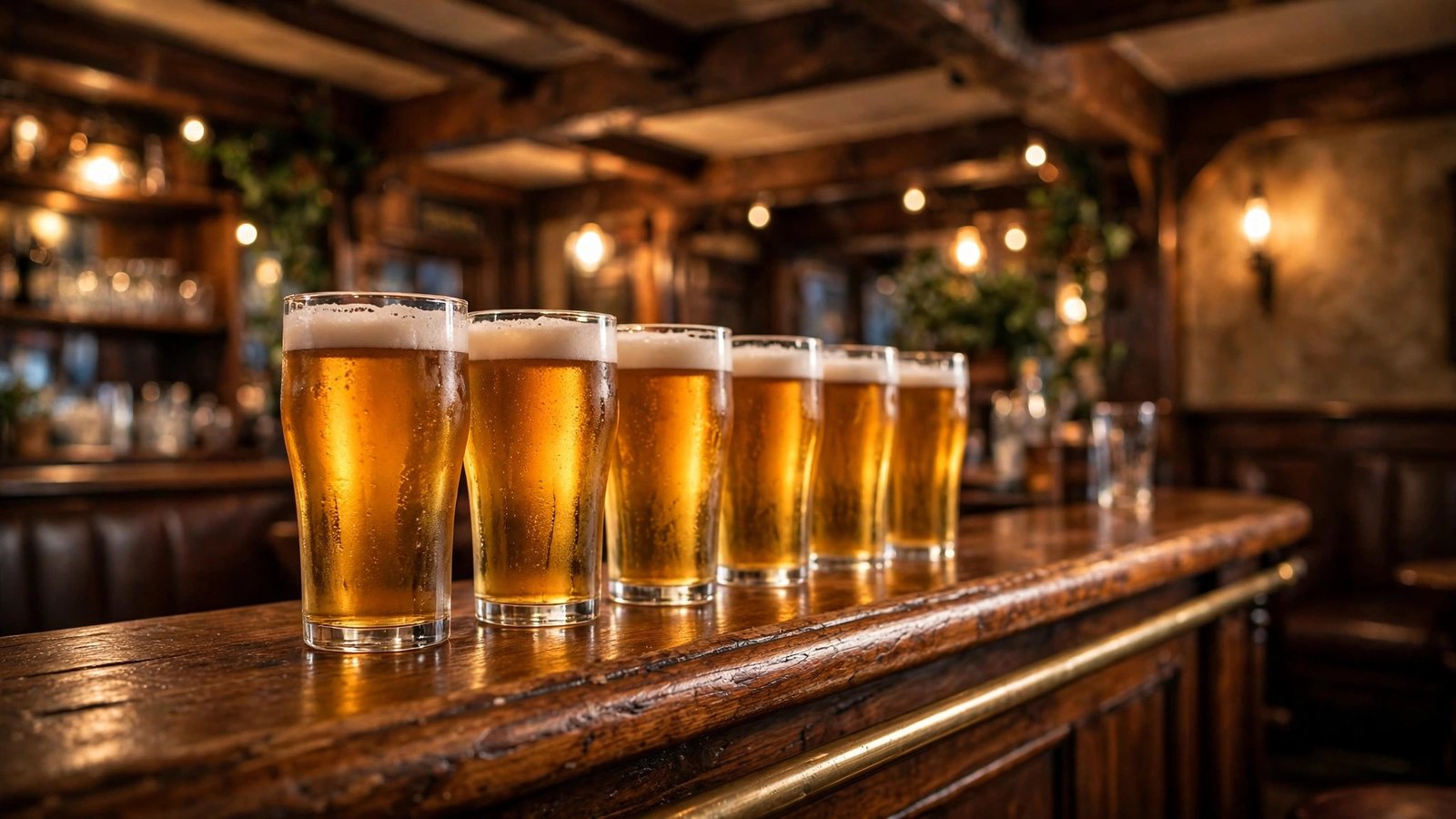
In England, Wales and Northern Ireland, 0.08% blood alcohol concentration (80 milligrams of alcohol per 100 millilitres of blood) is the legal drink-drive limit — and in Scotland it is stricter, at 0.05%. Very roughly, an average-sized man might reach 0.08 after about two pints of standard-strength lager, while an average-sized woman could get there after one to two pints. But body weight, food, drink strength, metabolism and time all shift those numbers enormously — which is why the only genuinely safe number of drinks before driving is zero.
The UK limits, precisely
British law actually defines the limit three ways, and you can be prosecuted for exceeding any of them:
- England, Wales & Northern Ireland: 80mg of alcohol per 100ml of blood (0.08%), 35 micrograms per 100ml of breath, or 107mg per 100ml of urine.
- Scotland: 50mg per 100ml of blood (0.05%), 22 micrograms per 100ml of breath, or 67mg per 100ml of urine — lowered in 2014 and unchanged since.
The gov.uk drink-driving pages spell out the penalties, and they are severe: a minimum 12-month driving ban, an unlimited fine, up to six months in prison, and a criminal record that must be declared to insurers for years — pushing premiums up by hundreds of pounds annually.
Why “how many drinks” is the wrong question
Asking how many drinks equals 0.08 assumes drinks are standard and bodies are identical. Neither is true. Your blood alcohol level depends on:
- Drink strength and size: a pint of 5.2% IPA contains far more alcohol than a pint of 3.8% session bitter. Wine served at home is routinely poured at double pub measures.
- Your weight and build: alcohol distributes through body water, so smaller people reach higher concentrations from the same drinks.
- Sex: women typically have a lower proportion of body water than men of the same weight, so the same drinks produce a higher reading.
- Food: a proper meal slows absorption; drinking on an empty stomach spikes your level fast.
- Time: your liver processes roughly one UK unit per hour, starting about an hour after you begin drinking.
The rough maths (with heavy caveats)
For illustration only — never use this to decide whether to drive. The UK measures alcohol in units, where one unit is 10ml of pure alcohol. Useful benchmarks: a pint of 4% lager is about 2.3 units, a 175ml glass of 13% wine is about 2.3 units, and a single 25ml pub spirit measure is 1 unit. The NHS alcohol unit calculator is worth bookmarking.
Working backwards from the 80mg limit: a 70kg man drinking pints of 4% lager (2.3 units each) would be hovering around the England-and-Wales limit after roughly two pints consumed within an hour or so — a third pint would almost certainly put him over. A 60kg woman drinking the same would likely exceed the limit after one and a half to two pints. In Scotland, with the 50mg limit, both would be over considerably sooner — potentially after a single pint.
Read that again: these are illustrations, not permissions. Individual variation is so wide that no table or calculator can tell you that you are safe to drive. Police roadside breath tests do not care about your maths.
The morning after still counts
One of the most common ways people get caught is driving the next morning. Alcohol leaves your system at about one unit per hour — so four pints of lager (over 9 units) drunk until midnight can still leave you over the limit at 8am. Sleep, coffee, a fry-up and fresh air do nothing to speed this up; only time works. If you drank heavily, assume you are unfit to drive until lunchtime at the earliest — and arrange your morning accordingly.
Making the safe choice easy
The drivers who stay out of trouble do not rely on willpower at midnight; they decide in advance:
- Nominate the driver before the first round — rotate the duty fairly among friends.
- Book the taxi before you go out, or check the last train times.
- Alternate alcoholic drinks with water or soft drinks — you will drink less, spend less and feel better.
- Try the alcohol-free options. The UK’s alcohol-free beer market has exploded, and modern 0.0% lagers genuinely taste like the real thing.
Looking after yourself includes making safe choices on nights out — the same principle behind our guides on teaching kids self care and moving on after a breakup: notice what you need, protect your future self, and do not leave important decisions to the version of you who has had four pints.
Frequently asked questions
- Q: How many drinks is 0.08 BAC for a man?
A: Very roughly, two pints of standard 4% lager within an hour could put an average 70kg man near the 80mg (0.08%) limit in England and Wales. Stronger drinks, lower weight or an empty stomach lower that number. Never rely on estimates — do not drink and drive. - Q: How many drinks is 0.08 BAC for a woman?
A: Roughly one and a half to two pints of 4% lager for an average 60kg woman, but individual variation is huge. Women generally reach higher blood alcohol levels than men from the same drinks. - Q: Is the drink-drive limit the same across the UK?
A: No. Scotland’s limit is 50mg per 100ml of blood (0.05%) — significantly stricter than the 80mg (0.08%) limit in England, Wales and Northern Ireland. - Q: Can I drive the morning after drinking?
A: Maybe not. Your body clears about one unit of alcohol per hour, so a heavy night can leave you over the limit well into the next day. Coffee and breakfast do not speed this up — only time does. - Q: What is the penalty for drink-driving in the UK?
A: A minimum 12-month driving ban, an unlimited fine, up to 6 months’ imprisonment, and a criminal record. Causing death by careless driving while over the limit carries up to life imprisonment.